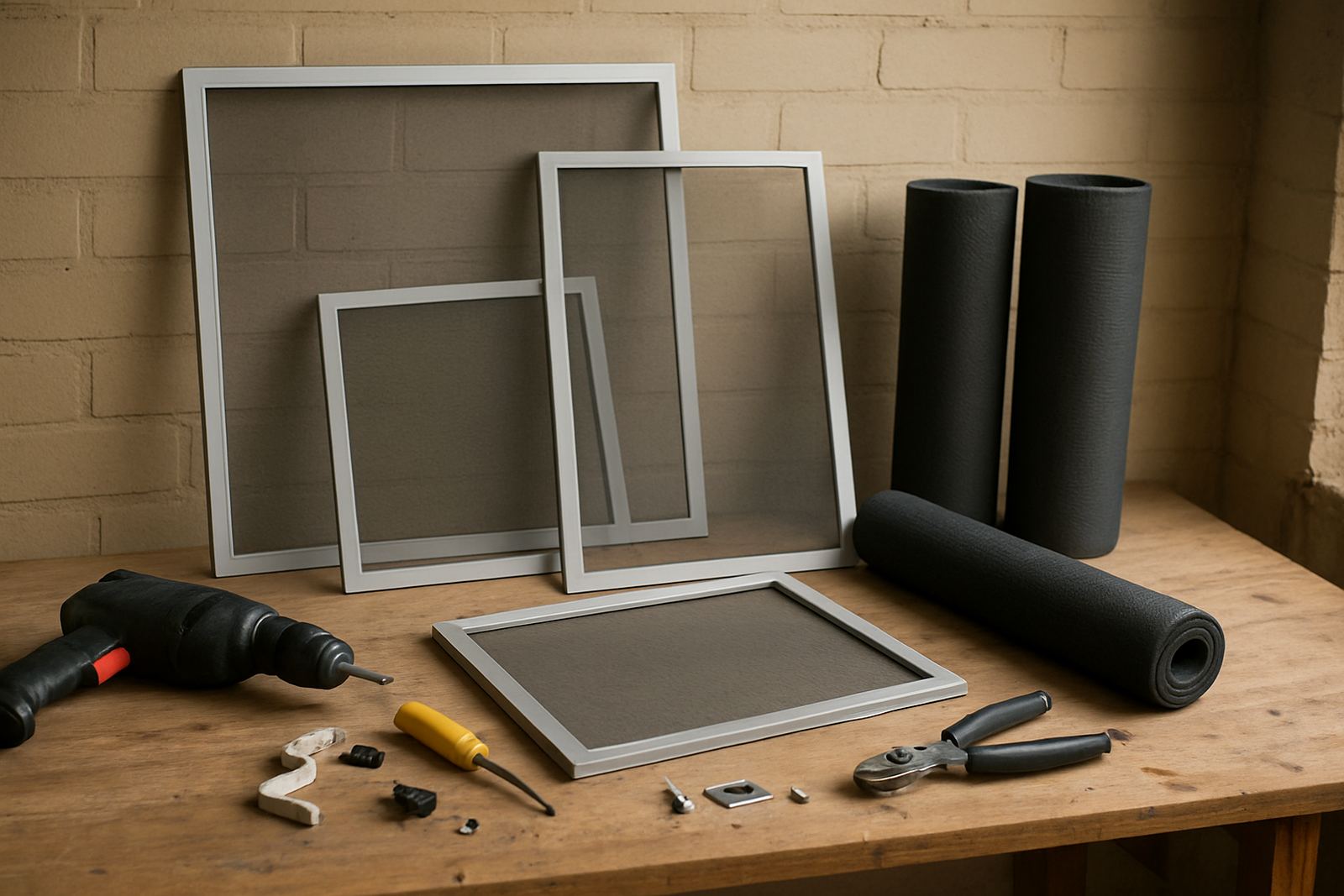
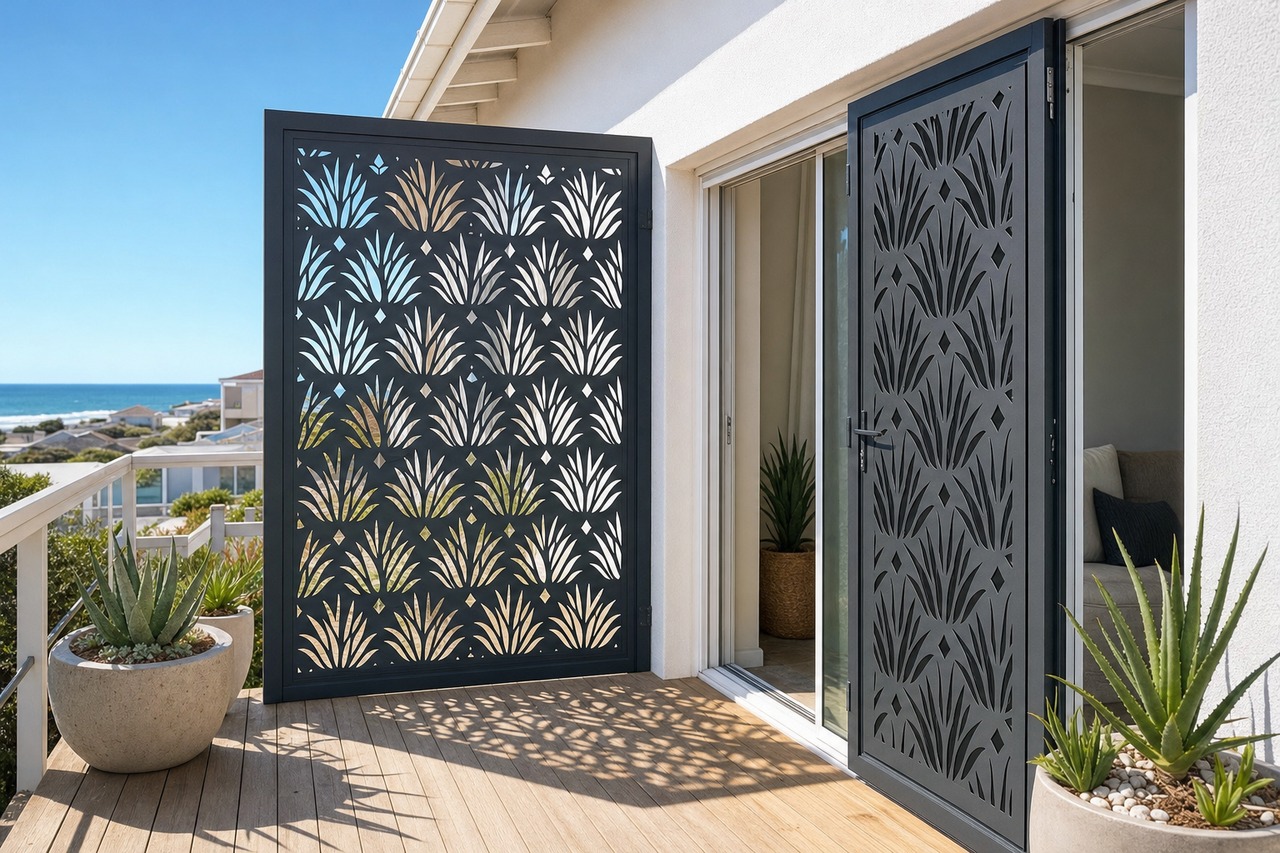
More of our clients now ask for something between a plain mesh screen and a solid wall. A shop owner wants a front door that looks good during trading hours and still feels secure after closing time. A Summerstrand homeowner wants a privacy screen panel beside the braai that cuts the neighbours' view but lets the sea breeze through. An estate manager wants courtyard doors that match the building, not the catalogue.
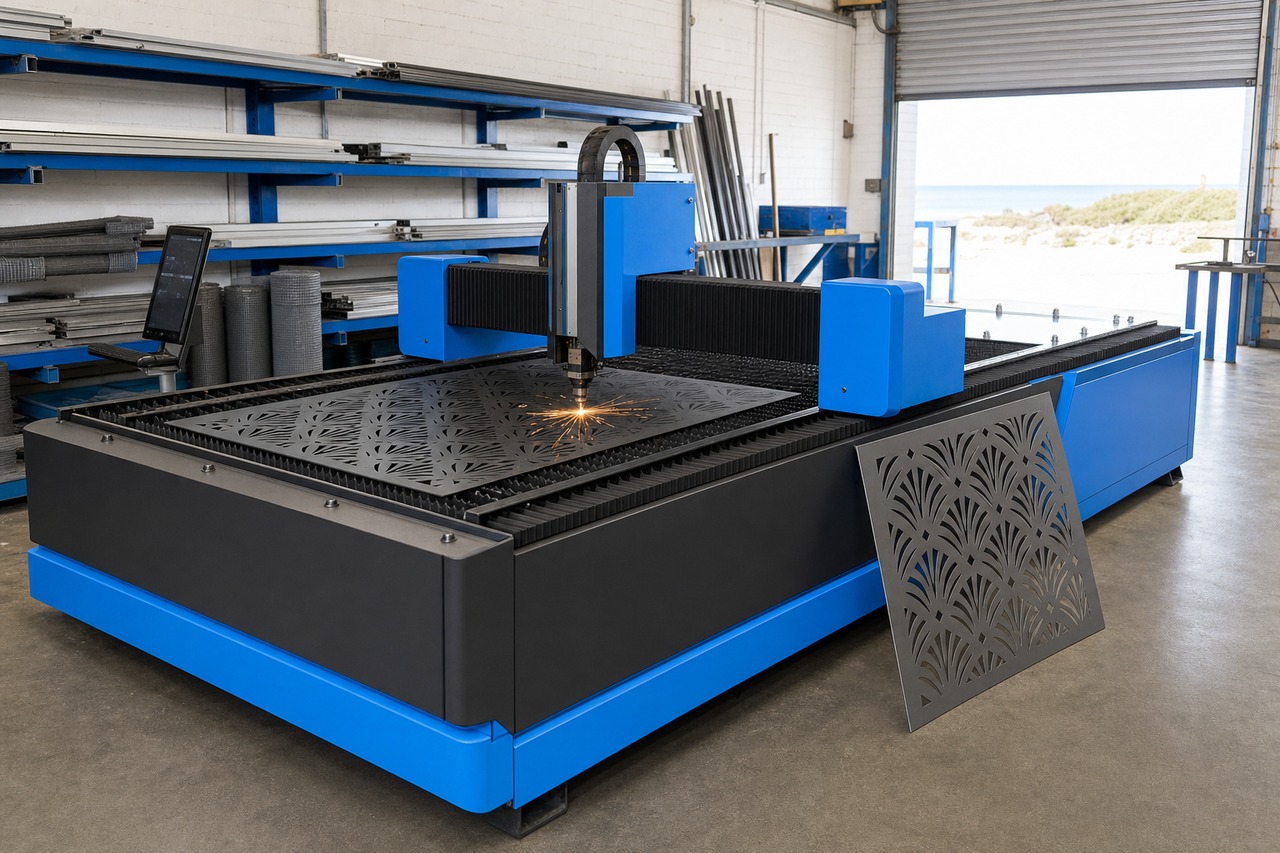
The answer is a patterned steel infill panel: a sheet of steel with a decorative cut-out pattern, set into a proper screen frame. For a long time we couldn't make these panels ourselves. This page explains how we now cut them in our Walmer workshop on a fibre laser cutter from our partner AM.CO.ZA, and what that means when you ask us for a patterned screen.
The problem: custom screens, standard panels
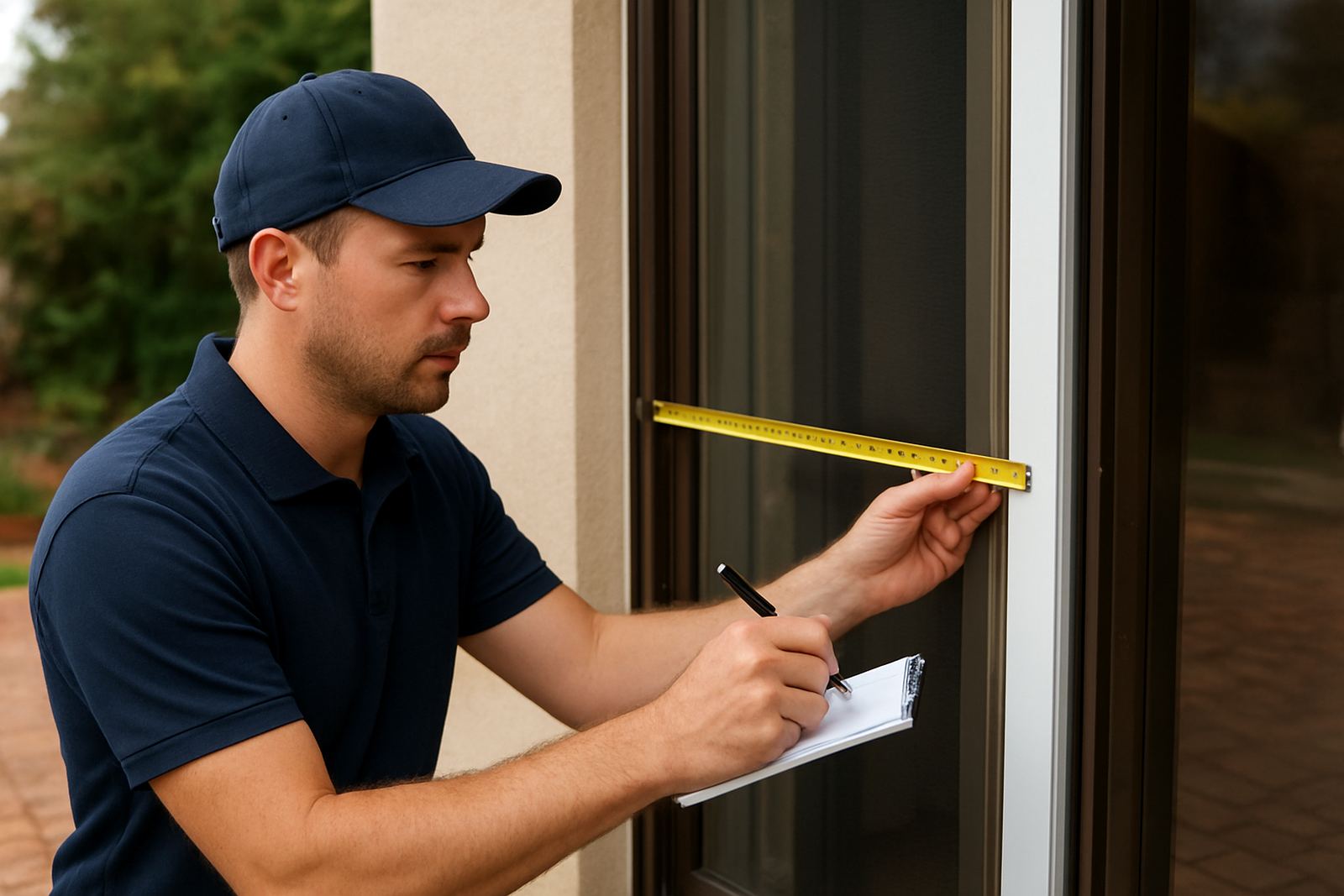
Everything we make starts with a site measurement, and we custom manufacture to the real opening, because a screen that is a few millimetres out will bind, gap or rattle in the wind.
Bought-in patterned panels didn't fit that way of working:
- Fixed sizes. They came in a few standard sizes. On older Walmer homes and commercial frontages the opening is rarely standard, so panels had to be trimmed or packed out with filler strips.
- Waiting on someone else. One late panel could hold up a whole shopfront security screen job, even when the frames were ready.
- No say in the pattern. Clients wanted a pattern that suited the building. We could only offer what the outside cutter had in its library.
The solution: cut the infill ourselves
For thin sheet steel with fine detail and clean edges, fibre laser was the clear choice. AM.CO.ZA's fibre cutter guide puts it simply: fibre is for metal, and their page on what people cut with fibre lasers matched what we had in mind, which was flat sheet parts cut accurately and repeatably.
The machine is the AM.CO.ZA RAYCUT 1530 fibre laser cutter, a barebone flatbed with a Raytools control system and cutting head, paired with a separate 2000W Raycus fibre laser source. Its 1530 × 3050 mm table takes a standard full sheet, so even a wide double door screen or a tall courtyard screen door gets its infill cut in one piece, with no joins across the pattern.
AM.CO.ZA asked what we cut, how thick and how often before suggesting a setup that suits a screen workshop. It has three branches, in Johannesburg, Cape Town and Durban, and day-to-day machine questions go through machinery.support.
How a patterned screen is made now
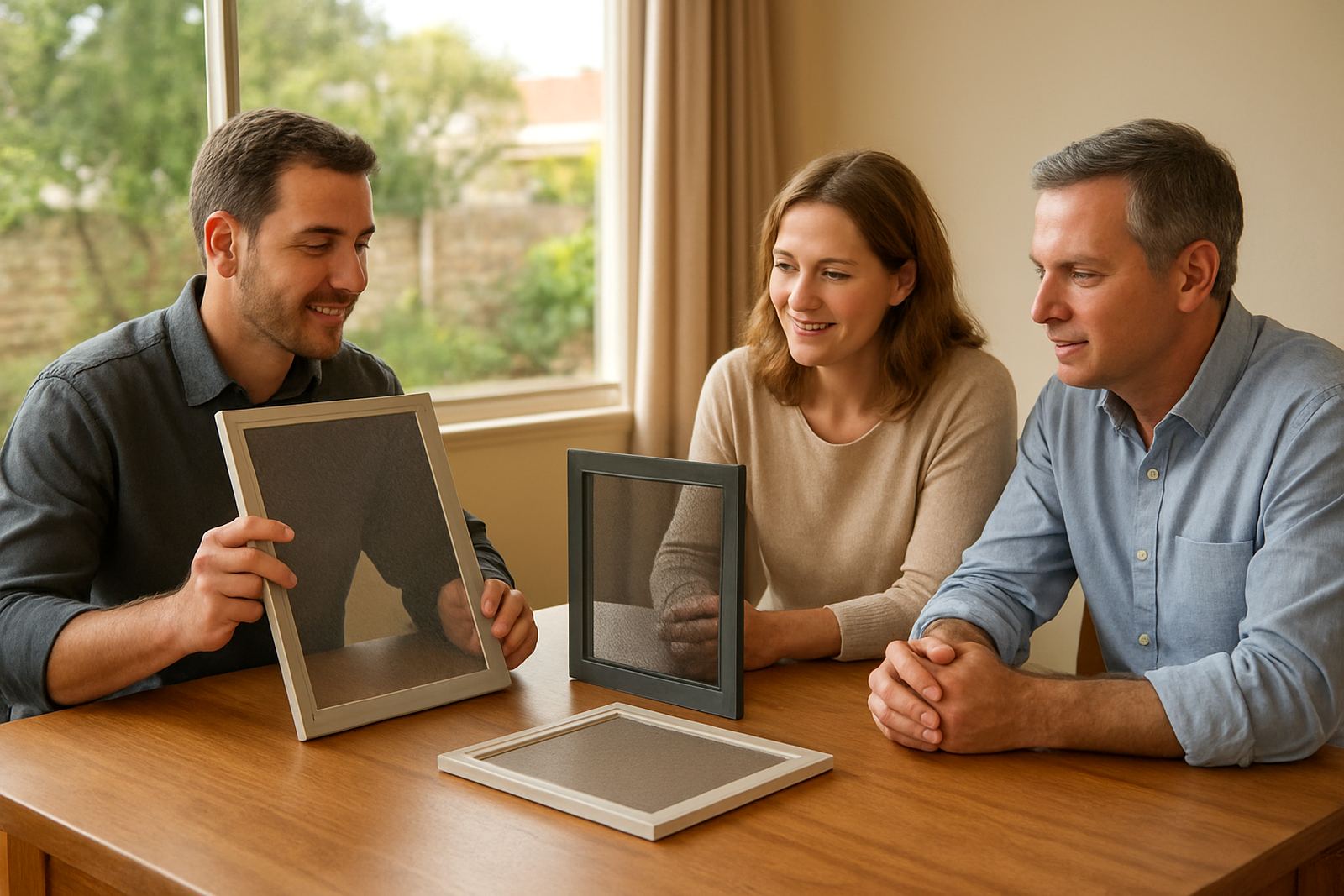
- Measure and consult. During the product consultation we take clients through pattern options, from tighter patterns for privacy to more open ones for light and airflow.
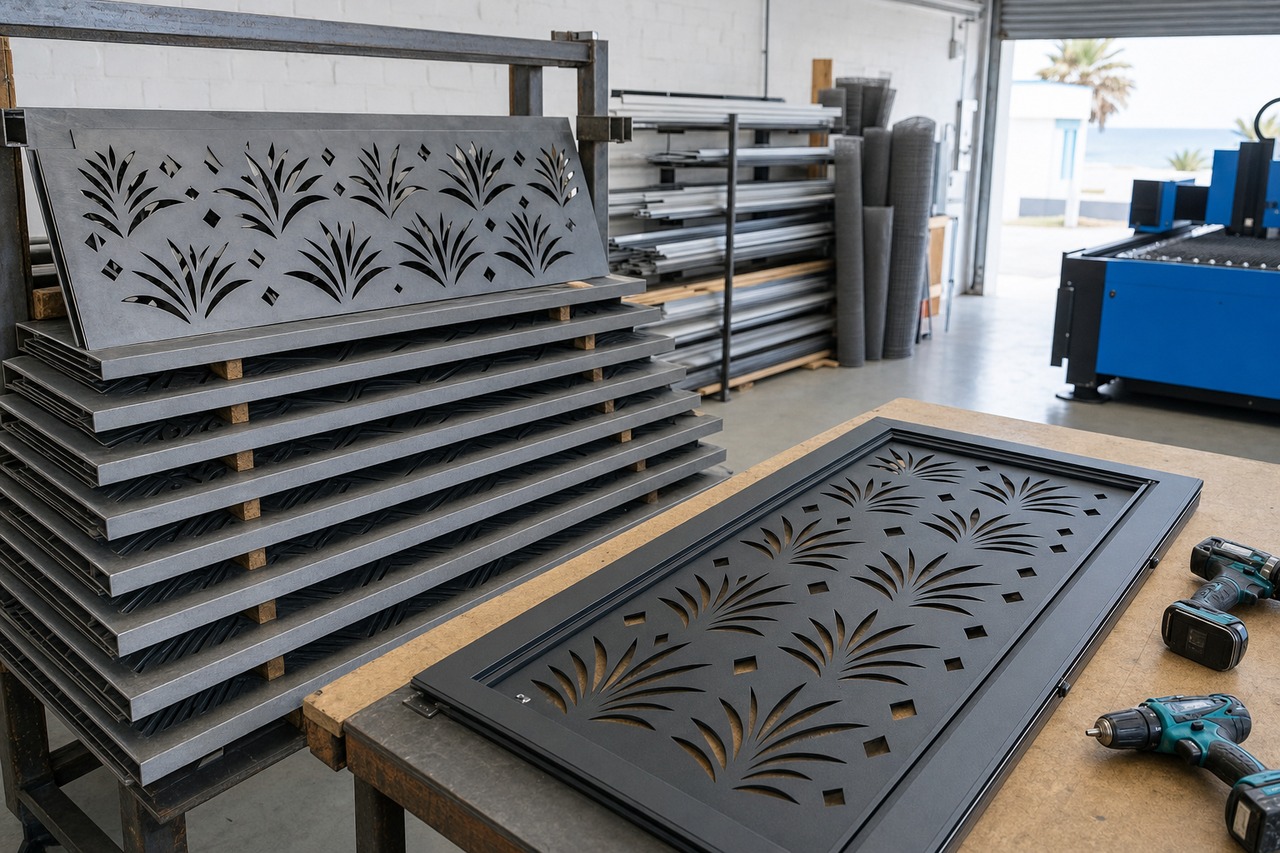
- Fit the pattern to the opening. The pattern is scaled to the measured size. We keep a solid border all round, and solid zones where the hinges, lock and pull handle go, so the hardware fixes into full steel and not into a cut-out.
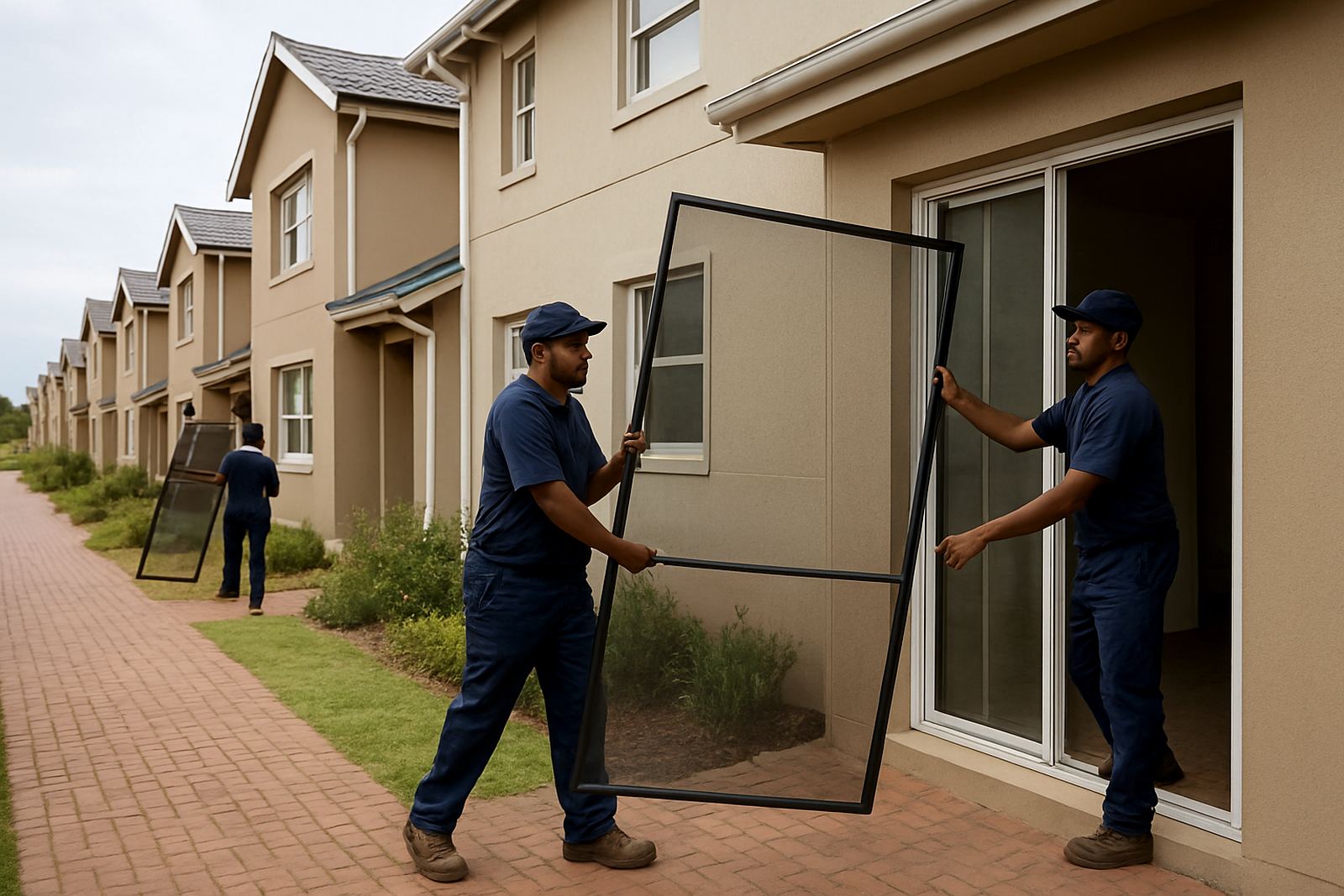
- Cut. Each panel is cut from mild steel sheet on the RAYCUT. Panels are batched by job, so a bulk estate rollout gets the same pattern in every unit.
- Coat for the coast. Cut panels are deburred, then sent for a zinc-rich primer and powder coat. Steel near the sea needs both, which is why we follow our own notes on coastal use and on choosing a frame finish.
- Frame and fit. The coated panel goes into the screen frame in our workshop, and our installers fit it on site like any other screen.
Clients see the pattern drawn to their own opening before anything is cut, which is a much easier conversation than pointing at a catalogue.
What a patterned panel does, and what it doesn't
A cut steel panel is a privacy and security layer. It is not an insect screen: the openings in a decorative pattern are far too big to stop mosquitoes. Where clients want both, we fit fine mesh behind the panel in the same frame. Our note on security versus insect screens explains the difference, and matching screens to your decor helps with choosing a pattern and colour.
Keeping the laser cutting cleanly
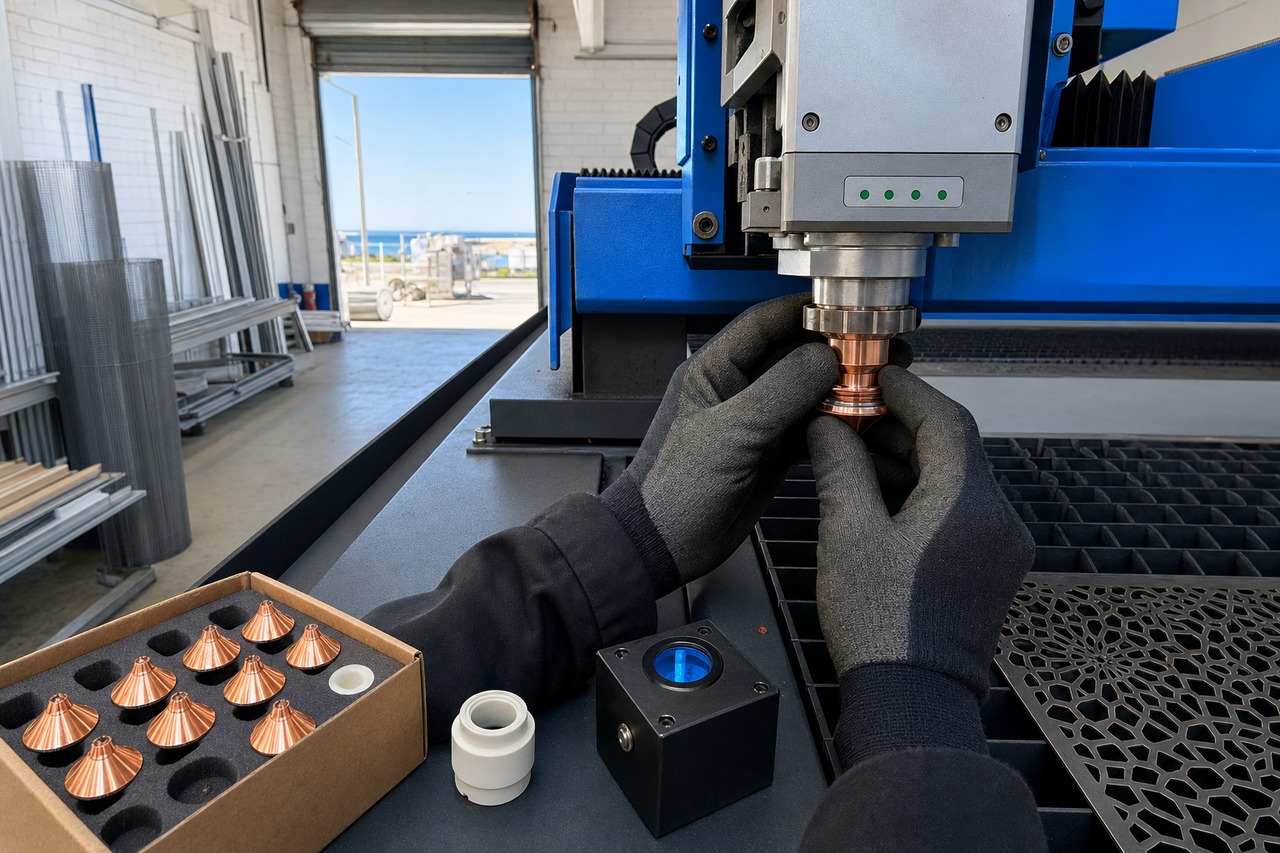
A fibre laser is only as good as its nozzle and optics, so the shelf beside the RAYCUT holds:
- a box of D1.2 double-layer high-speed cutting nozzles for the Raytools cutting head,
- a spare D28 ceramic nozzle holder, because a cracked ceramic ring throws the gas flow off,
- a QBH protection lens for the laser source connection,
- and a Raytools visual beam alignment tool to check that the beam is centred in the nozzle after a change.
AM.CO.ZA's laser shoot adjusting video shows how to centre the beam, and their short on checking RayCut laser lenses is part of our weekly check. When a cut edge starts looking rough, the nozzle or a dirty lens is the first place we look.
Training the workshop team
Along with the hands-on handover, our workshop team is working through the Machine Class at Ambitious Academy, AM.CO.ZA's training academy, which covers how CNC machines work and includes assessments. As we grow our workshop team, we are also looking at the academy's Digital Machine Age programme for school-leavers who want a hands-on start in modern manufacturing.
AM.CO.ZA's video on making a custom braai with a RAYCUT Lite is a different job, but it shows what we see every week: once a shape is drawn, the laser cuts it the same way every time.
Ask us about a patterned screen
If you'd like a security mesh door, courtyard door, privacy panel or shopfront screen with a pattern that suits your building, request a quote and we'll arrange a site measurement. Contractors, architects and estate managers can use our trade enquiries page. Every patterned screen still carries one of our small screen care badges, so you'll always know who to call.