Start With The Building, Not The Sample
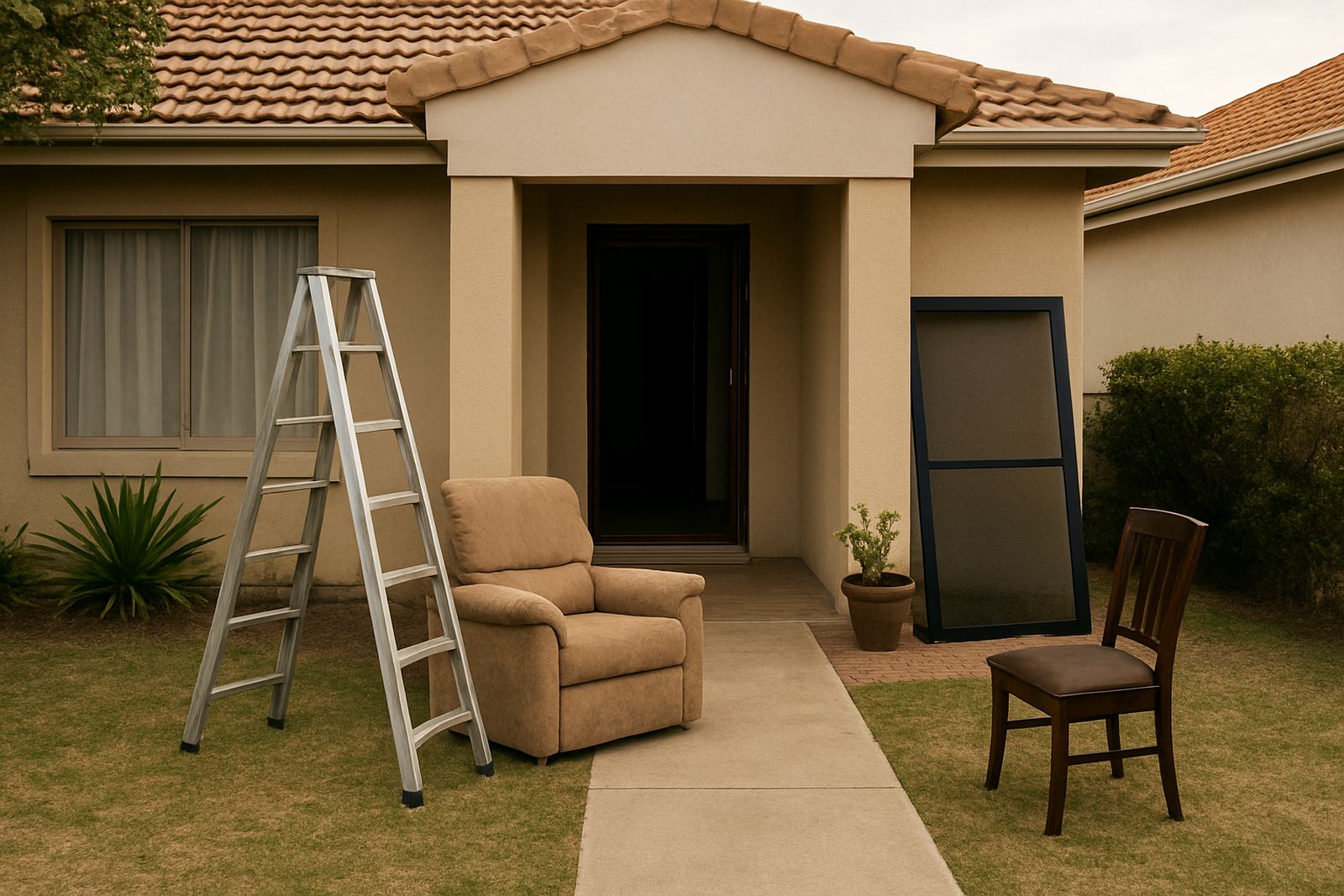
Before choosing a finish, stand back and look at the property as a whole. A frame that suits a modern brick house in Newton Park may look out of place on a heritage style home in St Francis Bay. The safest route is to match the screen finish to the window frames, balustrades, gutters or existing aluminium colours already on site.
For business premises, the finish should support the building image and not fight with signage, shopfront lines or security fittings. In Gqeberha and across the Eastern Cape, many clients choose practical neutrals because they stay neat for longer and are easier to match during future repairs or additions.
- Check the colour of your window and door frames in daylight.
- Look at the roof colour, paving and boundary walls too.
- Decide whether the screen should blend in or stand out slightly for easy spotting.
- Keep a note of any existing powder coated finishes on the property.
Choose A Finish That Handles Coastal Conditions
Coastal humidity and salt in the air can affect exposed metal over time, so the finish matters as much as the colour. In areas near the beachfront, or even a few streets inland, a good quality powder coated frame usually gives better long term appearance than a plain painted surface. It helps with cleaning and gives the frame a more even look.
If the property gets strong sun, darker finishes can show dust and salt marks quicker, while very light colours may show scuffs or dirt from regular use. A mid tone colour often gives the best balance for homes that want lower upkeep. We see this often in Walmer and Summerstrand where clients want neat lines without too much fuss.
For high traffic commercial sites, choose a finish that can handle repeated opening, closing and cleaning. If there is frequent load-shedding and doors are being used more to control airflow, it is worth choosing a finish that will still look good after regular handling and a bit of wear.
Match Frame Colour To Glass, Walls And Hardware
The best finish is usually the one that ties everything together. If the windows are white and the walls are light coloured, a white or soft silver frame often works well. If the property has charcoal window lines, darker screen frames can disappear visually and keep the focus on the building. That is often preferred for newer homes and offices.
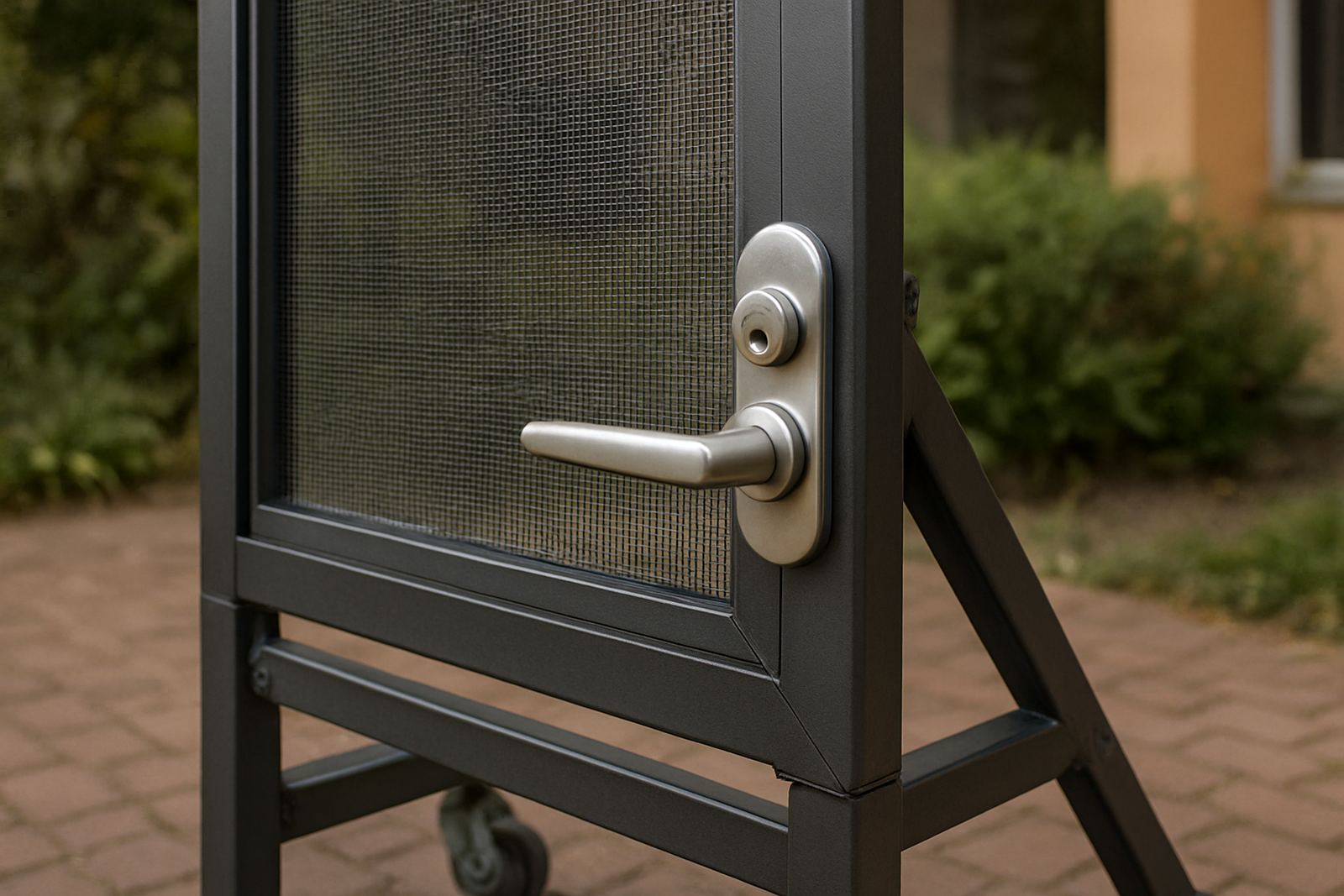
Hardware should also be considered. Handles, locks, hinges and retaining parts do not have to match exactly, but they should not clash. A neat finish on the frame can be let down by shiny fittings that look out of place, so it is worth checking the whole assembly before confirming the order.
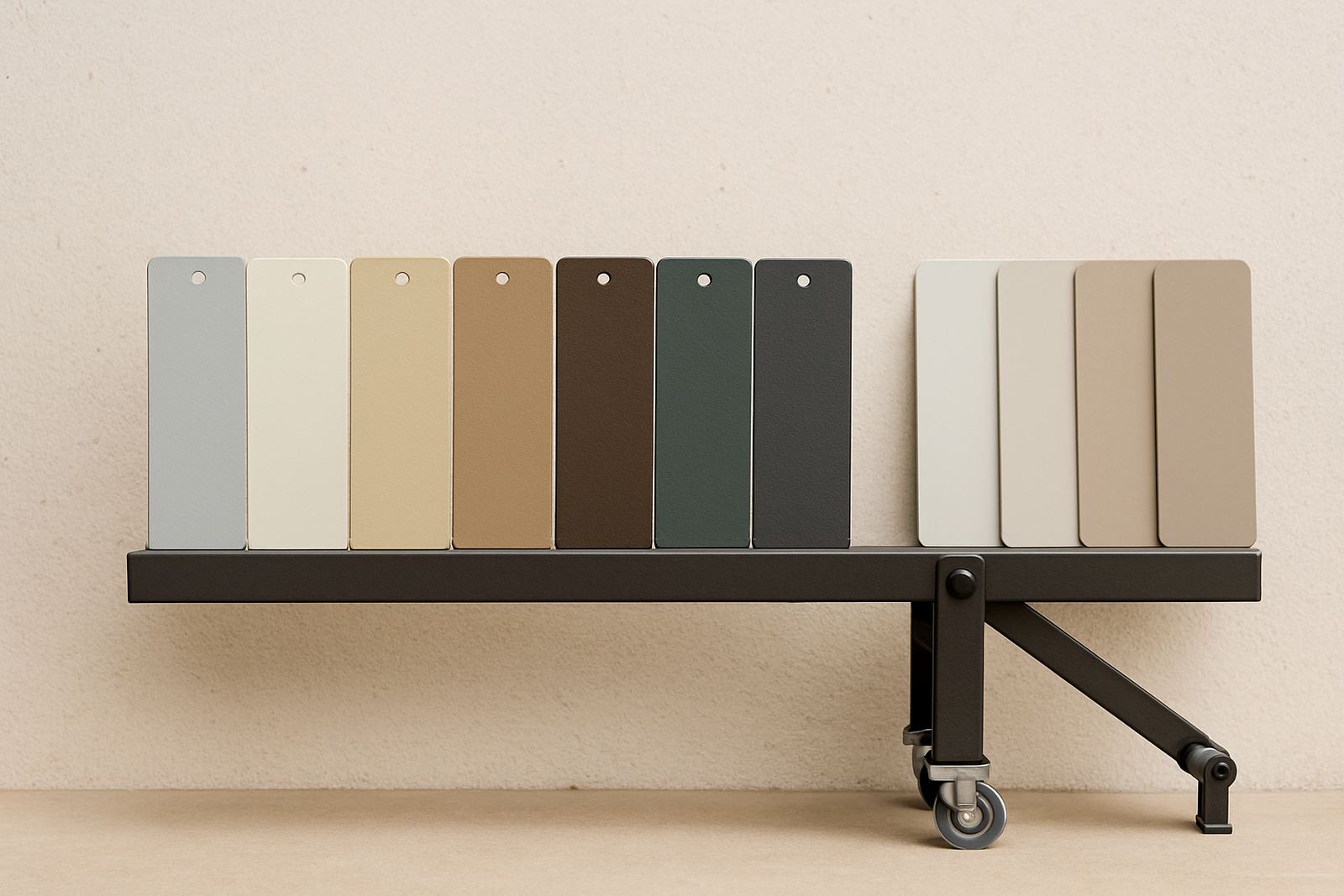
- White or cream suits many traditional homes.
- Grey or charcoal suits modern finishes and darker window lines.
- Bronze or brown tones can work well with warm brick and timber details.
- Light neutral shades are often better for hot, sunny areas.
Think About The Room And How It Is Used
Different rooms need different thinking. A kitchen screen may sit close to food prep areas, so a clean, simple colour is often best. Bedrooms usually call for a quieter finish that does not draw attention. Living rooms and enclosed patios often benefit from a finish that blends with the main frame colour so the view stays open.
On commercial sites, the use of the space matters too. A school, medical practice or estate entrance may need a practical finish that stays tidy under heavy use. A retail frontage may prefer a darker shade to hide handling marks and keep the look consistent through the day. The point is not only colour, but how the finish behaves in real life.
For shading systems, the frame finish can also affect the feel of the room. A lighter finish reflects less visual weight, while a dark finish can make a large opening feel more defined. It is a small detail, yet it changes how the room settles once the product is installed.
Use This Simple Selection Checklist
If you are unsure where to start, use a short checklist before site measurements are done. It saves time and helps avoid a finish that looks fine on a sample but wrong on the actual property. Bring together a few photos, look at the light in the morning and afternoon, then narrow the options to two or three likely colours.
- Is the property coastal, inland or exposed to strong sun?
- Are the existing frames light, dark or mixed?
- Do you want the screen to blend in or be more visible?
- Will the area be cleaned often?
- Is this for a home, estate, shopfront or office?
- Do any municipal or estate rules require a specific appearance?
Once those points are clear, the final choice is usually much easier. In many cases a practical neutral finish is the best starting point, then the exact shade is adjusted to suit the site and the product type. A good consultation will sort that out without overcomplicating things.
Confirm Samples, Measure Properly And Plan For Aftercare
Before manufacture, always confirm the finish against the real setting where possible. Small samples can look different in bright coastal sun compared with indoor light. If the property has strong colour contrasts, check the sample against the wall and frame, not only against paper or a catalogue sheet.
Proper site measurements also matter because a well chosen finish still needs a neat fit. If the frame is too tight or the surrounding surface is uneven, the final look can be spoiled no matter how good the colour is. That is why measuring, consultation and manufacture should be handled together, not as separate guesswork. It also avoids unnecessary return visits, which nobody wants.
Aftercare is part of the decision too. Choose a finish that can be wiped down with mild soap and water. For homes near the sea, a quick rinse now and then helps keep the frames looking tidy. For businesses, seasonal checkups can pick up loose fixings, track wear or surface marks before they become a bigger issue.