Built for wider openings that get used every day
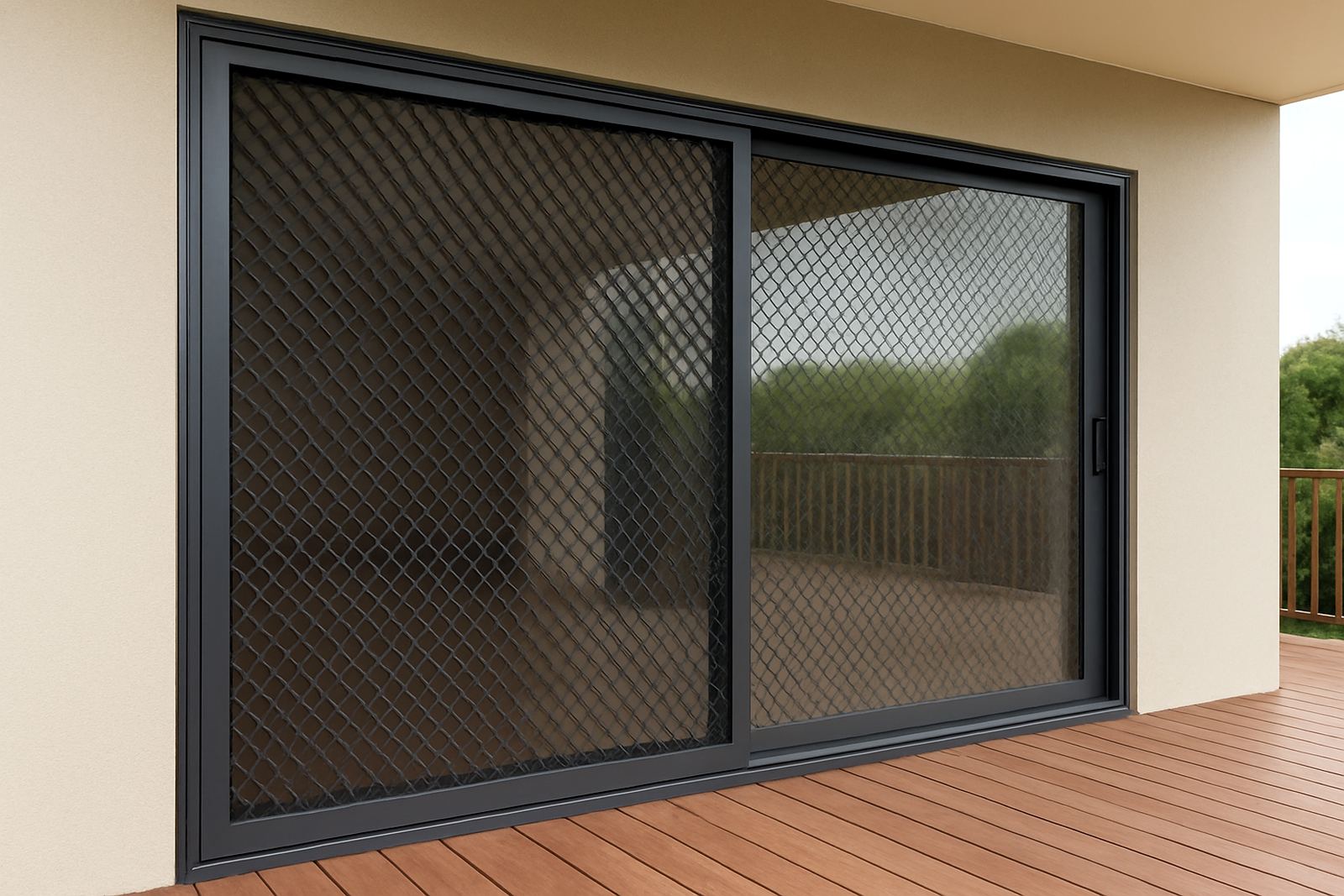
A security sliding screen is made for larger glazed openings where a hinged door would be awkward or where you want the screen to glide clear for regular access. It is commonly fitted to sliding patio doors, stacker doors, enclosed braai areas and office openings that need fresh air without leaving the property exposed.
The frame and mesh are selected for repeated use, so the screen can handle family traffic, staff movement and the stop start wear that comes with busy homes or small business premises. In coastal areas like Gqeberha, Walmer and Summerstrand, it also helps reduce the usual corrosion issues that come from salt in the air when the correct materials are specified from the start.
What you get in the standard security sliding build
The most common setup uses an aluminium frame, reinforced corners, a lockable sliding arrangement and a security grade mesh. The screen is custom made to your opening so the tracks, rollers and clearance are matched to the site rather than forced into a stock size. That matters when the opening is slightly out of square, which happens often in older homes in Newton Park and Uitenhage.
- Custom made width and height to suit the opening
- Single or double sliding panels, depending on the span
- Security mesh options for added resistance and visibility
- Locking hardware fitted to the required access side
- Low profile tracks for neat movement and easier cleaning
- Colour options to suit the window or door frames
For many clients, the appeal is that the screen looks tidy from inside and outside, while still giving a stronger barrier than a light household screen. It is a practical choice where children, tenants or staff use the opening frequently and the screen must stay aligned over time.
Sizes, opening types and finish choices
Security sliding screens are normally made to order from the site measurement. They can suit a single opening or a wider span with multiple panels. In larger homes and commercial spaces, we often see openings around 900 mm to 3 000 mm wide, but the actual size depends on the track layout, the door system and the clearance available. Height is also confirmed on site because floor levels and paving slopes can affect the final fit.
Finish choice matters in coastal towns and in busy commercial areas. A powder coated frame can help the screen blend with existing aluminium frames, while a more discreet mesh is preferred where outward visibility is important. If you are near the sea in Jeffreys Bay or St Francis Bay, it is worth checking the hardware selection closely so moving parts are specified for humid air and salt exposure.
- Ideal for patio doors, stacker doors and wide shop or office entries
- Single panel for narrower spans, dual panel for wider spans
- Mesh density can be matched to airflow and visibility needs
- Frame colour matched where possible to existing openings
- Bottom track and threshold options depend on floor finish
Where this screen suits best in Gqeberha and beyond
This product suits homes that need everyday access to a garden, pool area or courtyard without leaving the opening exposed. It also works well in small commercial settings where doors are opened often and a neat, sliding security screen is easier to live with than a fixed barrier. In estate environments, it can be a sensible fit because the screen can be specified to comply with site rules on finish and appearance.
We often supply these screens for houses in Walmer, Summerstrand and Newton Park, as well as properties in Despatch, Uitenhage and Jeffreys Bay that need a more practical solution for larger doorways. On coastal properties, the screen is also useful when windows and doors stay open for ventilation during hot spells, but owners still want a proper layer of protection at night.
If you rely on power for cooling or use gas appliances near the opening, the screen does not need power or gas to operate. It works mechanically, so load shedding has no effect on how the screen moves or locks. That makes it a straightforward option for homes that want a bit more control when the lights go off and doors need to stay secure.
Installation matters more than people think
For best results, the opening should be measured carefully and checked for square, sill level and available mounting depth. A sliding security screen is only as good as its track line and fixing points, so the installation needs proper anchoring into sound substrate, not just light cladding. Where existing doors are uneven or the threshold is worn, the fit may need small adjustments before manufacture.
Our team handles site measurements, product consultation, custom manufacture and installation across the Eastern Cape. A tidy install means the screen travels properly, the lock lines up and the user does not have to lift or drag the panel each time. That is especially important in homes where the screen will be used many times a day, or in business premises where staff need quick access without fuss.
- Check sill height and track clearance before ordering
- Confirm whether the opening is for left hand or right hand access
- Allow for existing handles, hinges or door furniture nearby
- Note any security gates, burglar bars or nearby fixtures
- Tell us if the opening is exposed to strong wind off the coast
Care, servicing and long term use
A security sliding screen needs basic care to keep running properly. Dust, sand and salt can collect in the bottom track, especially in coastal suburbs, so a regular wipe down and light clean helps prevent stiffness. The mesh should be checked for dents or pulled points, and the rollers and locks should be tested now and then so any wear can be picked up early. It is a simple thing, but it prevents bigger repairs later.
We offer screen repairs, mesh replacement, track servicing, hardware replacement and seasonal checkups. That is useful for property owners who want the screen kept in good order without waiting for it to seize up. If the panel starts to stick, rattle or sit out of line, it is usually a sign that the track needs cleaning, the rollers need attention or the frame has taken a knock.
For estates and businesses with several openings, regular aftercare can be scheduled so each screen is checked before peak use seasons. That is handy before holidays, winter rentals or summer trading periods when doors are opened more often and security has to stay consistent.
What to confirm before ordering a security sliding screen
Before ordering, it helps to have a clear picture of how the opening is used and what the site conditions are. A few details up front can save time and make the finished screen fit the job better. If you are unsure, we can talk through the options during the product consultation and then measure the opening on site.
- Exact opening width and height, including any uneven floor levels
- Whether the screen must slide left, right or from both sides
- Required level of security, airflow and visibility
- Colour match needs for the frame and hardware
- Exposure to coastal air, direct sun or strong wind
- Any estate, body corporate or municipal appearance rules
It also helps to check whether the door is used by children, tenants, staff or frequent visitors, because that affects the best lock position and handle style. For larger spans, we may recommend a specific panel arrangement so the screen stays practical day to day. Done properly, the screen fits the opening, feels smooth in use, and gives a cleaner finish than a one size fits all solution.
Key facts
| Product type | Custom security sliding screen |
|---|---|
| Typical use | Wide glazed openings, patios, stacker doors and commercial entries |
| Frame material | Powder coated aluminium |
| Mesh options | Security grade mesh with visible airflow |
| Common opening range | About 900 mm to 3 000 mm wide, subject to site measurement |
| Servicing | Track cleaning, roller adjustment, mesh replacement and hardware repair |