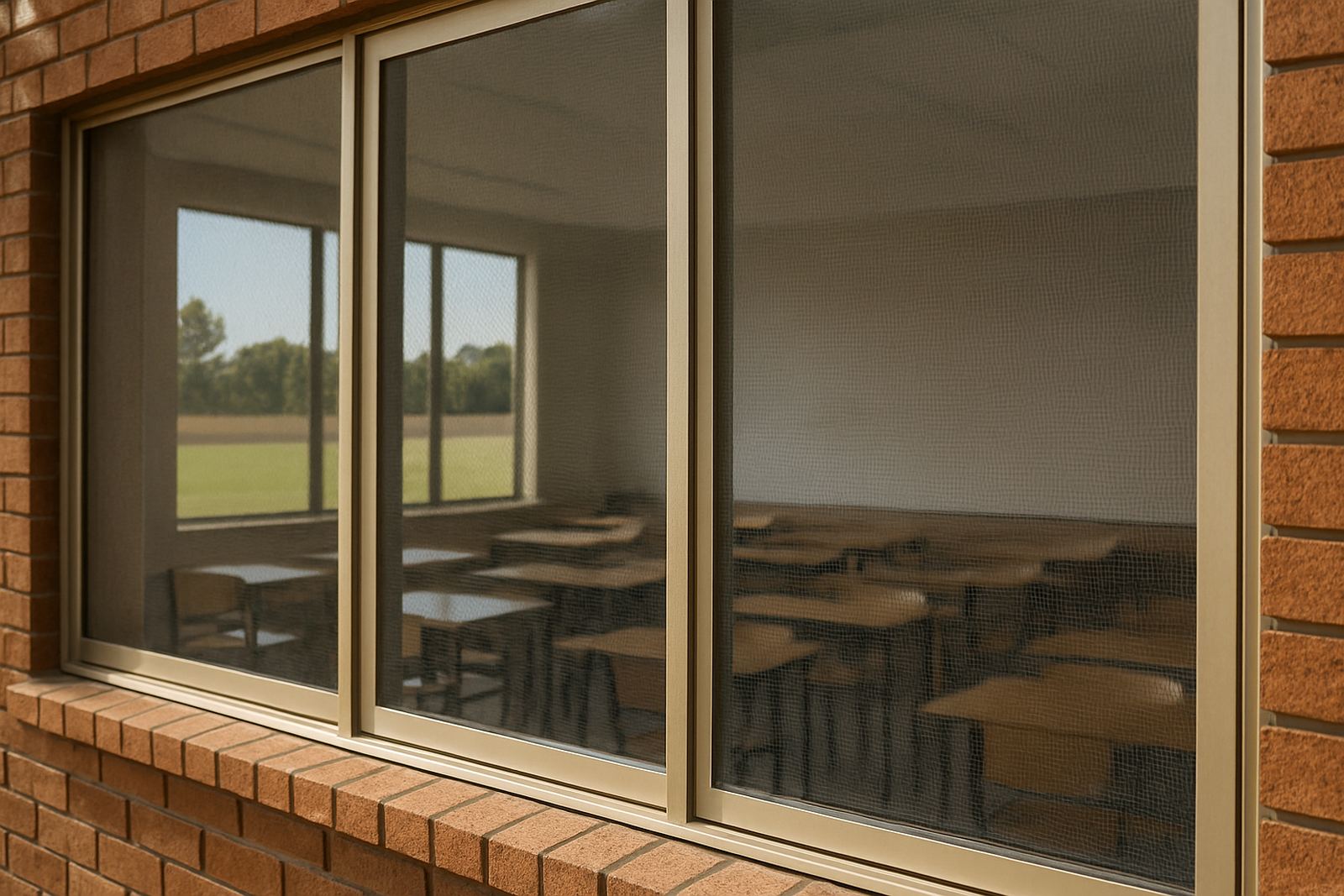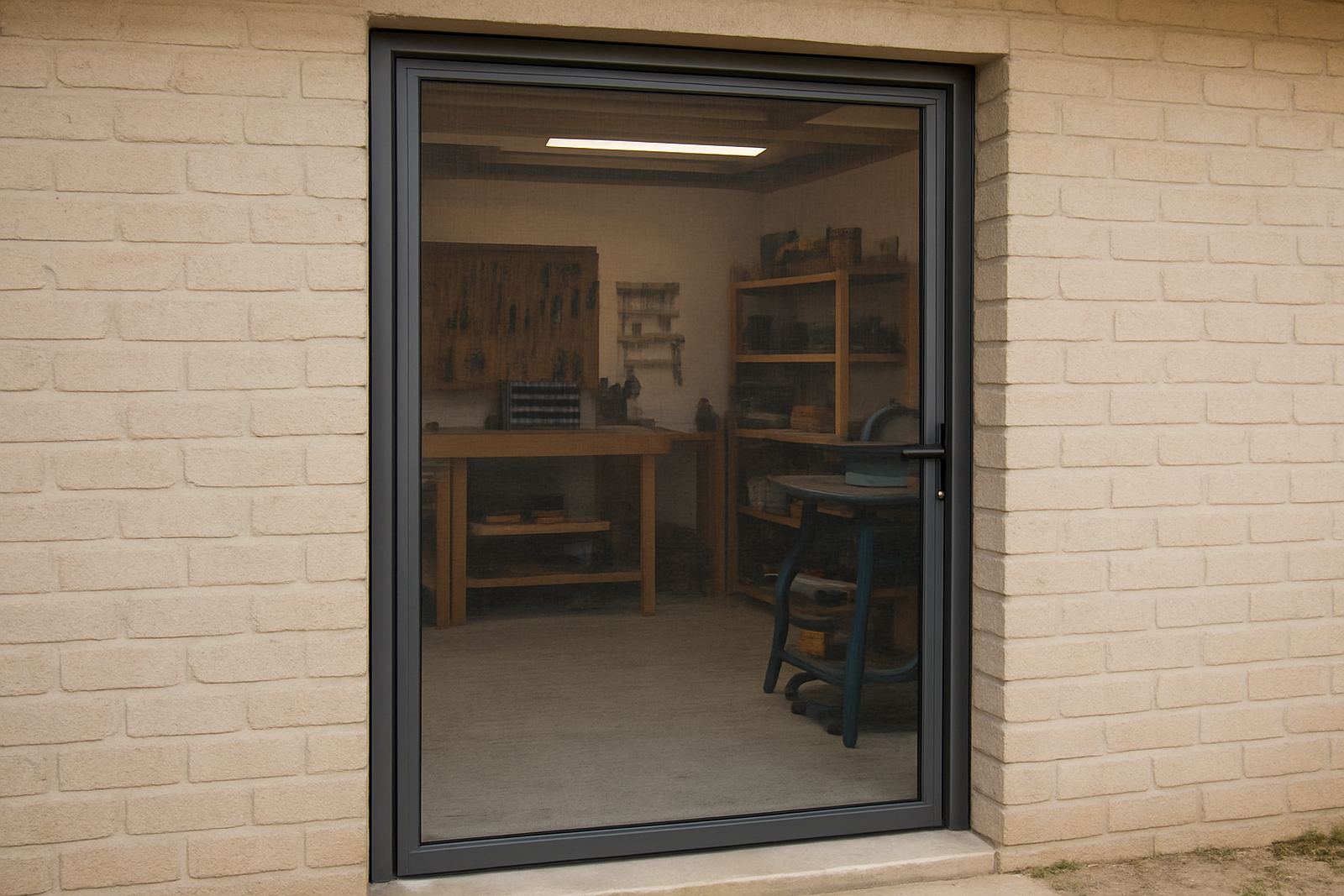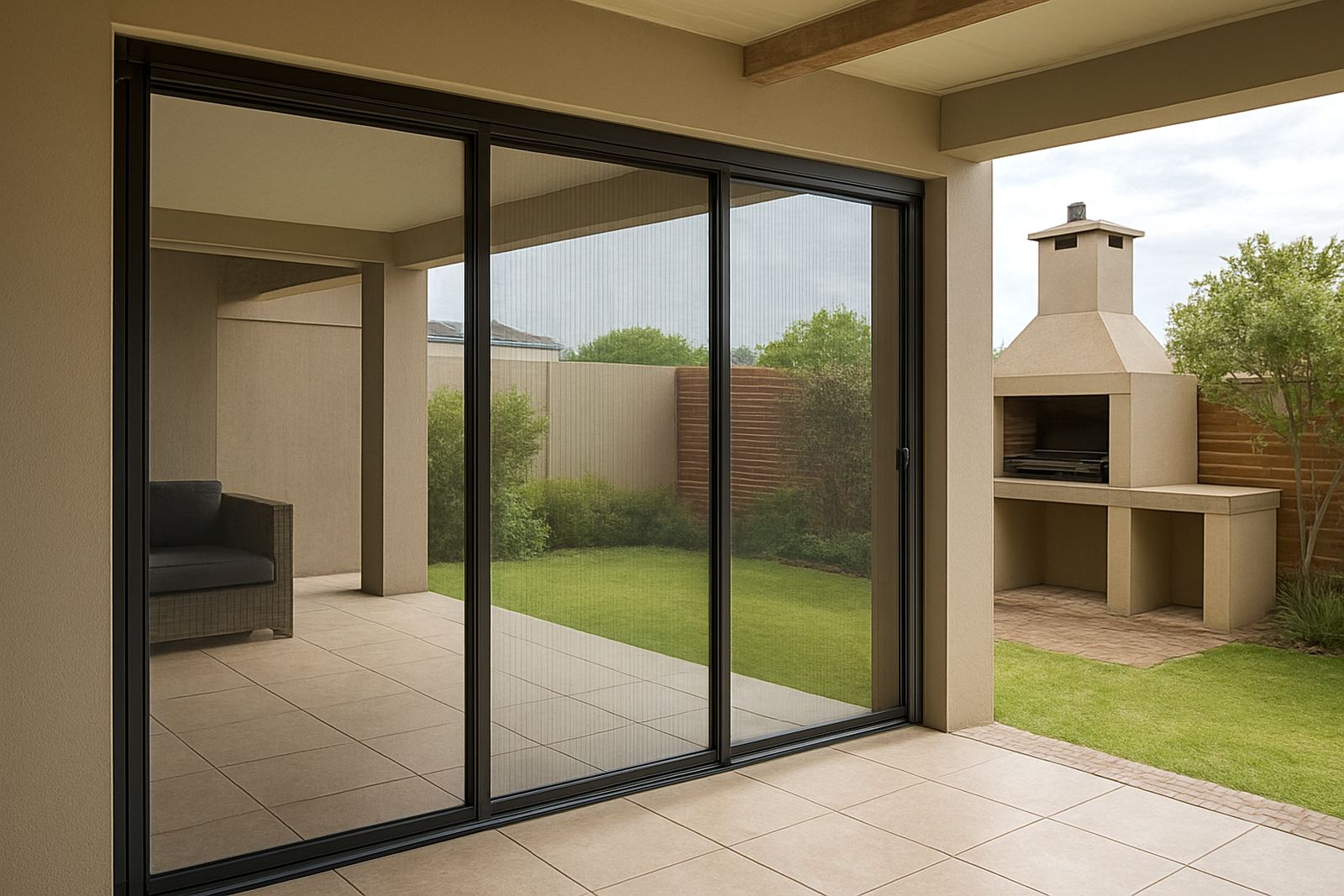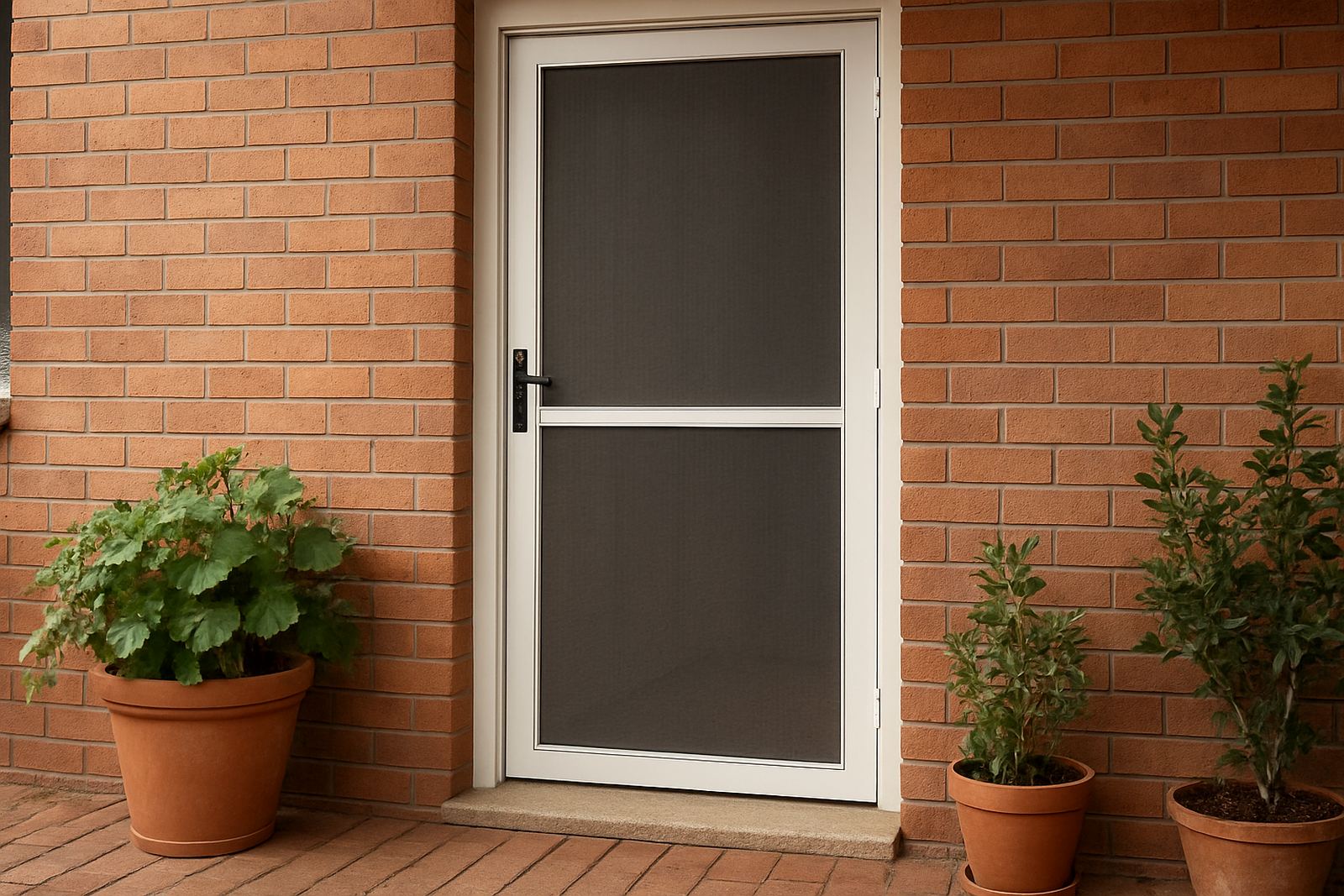
What a hinged door screen does in daily use
A hinged door screen is fitted to the frame and opens like a normal door, so you can walk through without lifting or sliding panels. It is often chosen for front doors, kitchen doors, back stoep doors and patio entries where there is regular foot traffic. The mesh is sized to allow airflow while reducing insect entry, which helps in warmer months and in coastal areas where flies can be a problem after rain. It also suits homes that keep doors open during load-shedding, when natural airflow is the easiest way to stay comfortable.
For businesses in Gqeberha, Walmer, Summerstrand and Newton Park, a hinged screen can help keep entrances open for ventilation while maintaining a tidy appearance. It is a sensible fit for offices, reception areas, cafés and small shops that want a cleaner, more controlled entry point. The door can be made to suit the opening and the way people move through the space, so it feels natural in daily use, not awkward or heavy.
Sizes, frame options and mesh choices
Every opening is measured on site before manufacture, because even small differences in wall plumb, tile thickness or a warped timber frame can affect the final fit. A hinged screen can be made as a single leaf or as a pair for wider openings. Common widths range from about 700 mm to 1 200 mm per leaf, with custom sizes available for older homes, townhouses and commercial entrances. Heights are usually matched to the existing door, including taller units where needed.
- Aluminium frame in standard powder-coated colours to suit the property
- Fine insect mesh for everyday fly control
- Tougher mesh options for homes that want extra resistance to pets and regular use
- Choice of left-hand or right-hand opening
- Self-closing or manual latch options depending on the doorway and traffic
In humid coastal areas, aluminium and quality fixings are important because they handle salt air better than plain steel. The right mesh choice also depends on how the door is used. A family kitchen door may need one thing, while a rental unit or shop entrance may need something a bit firmer and easier to clean.
Where a hinged screen works best in the Eastern Cape
This screen suits many property types across Gqeberha and the Eastern Cape, from older homes in Walmer to newer builds in Jeffreys Bay and St Francis Bay. It is especially useful where the opening is used many times a day and where you do not want to deal with a sliding track on the floor. Because the door swings clear, it can be a good choice for tiled thresholds, uneven paving and entries where dirt and sand would quickly build up in a track.
It also works well in commercial settings that need a simple, reliable barrier without blocking visibility. A hinged screen can help with ventilation in staff areas, storerooms and customer-facing entrances, while still allowing easy access. For estate rollouts, consistency matters, so one style can be repeated across several units with the same finish and hardware. That keeps maintenance simpler over time.
- Front entrances and back doors
- Kitchen exits and laundry doors
- Stoep and patio openings
- Office and reception access points
- Rental properties and sectional title units
Installation details, power use and gas appliances
Hinged screen doors do not need power, and they do not use gas. They are purely a physical barrier and airflow solution, which makes them useful during load-shedding and in areas where you want a low-maintenance way to keep insects out. Installation starts with a site measurement and a check of the frame, hinges and landing area. The installer looks for uneven plaster, security gates, light fittings nearby and any obstacles that could affect the swing.
If a doorway is close to a gas stove, outdoor braai area or utility zone, the screen should be placed so it does not interfere with safe movement or ventilation. In homes with existing security gates, the opening sequence is checked carefully so the two doors do not clash. On coastal properties, stainless or corrosion-resistant hardware is recommended where possible, because salty air can shorten the life of ordinary fittings. A proper fit matters here, because even a few millimetres off can cause rubbing and make the door feel wrong after a few weeks.
Care, servicing and repairs over time
A hinged screen is easy to keep in good condition if it is checked now and then. Wash the mesh and frame with mild soapy water and a soft cloth, then rinse and dry. Avoid harsh chemicals, abrasive scourers and high-pressure washing, as these can loosen fittings or mark the finish. In coastal homes around Gqeberha, regular cleaning is a good habit because salt and dust can build up quicker than expected.
Service checks can include hinge adjustment, latch replacement, closer tuning, mesh tensioning and hardware replacement if a component starts to wear. If the screen begins to scrape, close poorly or rattle in wind, that usually means it needs attention rather than replacement. Screen repairs and mesh replacement are often straightforward if the frame is still sound. A seasonal checkup before summer is a practical idea, especially in areas where insects come through quickly after warm rain.
- Check that the door closes fully without dragging
- Look for loose screws, worn hinges or a weak latch
- Inspect the mesh for tears, dents or sagging
- Confirm that the frame sits square in the opening
- Clean away dust, coastal salt and spiderwebs regularly
What to check before you order
Before ordering, it helps to know how the door will be used. Measure the opening width and height, note which way the door should swing, and check whether there is enough clearance for the arc of the door to open properly. If the entry has a security gate, a narrow passage or a step immediately behind it, those details must be taken into account. The more precise the information, the better the fit and the neater the final result.
You should also decide whether you want the screen to be more discreet or more visible, and whether you need stronger hardware for a busy household or commercial entry. In coastal suburbs and estate environments, colour matching and neat finishing matter as much as function. If you are unsure, a product consultation and site measurement can settle the details before manufacture starts. That usually saves time later and avoids unnecessary adjustments on install day.
- Opening size and wall depth
- Left-hand or right-hand hinge side
- Frequency of use
- Security gate clearance
- Exposure to wind, salt air or direct sun
- Need for pet resistance or easy cleaning
Key facts
| Product type | Custom hinged swing screen door |
|---|---|
| Frame material | Powder-coated aluminium |
| Mesh | Fine insect mesh with optional tougher mesh |
| Opening styles | Single leaf or double leaf |
| Typical use | Homes, shops, offices, patios and entrances |
| Service support | Measurements, repairs, mesh replacement and aftercare |