A tidy retractable screen for doors you use every day
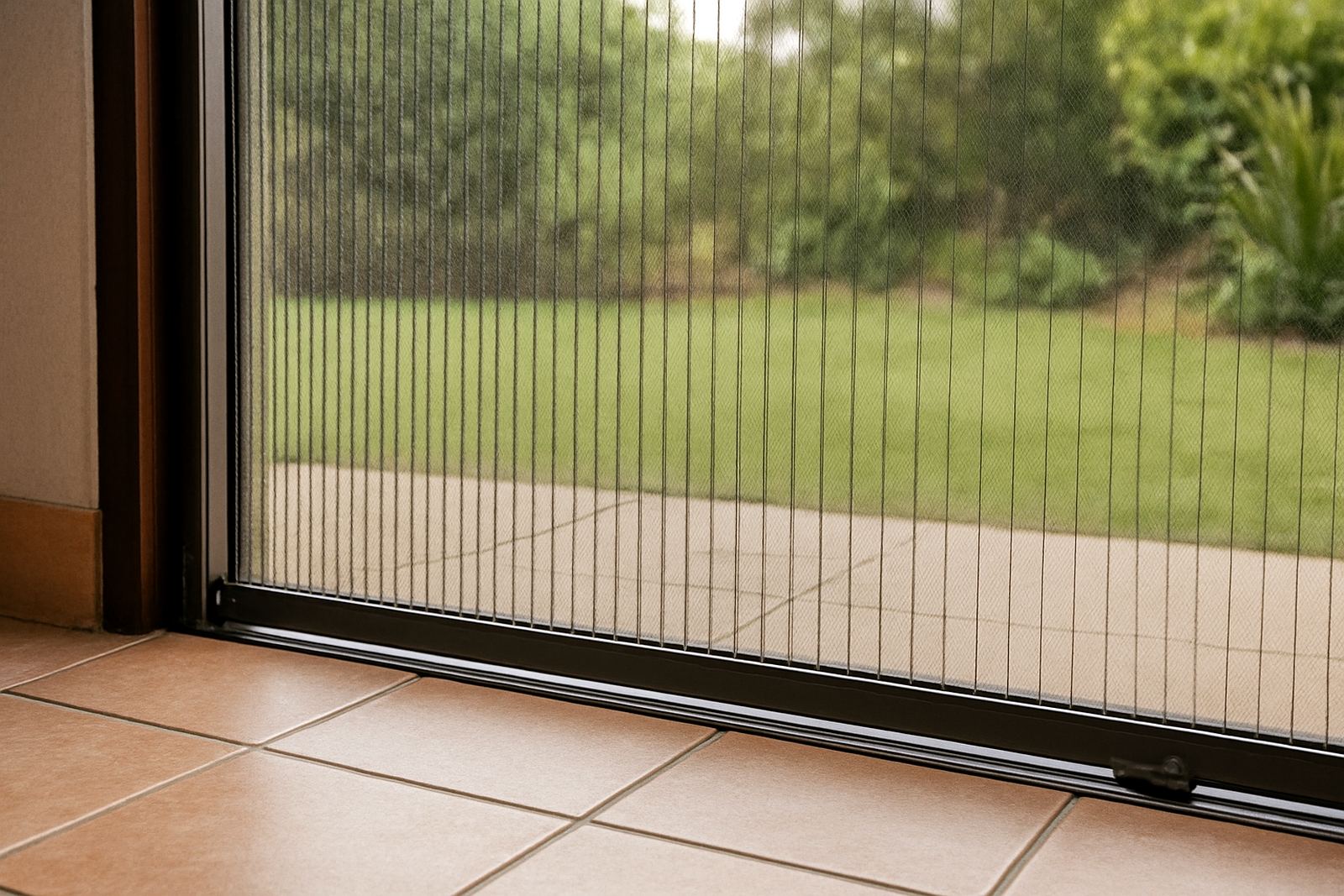
The pleated door screen is a practical insect barrier made for openings where you want airflow, light and easy passage. It folds neatly back into its side frame when not in use, so the doorway stays open and uncluttered. This makes it a good fit for patio doors, hinged back doors and larger openings where a fixed fly screen would get in the way.
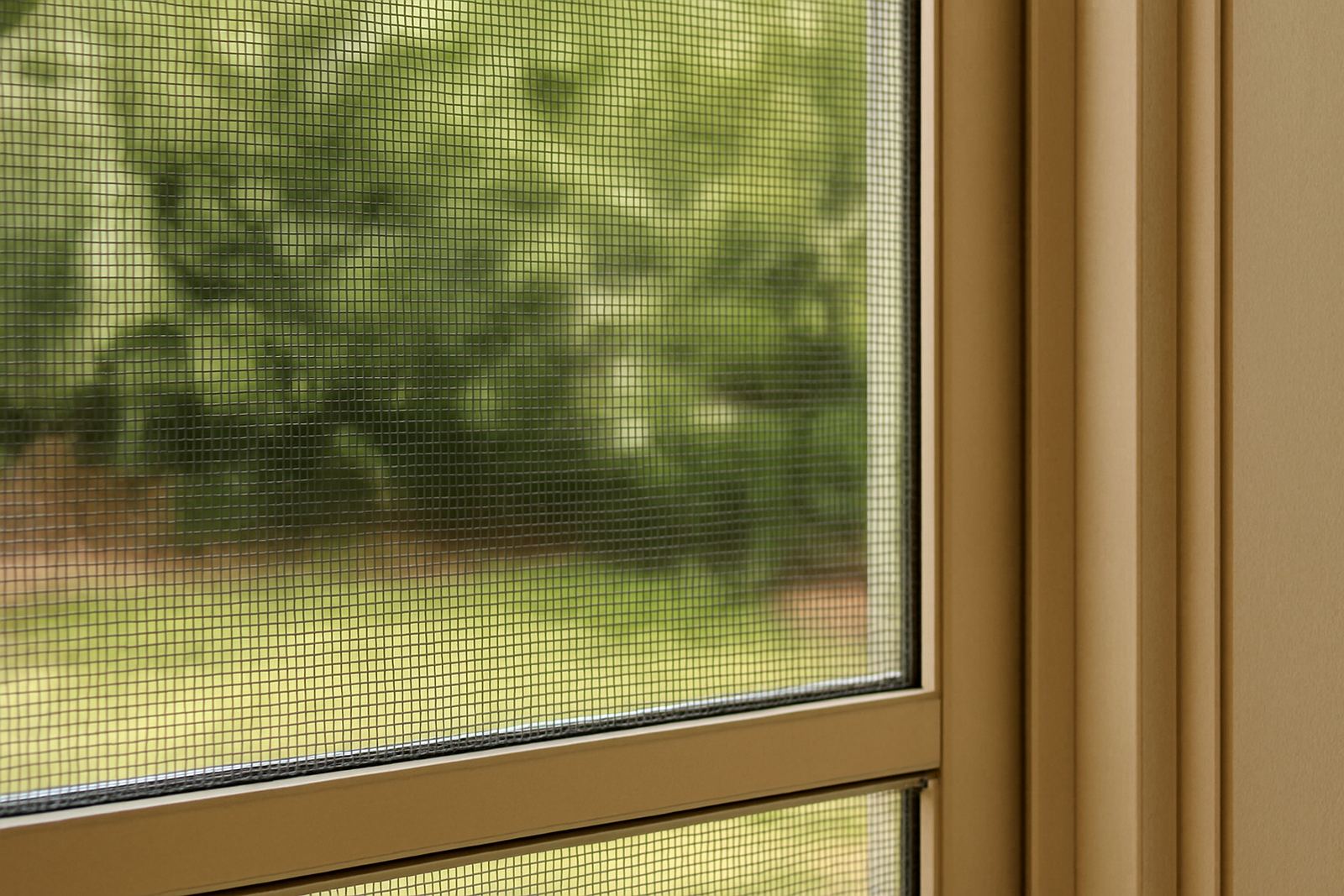
The pleated mesh sits in a slim aluminium frame and moves smoothly across the opening on a guided track. Because the mesh pleats rather than rolling into a tube, it works well on wider spans and gives a clean look at the door line. In homes around Walmer, Summerstrand and St Francis Bay, it is often chosen where sea air and insects are both part of daily life.
It is also a solid choice for holiday homes and rental properties where ease of use matters. Guests do not need instruction to open or close it and there is no motor, battery or wiring to maintain. Once fitted correctly, it becomes part of the doorway and can be used many times a day without fuss.
Where pleated door screens suit best
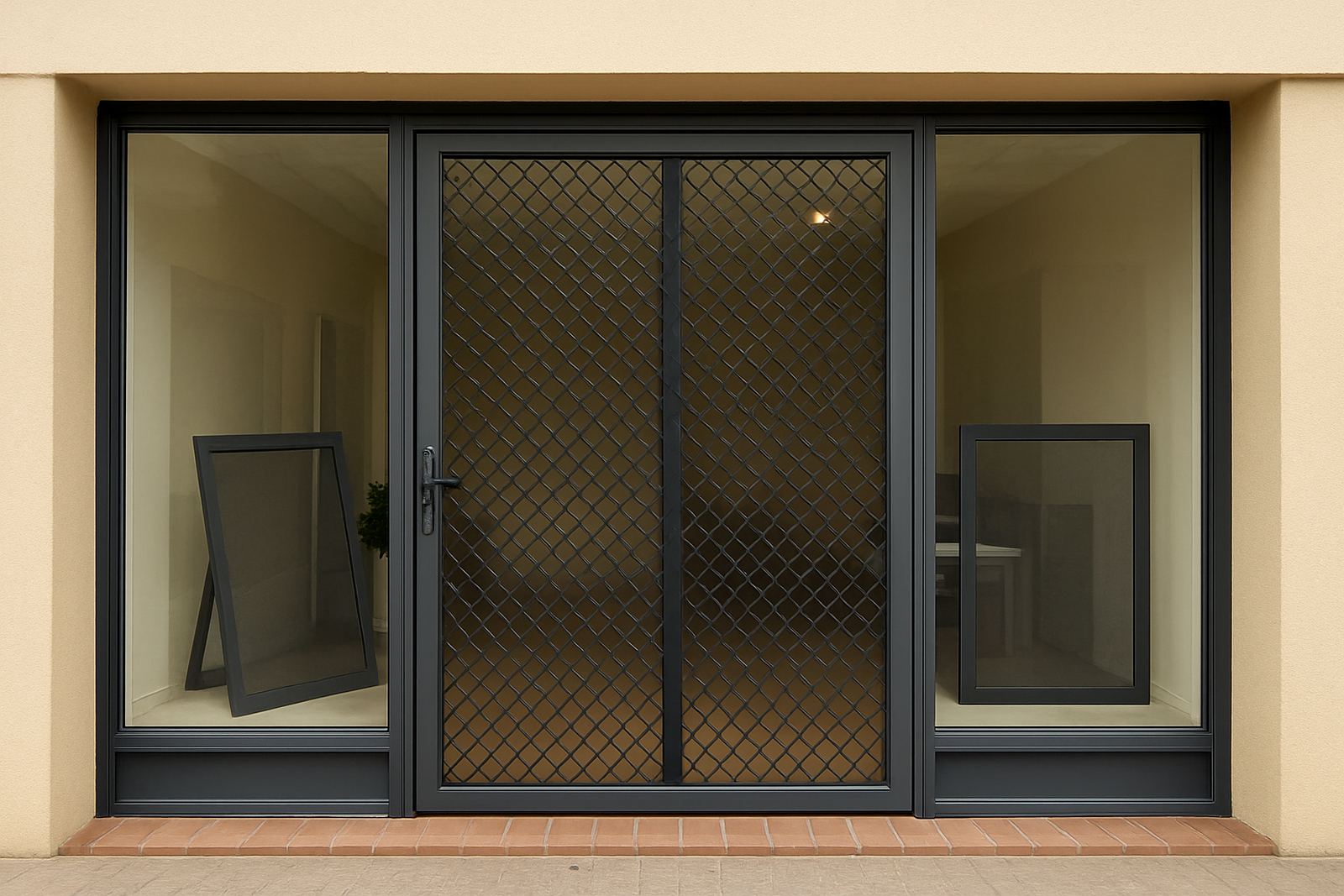
This screen works well on many kinds of doorways, but it is especially useful where the opening is used often and needs to stay comfortable. It is a strong option for homes facing gardens, courtyards or braai areas, and for commercial spaces that want insect control without shutting off fresh air. In Gqeberha, coastal wind and salty moisture can be hard on cheaper fittings, so correct material choice matters.
Common applications include:
- Patio doors opening onto verandas, decks or enclosed entertainment areas
- Hinged back doors used from kitchens, sculleries and laundry areas
- Sliding or stacking openings that need a wider screen solution
- Guest houses, offices and reception areas where appearance counts
- Holiday units in Jeffreys Bay and St Francis Bay that need simple day-to-day use
For homes in Newton Park, Despatch and Uitenhage, the screen is often used where windows and doors stay open in summer but mosquitoes and flies become a problem after rain. It helps reduce the need to close the door fully, which is handy when children, pets or staff are moving through the opening often.
Sizes, finishes and mesh choices
Each pleated screen is made to measure, so the final fit depends on the exact door opening, the wall return and the space available for mounting. We check the width and height on site, then confirm how the track and frame will sit around the opening. For some doors, the screen can be fitted to the face of the wall; for others a recess or return is better.
Typical options and choices include:
- Single or double opening widths, depending on the doorway
- Frame colours suited to white, bronze, charcoal or aluminium finishes
- Standard insect mesh for everyday use
- Finer mesh for smaller insects in warmer areas
- Pet-aware advice where a screen needs a little more care around claws
- Low-profile thresholds where a neat walk-through is needed
Because every opening is different, there is no one-size-fits-all rule. We look at the door type, floor finish and how the household uses the space before confirming the best setup. That is especially important in older homes or buildings with uneven walls and floors, where a millimetre or two can affect how the screen moves.
Installation, track layout and everyday use
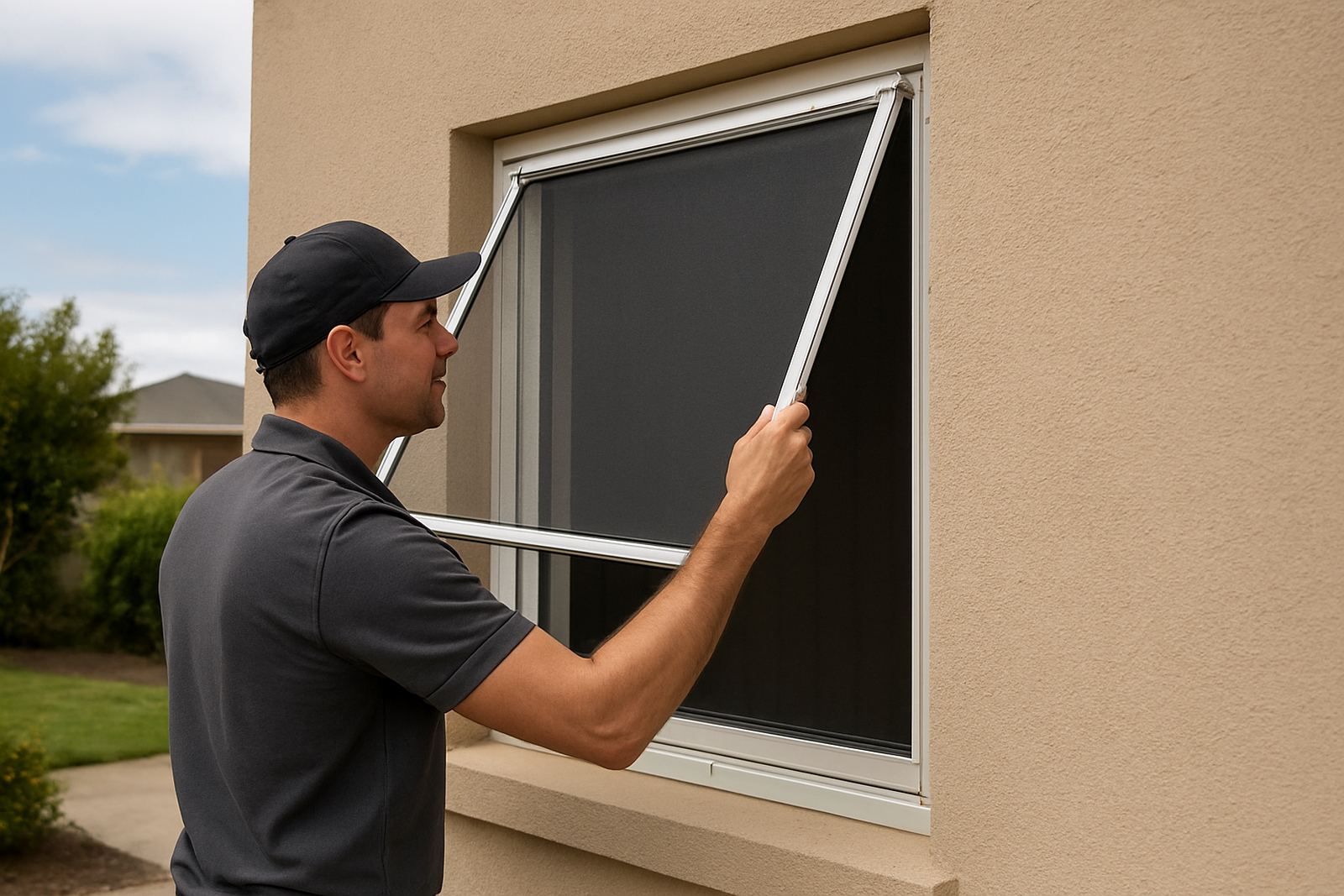
Installation starts with a site measurement and product consultation so the screen can be made to the correct size. Our installation team checks the doorway, the reveal depth and the floor line before fitting the frame and guide track. The aim is a straight, smooth run that opens and closes without dragging or snagging.
The pleated screen does not need power, batteries or gas. It works manually, which makes it useful during load shedding and in areas where you simply want a low-maintenance solution. Once installed, there are no motors to service and no wiring to protect from moisture or power interruptions.
On the day of installation, we also confirm access details and how the screen should be used. In some homes the better answer is a centre opening, while in others a one-sided slide makes more sense. If the doorway is close to a step, tile edge or weather strip, we allow for that during the fitment so the final movement feels natural.
Care in coastal conditions and servicing support
Gqeberha’s coastal air can leave dust and salt on frames and tracks, so a little care goes a long way. Wipe the frame with a soft damp cloth and keep the track free of grit. If sand builds up, the pleats can feel stiff or the screen may not close fully. A quick clean is usually enough, and it is better than forcing the mesh.
We also offer screen repairs, mesh replacement, track servicing and hardware replacement when a screen has taken wear over time. That is useful in homes near the coast, where humidity and wind can affect moving parts. Seasonal checkups are a good idea before summer, especially for busy family homes, guest properties and commercial entrances that get used daily.
- Do not use harsh cleaners on the mesh or aluminium frame
- Keep the lower track clear of stones, leaves and fine sand
- Check that the handle and latch still align properly
- Call for service if the pleats start bunching or the screen catches on one side
If the screen is part of a larger rollout for an estate, lodge or commercial site, we can help with aftercare support so all units stay in good working order. A small issue picked up early is easier and cheaper to sort than a damaged track later on.
What to verify before ordering a flush window screen
Before ordering, it helps to know how the door is used each day and what space is available around it. That gives us the right information for sizing and for choosing the best frame and track arrangement. If you are replacing an older screen, bring the old dimensions if you have them, but we will still confirm everything on site.
Please check the following before we measure:
- Door type: hinged, patio, stacking or folding opening
- Exact width and height of the opening
- Clearance beside the door for the screen to retract
- Floor finish and whether there is a step or threshold
- Any nearby rails, burglar bars or handles that affect fitment
- Whether the screen is for a home, business or rental unit
For properties in Walmer, Summerstrand, Newton Park and surrounding areas, our office team can arrange the next step through the enquiry form on our contact page. ScreenMaster is based in Walmer, Gqeberha and carries out installs across the Eastern Cape, including Uitenhage, Despatch, Jeffreys Bay and St Francis Bay.
A practical choice for fresh air without the nuisance
A pleated door screen is one of those products that becomes part of daily living very quickly. It keeps insects out, lets air move through the home and suits places where a neat finish matters. For families, landlords and businesses alike, it offers a sensible balance between comfort and low upkeep.
With custom manufacture, careful measuring and proper installation, the screen should open easily and sit neatly at the doorway for years. If you are looking for a screen that suits South African homes and the conditions along our coast, this is a reliable place to start.
Key facts
| Product type | Pleated retractable insect screen for doors |
|---|---|
| Best suited to | Patio doors, hinged doors and wider openings |
| Operation | Manual slide with pleated mesh |
| Power or gas needed | None |
| Frame material | Powder-coated aluminium |
| Service area | Gqeberha, Walmer and across the Eastern Cape |