What folding screen panels do
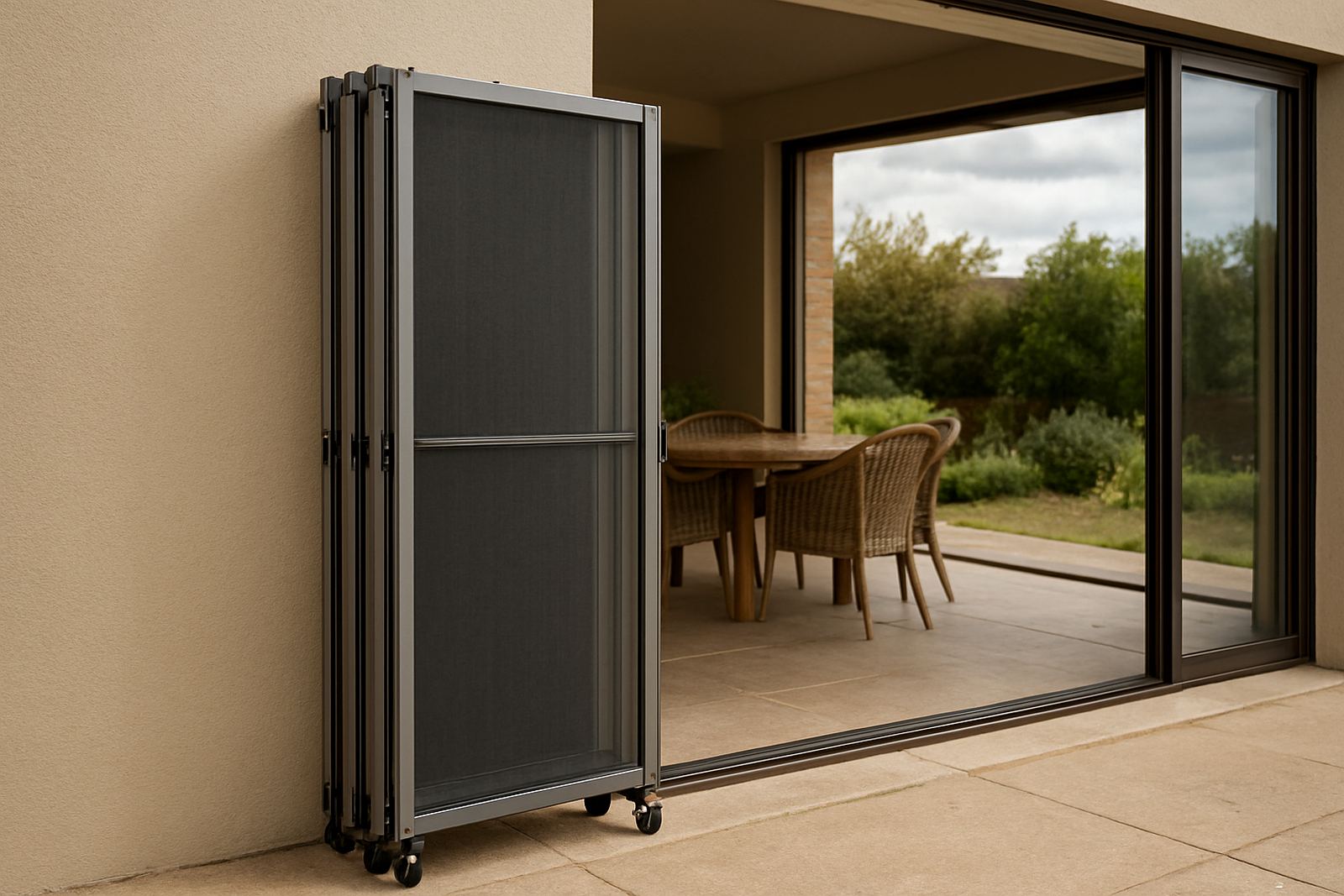
Folding screen panels are made for openings that are too wide or too active for a single fixed panel. The system folds back to one side or splits in sections, so you can open up a doorway or patio opening when needed and close it again at night or during insect-heavy months. In Gqeberha, Walmer and Summerstrand, that matters on warm evenings when flies and mozzies move in fast, especially if the house is near the coast or a garden area.
These panels are commonly used where a homeowner wants screening without losing daily access. They suit sliding openings, French doors, enclosed braai areas and some commercial entrances. Depending on the layout, they can be made as insect screens only, security screens, or a combination of both. The aim is simple: keep the opening useful, while adding a proper barrier that fits the opening size instead of forcing a standard size solution.
Because each opening is different, the panel layout is set from site measurements. That helps with fit, but it also helps the panels move cleanly, sit square, and avoid rubbing on uneven floors or older frames.
Sizes, panel counts and finish options
Folding screen panels are made to measure, so the final size depends on the width and height of the opening. They are often used on openings from about 1.2 m right up to wider spans of 4 m or more, depending on the frame layout and the number of folding leaves needed. A narrow opening may only need two panels, while a broader patio or commercial opening may need three, four or more sections.
Common options include:
- Single-side fold for openings where one stack side is preferred
- Centre split for balanced use on wider doors or passage points
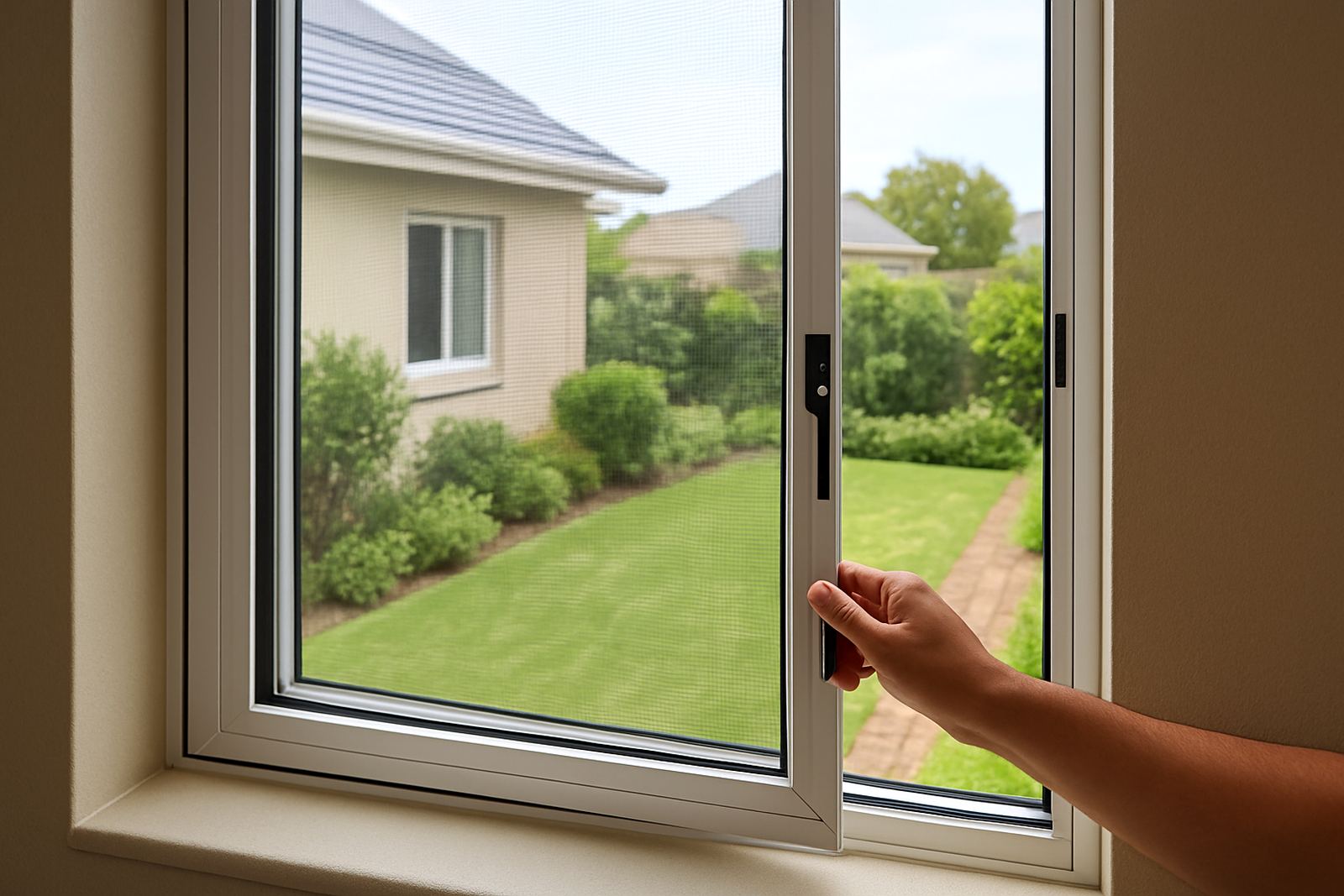
- Insect mesh for airflow and basic barrier use
- Security mesh for a stronger physical barrier
- Powder-coated aluminium frames in a colour matched to the building
- Low-profile tracks or threshold details where floor clearance is tight
In coastal areas like Gqeberha and St Francis Bay, finish choice matters because salt air can work on lesser materials over time. Aluminium frames and quality fittings are usually the first choice for homes near the sea. For inland areas such as Uitenhage, Despatch and Jeffreys Bay, the same systems work well but the exact mesh and hardware can be chosen around how often the opening is used. Minor typo happen when people rush their order, so it is worth slowing down and checking the measurements before manufacture.
Where folding panels work best
These screens suit places where the opening needs to stay flexible. That includes family homes with patio doors, holiday homes that are empty for parts of the year, guest houses, shop fronts, canteens, clinics and office access points. They are also useful for homes with pets or young children, because the panel can be closed for control and opened when there is movement in and out.
They work especially well in:
- Walmer homes with wide entertaining areas and braai spaces
- Summerstrand apartments with balcony or patio access
- Newton Park businesses that need screened staff entries
- Jeffreys Bay holiday homes needing seasonal screening
- St Francis Bay properties where sea air and insects are both common
- Estate homes that need neat, consistent fittings across several units
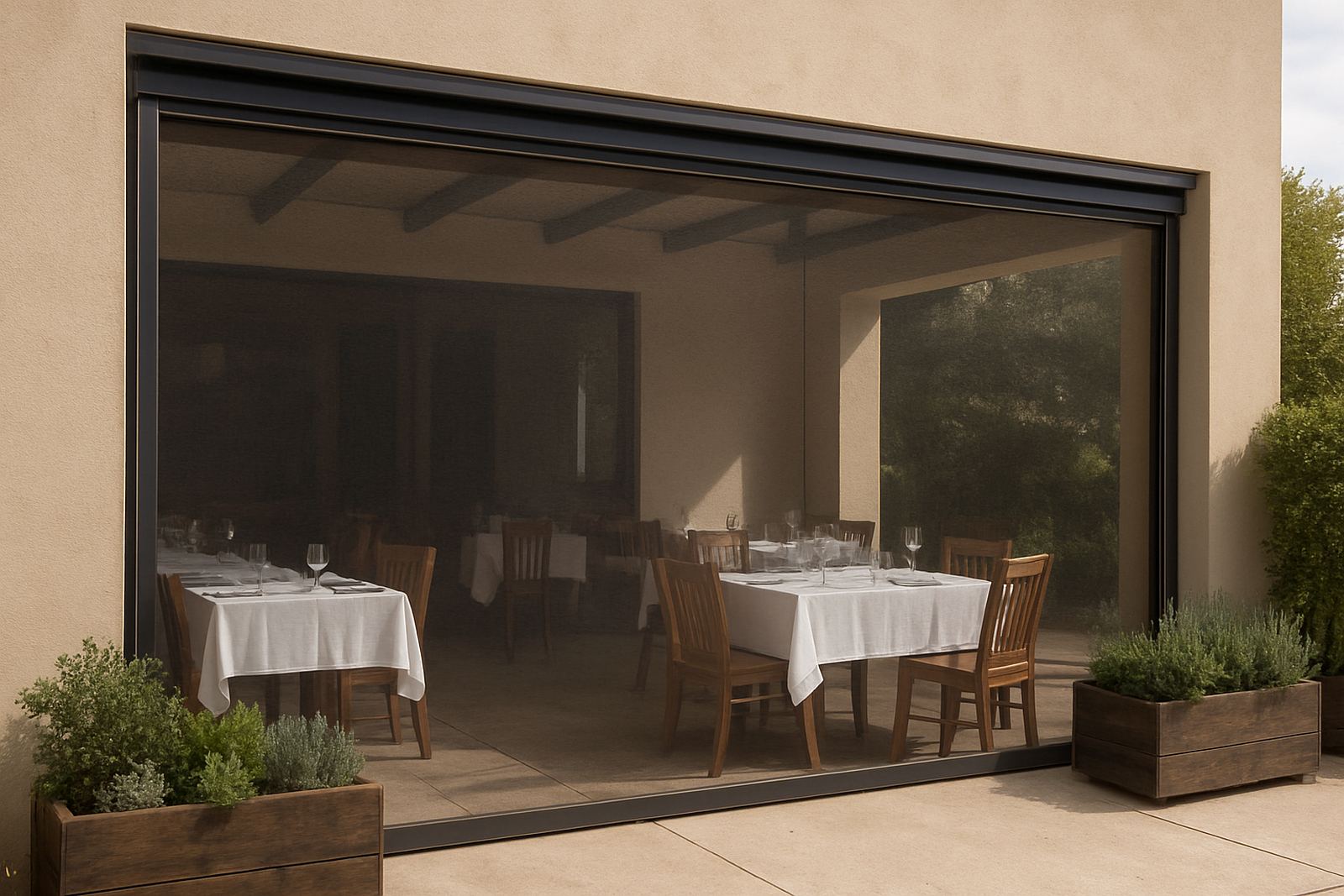
For commercial use, folding panels can help with after-hours closure of an opening without needing to lock down the entire premises. In homes, they are popular where a full opening must remain usable, but you still want protection against flies, wasps and dust on windy days. They also fit well where a fixed panel would get in the way of furniture or regular foot traffic.
Installation details and what the opening needs
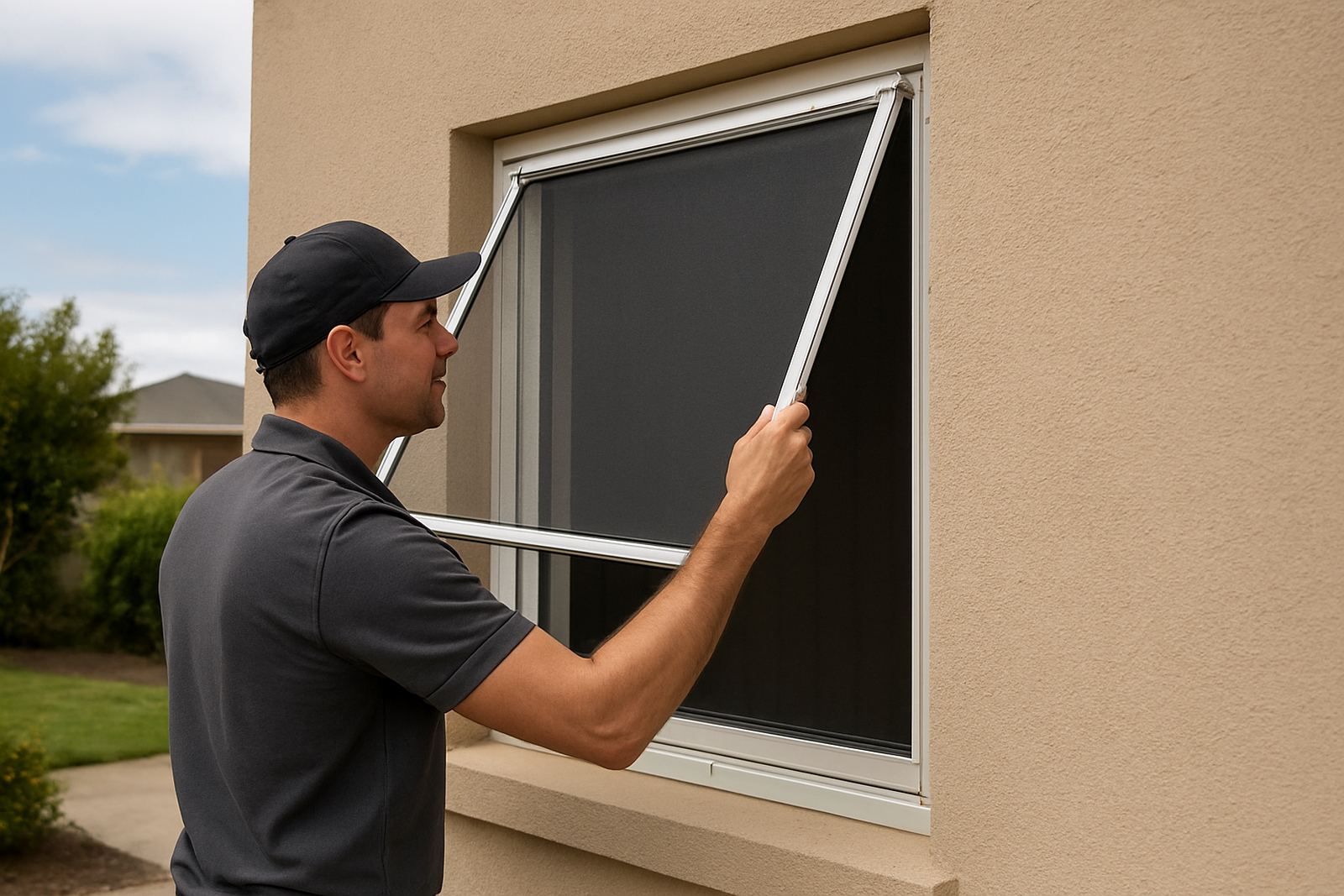
Installation starts with a site measurement and a look at the opening itself. The installer checks the width, height, floor level, existing frame condition, clearances and the side where the panels should stack. On older homes or commercial units, the opening may need small adjustments so the tracks sit true and the panels fold properly. That is especially important where floors are not level, or where there is movement from heat and age.
Folding panels do not need mains power or gas, which makes them useful during load-shedding and in areas where power is only used intermittently on the premises. They are a mechanical system, so the main requirement is a sound opening and a clear path for the tracks or hinges. If the screen is going onto a door that is used many times a day, the hardware choice should match that traffic so the movement stays easy over time.
During fitting, the team also checks whether there are existing security gates, burglar bars, drain covers or raised thresholds that could affect the operation. On business sites, municipal rules, body corporate rules or estate rules may also influence the final layout, so it helps to confirm those details before manufacture.
Care, servicing and long-term use
Folding screen panels need simple care, but they do better when looked after regularly. In coastal towns the main issue is salt and fine grit, while inland the common problems are dust, pet hair and small knocks from daily use. A quick clean with a soft brush or damp cloth keeps the mesh and frame looking right. Avoid harsh chemicals and abrasive pads, because they can mark the finish and shorten the life of the moving parts.
For good operation, the tracks and moving points should be checked from time to time. If a panel starts dragging, catching, or not folding back fully, it usually means the rollers, hinges or track are due for service. Regular seasonal checkups are worth it before summer and again before the wetter months, because that is when screens get used the most. Homeowners often ignore a small squeak and then the panel starts to bind, which is easy to avoid with a simple service visit.
- Wipe the frame and mesh every few weeks
- Keep tracks free of sand, leaves and grit
- Do not slam the panel open or closed
- Check catches and handles for looseness
- Book a service if the panel starts sticking or rattling
What to confirm before you order
Before placing an order, it helps to work through the opening carefully so the finished product matches how you use the space. A folding screen should suit the traffic, the climate and the way the opening is framed. If a client is replacing an older screen, the new setup can often improve both the look and the movement, but only if the details are right from the start.
- Exact opening width and height at several points
- Whether the screen should fold left, right or split in the middle
- Choice of insect mesh or security mesh
- Frame colour and finish to suit the building
- Whether a threshold or track needs special clearance
- How often the opening is used each day
- Any estate, body corporate or site rules that apply
If you are fitting to a home in Walmer, a shop in Newton Park or a holiday place in Jeffreys Bay, the best result comes from clear measurements and a proper consultation. ScreenMaster handles site measurements, custom manufacture, installation and aftercare support across Gqeberha and the Eastern Cape, so the screen can be set up for the way the property is used, not just for the opening size.
Key facts
| Product type | Made-to-measure folding screen panels for wider openings |
|---|---|
| Typical use | Patios, sliding doors, entries, braai areas and commercial openings |
| Width range | About 1.2 m to 4 m+, subject to opening layout |
| Height range | Usually up to standard door height and custom heights on request |
| Materials | Powder-coated aluminium frames with insect or security mesh |
| Power or gas needs | None, mechanical operation only |