Start with how the balcony is used day to day
Before choosing a screen, think about what the balcony does for the home. Some people want a quiet place for a chair and a plant or two, while others use it for washing, storage, a braai trolley or morning coffee. In apartments around Walmer and Summerstrand, a balcony often needs to do more than one job, so the screen should work with your routine, not against it.
The best first step is a site measurement and a proper look at the opening, the handrail height and any body corporate rules. Many complexes limit what can be visible from the outside, and some have colour or fixing requirements. A good measuring process also picks up things like uneven walls, drainage points and how much wind the balcony gets on the exposed side.
- Choose a screen that still allows safe access for cleaning and maintenance.
- Check whether you need privacy from neighbouring units or only insect control.
- Consider how much afternoon sun hits the balcony in summer.
- Ask about marine-grade or corrosion resistant parts if you are near the coast.
Insect screens that keep the space open and airy
If the main problem is mozzies and other insects coming in through sliding doors or open balustrades, insect screening is usually the simplest answer. These screens are useful where the balcony links directly to a lounge or bedroom, because you can leave doors open for air without making the room feel closed in. In Gqeberha, where evenings can be warm and humid, that matters a lot.
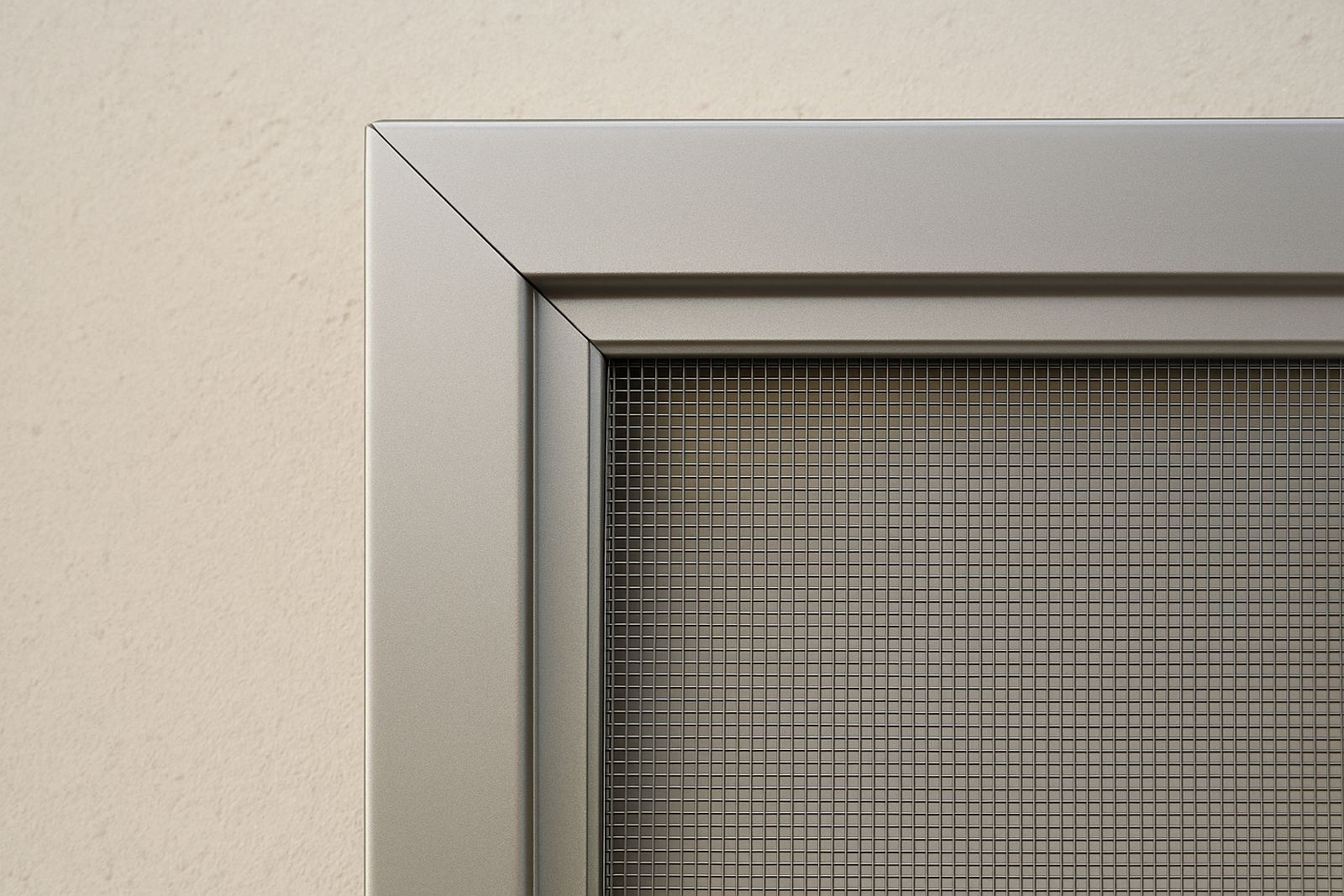
For flats, the screen often needs to be neat, slim and easy to use. Slim framing and well-fitted mesh can keep the look tidy while still giving good airflow. Fine mesh is a solid choice for smaller insects, but it should still allow enough visibility so the balcony does not feel boxed in. If the balcony gets strong wind, the fixings and track alignment need to be done carefully, or the panel may chatter and wear faster.
- Best for open, lived-in balconies used for fresh air and light.
- Works well on sliding openings, hinged doors and larger access points.
- Can be paired with mesh replacement later if the screen gets damaged.
- Useful for rental units where the owner wants a neat, low fuss solution.
Security screening for ground floor and exposed units
For ground floor balconies, or units that face a courtyard or parking area, security screens can make the space feel more usable after dark. They are especially practical where a balcony door is the main entry point to the apartment. A proper security screen lets you keep the door open for air while adding a barrier that can stand up to forced entry better than light fly mesh alone.
Many residents in Newton Park and Despatch want a screen that does not make the balcony look harsh from the outside. That is where custom manufacture helps. The frame size, locking method and mesh style can be matched to the opening so the result looks like part of the unit rather than an add-on. It is also worth asking about hardware replacement and track servicing from the start, because a secure screen should still open and close smoothly after daily use.
- Useful for lower-level flats, bachelor units and townhouse balconies.
- Can help protect access doors while still allowing ventilation.
- Should be checked for sturdy locks, fixed points and proper alignment.
- A good option where tenants want extra peace of mind without major alterations.
Shading ideas that cut heat without shutting out the view
Some balconies need shade more than they need extra protection. Afternoon sun on a west-facing balcony can make the slab hot enough that nobody wants to sit outside. Shading solutions can make a small outdoor area far more usable, and they also help protect furniture and flooring from fading. In coastal areas, lighter fabrics and well-finished parts tend to hold up better than bulky coverings that trap moisture.
For apartment living, the goal is usually to soften the sun rather than block the balcony completely. This is where careful product consultation helps, because the angle of the sun changes through the year and the right coverage depends on the balcony size. A screen or shade that works in Jeffreys Bay may need a stronger wind tolerance than one in a sheltered block in central Gqeberha.
- Choose shade where the balcony is too hot for regular use in summer.
- Keep drainage clear so water does not sit against the fabric or frame.
- Use finishes that cope better with coastal humidity and salt air.
- Consider partial coverage if the aim is coolth, not full enclosure.
Small balconies need tidy hardware and easy servicing
Balconies are often compact, so every centimetre counts. A screen that is too heavy or hard to slide becomes a nuisance quickly, especially in a flat where the balcony is used for washing lines, bin storage or a few chairs. That is why track servicing and good hardware matter just as much as the mesh itself. If the rollers, catches or guide channels are off, even a well-made screen will feel irritating to use.
For the Eastern Cape climate, this practical side is important. Dust, salt and seasonal wind can build up in tracks, while load-shedding often means people use balconies for airflow instead of fans and cooling. If the screen is easy to clean and maintain, it is more likely to stay in use for years. Seasonal checkups can also pick up loose fixings before they become a problem.
- Keep tracks clear of grit and paint dust after maintenance work.
- Check that the opening still clears plant pots, furniture and washing lines.
- Replace worn hardware before the panel starts dragging or sticking.
- Ask for mesh replacement if the screen has tears from pets or moving furniture.
A local example from a Walmer apartment balcony
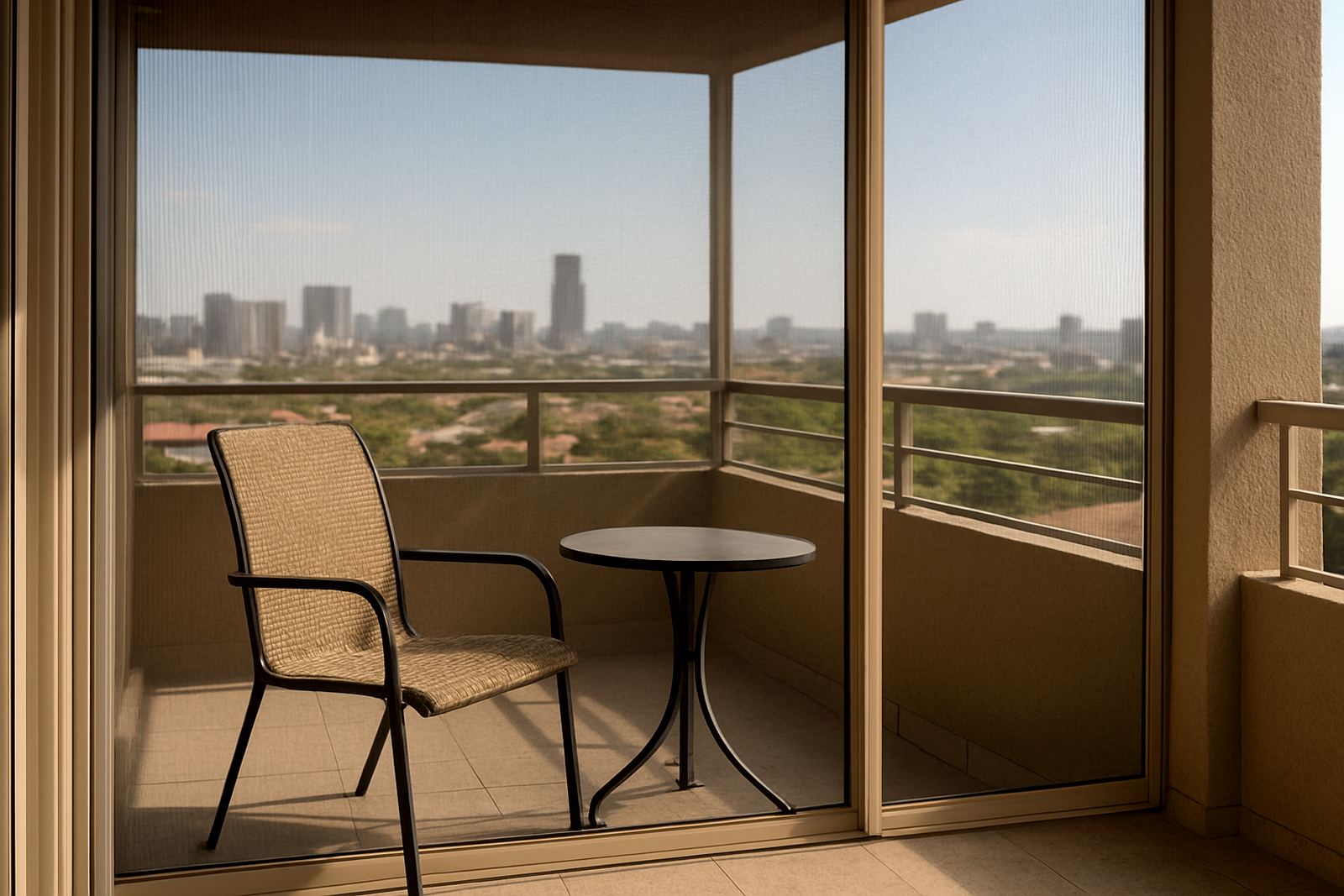
A common request in Walmer is for a balcony that feels private enough for evening use, but still open enough for light and air. One typical setup is a first-floor apartment facing a communal parking area. The owner wants to sit outside after work, keep insects out and avoid a heavy-looking barrier. In that case, a custom screen solution with a slim frame and fitted mesh can make the balcony more useful without changing the feel of the unit.
If the apartment gets strong coastal breeze, the installation has to be measured properly and fixed securely, because a loose fit will not last. The best results come from a combination of site measurements, product consultation and a careful installation plan. For body corporate buildings, it also helps to keep the design consistent with other units, so the building still looks orderly from the outside. That keeps neighbours happy and avoids rework later on.
For owners and managing agents, aftercare support matters too. A balcony screen is not something you should have to think about every week. Once it is fitted correctly, it should be easy to live with, easy to clean and easy to service if a lock or mesh panel wears out. Thats the point of doing it properly from the start.
Choosing the right screening path for your balcony
There is no single best answer for every balcony. A sheltered upstairs unit in Summerstrand may only need insect screening and light shade, while a ground-floor flat in Uitenhage may need a stronger security screen as well. The right choice depends on the opening size, exposure to wind, the body corporate rules and how the space is actually used.
If you are not sure what will work, start with a site visit and talk through the options for your specific apartment. That way the screen can be made to suit the balcony rather than forcing the balcony to suit the screen. For flats and apartments across Gqeberha, St Francis Bay and Jeffreys Bay, that practical approach usually gives the best long-term result.
- Use insect screening when airflow and comfort are the priority.
- Use security screening when access control is the main concern.
- Use shading when heat and glare make the balcony unpleasant.
- Combine solutions where the balcony has more than one issue.