What to measure before you send a quote request
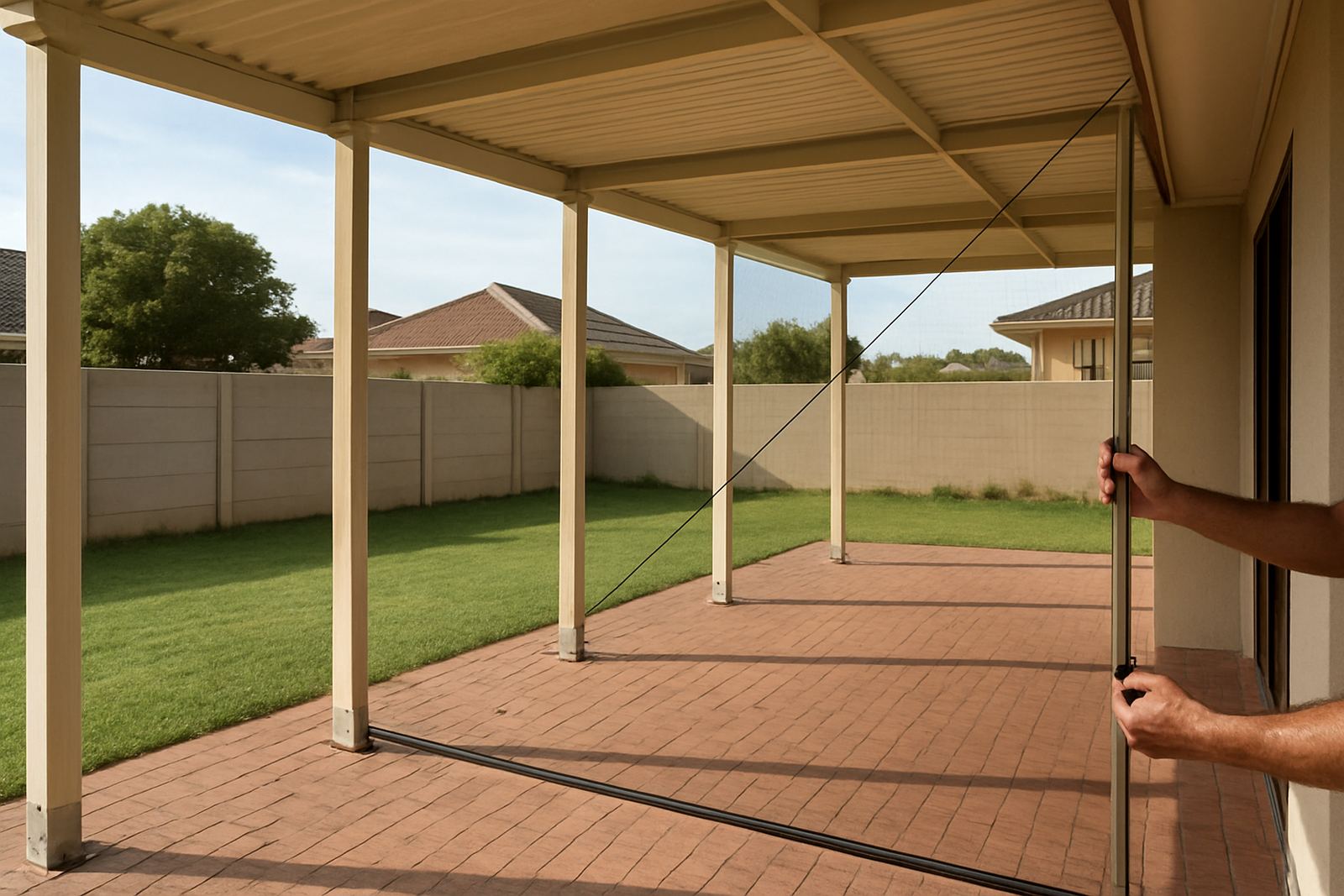
Start with the finished opening, not the old door leaf. You want the clear space where the screen will sit, plus the reveal details that affect the frame, hinges or sliding track. If there is plaster, tile or aluminium trim around the opening, measure to the face where the screen will mount and note anything that may reduce the fitting space.
For most doorways, we need three things: the width, the height, and a note on the frame depth or reveal. If you are measuring in a coastal area like Summerstrand or St Francis Bay, also mention any signs of salt corrosion, as that can affect hardware choice. A quick photo helps too, especially where the opening is uneven or the sill slopes.
How to measure the width correctly
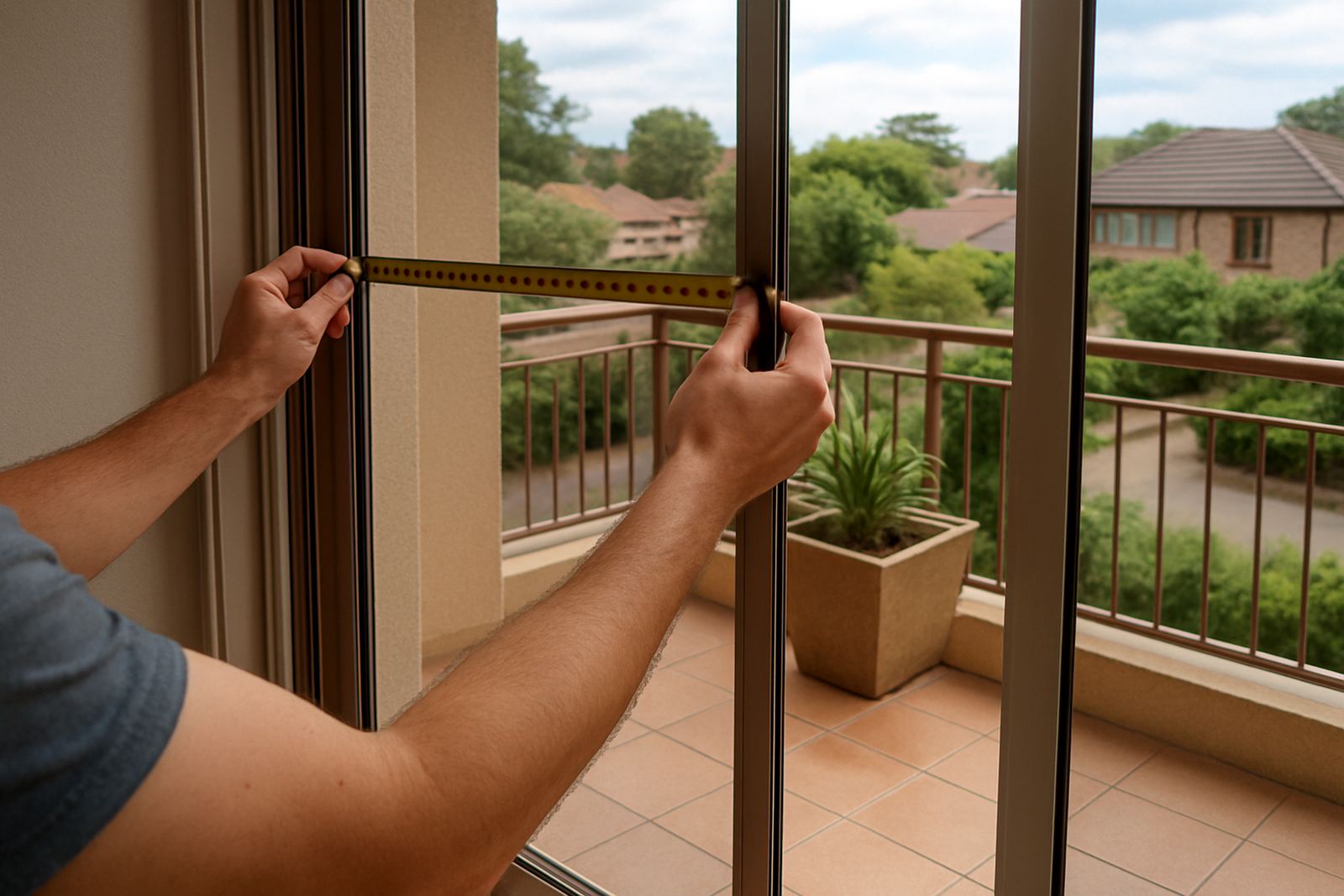
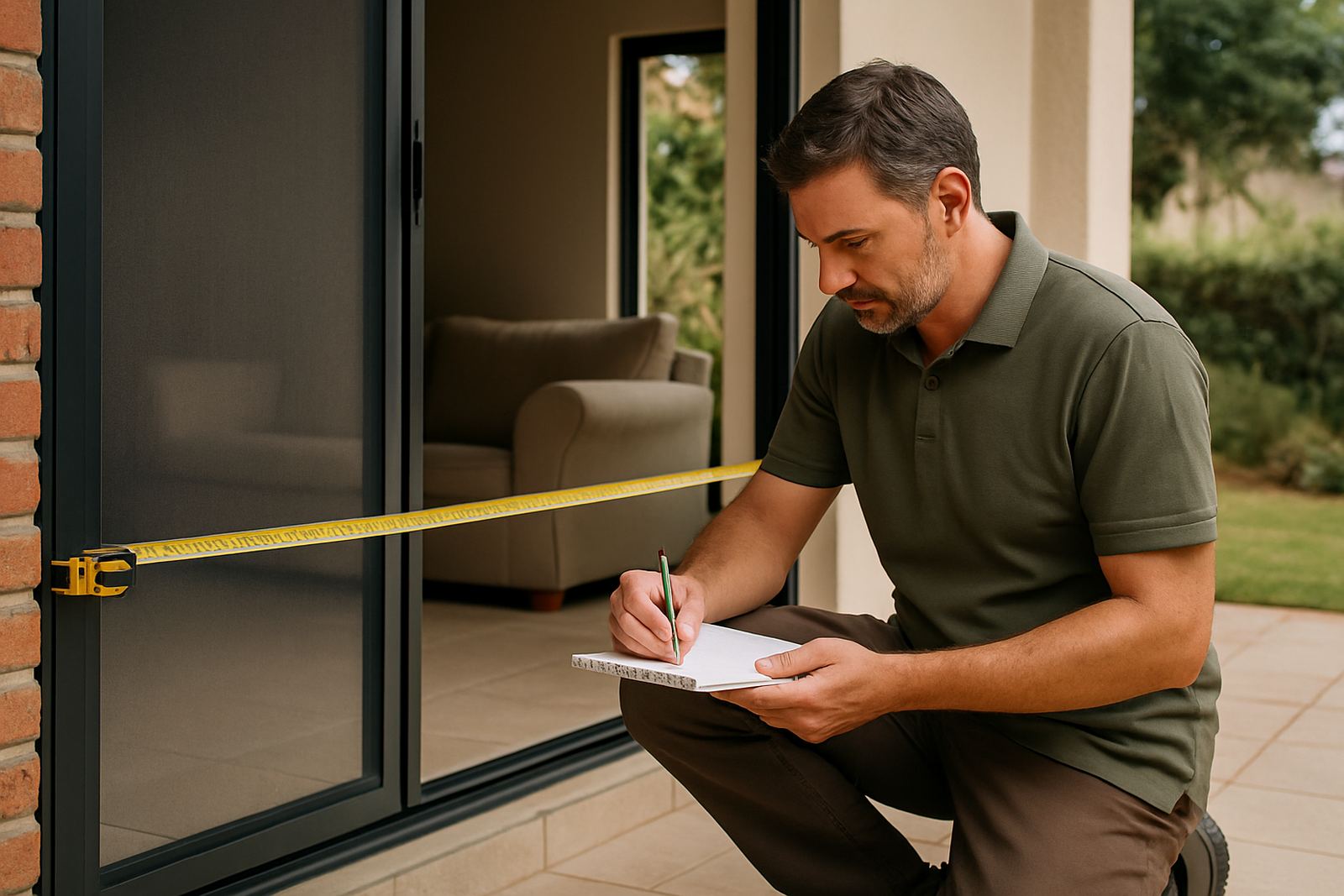
Use a steel tape measure and take the width at three points: top, middle and bottom of the opening. Record the smallest measurement, because that is the size that matters when space is tight. If the doorway is out of square by a few millimetres, the smallest width will prevent a frame from binding. That little bit makes a big differnce.
- Measure from finished side to finished side, not over loose trim.
- Check for door handles, locks or closers that may project into the opening.
- Note whether the door opens inwards or outwards.
- If the opening has a rebate or stop, include a photo so we can see where the screen will sit.
If the doorway is in a busy commercial space in Newton Park or central Gqeberha, allow for heavier use and mention the traffic level. That helps us advise on the frame style and the best mesh tension.
Measuring the height from sill to lintel
Measure from the highest point where the screen will start down to the sill, floor finish or threshold where it will end. Do this on both sides if the floor is not level. In older homes around Walmer or Uitenhage, the doorway can settle over time, so one side may be slightly different from the other. Use the shorter measurement for quoting.
If there is a raised sill, tile lip or drainage channel, include that detail. Some entrances have a concrete step or a strip drain that changes the bottom clearance. For sliding units, check how much vertical space is available above the opening for the top track and whether there is enough wall face for fixing.
- Measure in millimetres for accuracy.
- Check for uneven floors, ramps or steps.
- Note any obstruction above the opening, such as bulkheads or light fittings.
- Tell us if the doorway is exposed to wind, rain or direct sun.
Check the reveal depth and fixing surface
The reveal is the space where the screen frame, runner or hinge hardware will sit. Measure the depth of the recess and the width of the flat fixing surface available on each side. If the opening is too shallow, there may be limited room for a full frame. If the surface is uneven, cracked or soft, we may need to plan for repair work before installation.
For security screens and certain sliding setups, the fixing surface must be strong enough to take the load. In properties near the beachfront or where there is frequent load-shedding and manual use of doors and gates, we also check for wear on existing hardware. Rusty screws, swollen timber and loose brickwork all affect the final fit.
Simple checklist before you send your measurements
Before you complete the enquiry form, go through the doorway once more and confirm the basics. A good note from the start helps us prepare the correct product and gives the installation team fewer surprises on site. If you are a body corporate, estate manager or business owner, keep one set of measurements per opening so each door is easy to match.
- Opening width at top, middle and bottom
- Opening height on both sides
- Reveal depth and fixing surface
- Door swing direction
- Handle, lock or closer positions
- Photos of the doorway and nearby walls
- Any damage, cracks, rust or uneven floors
For homes in Jeffreys Bay or St Francis Bay, mention wind exposure and salt air. For commercial sites in Despatch or Gqeberha, note operating hours so site measurements can be arranged with minmum disruption.
What happens after the measurements are checked
Once we receive your details, we can confirm whether the opening suits an insect screen, a security screen or a shading solution. If anything is unclear, we may ask for a second photo or arrange a site measurement in Walmer, Summerstrand, Newton Park, Uitenhage, Despatch or further afield across the Eastern Cape. That is often the quickest way to avoid delays.
Accurate measurements also help with custom manufacture, mesh replacement, track servicing and future aftercare. If your doorway is likely to be used heavily, or if you want screens checked seasonally, tell us at the outset so we can plan the right components and servicing approach. A careful measure now means a cleaner install later.