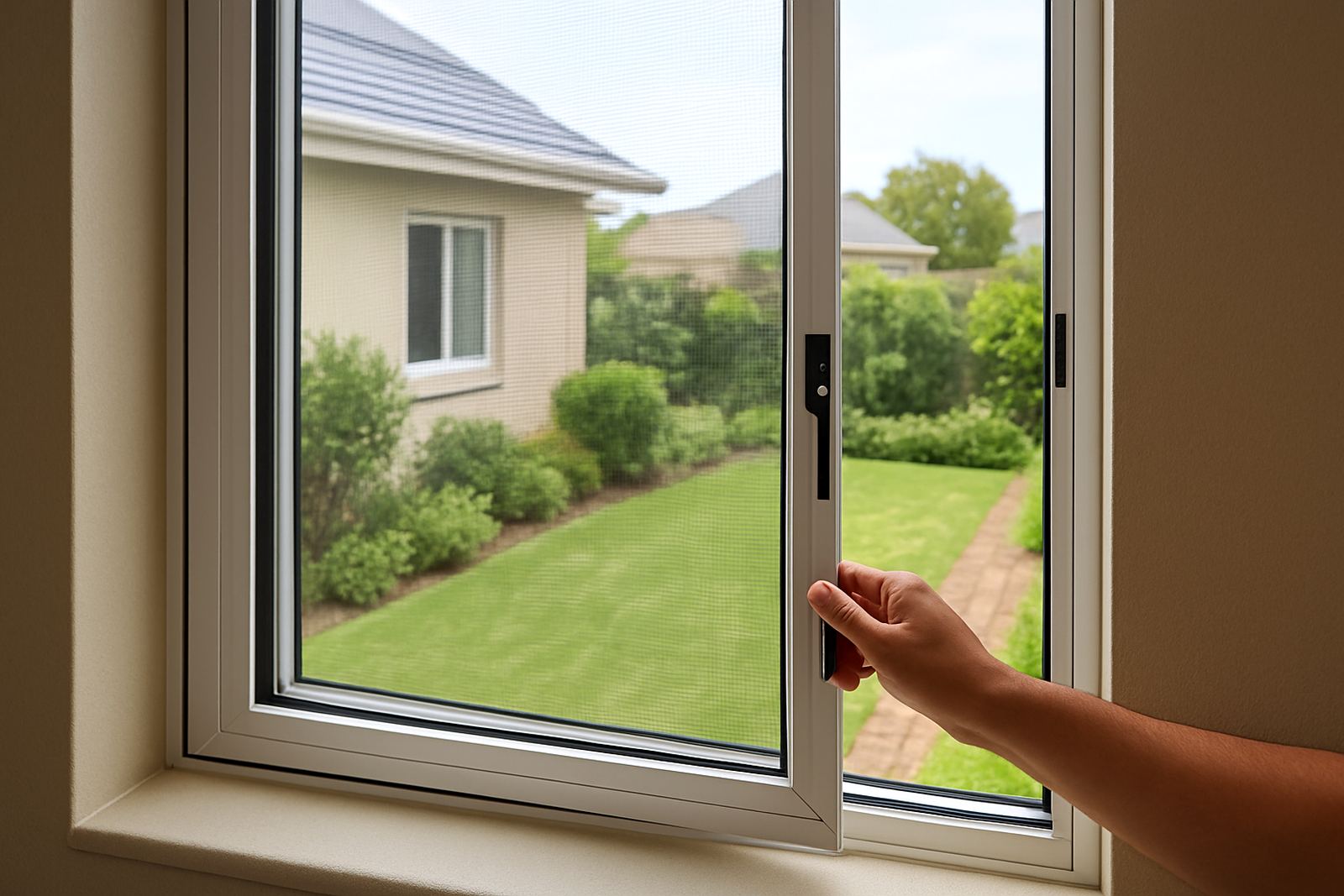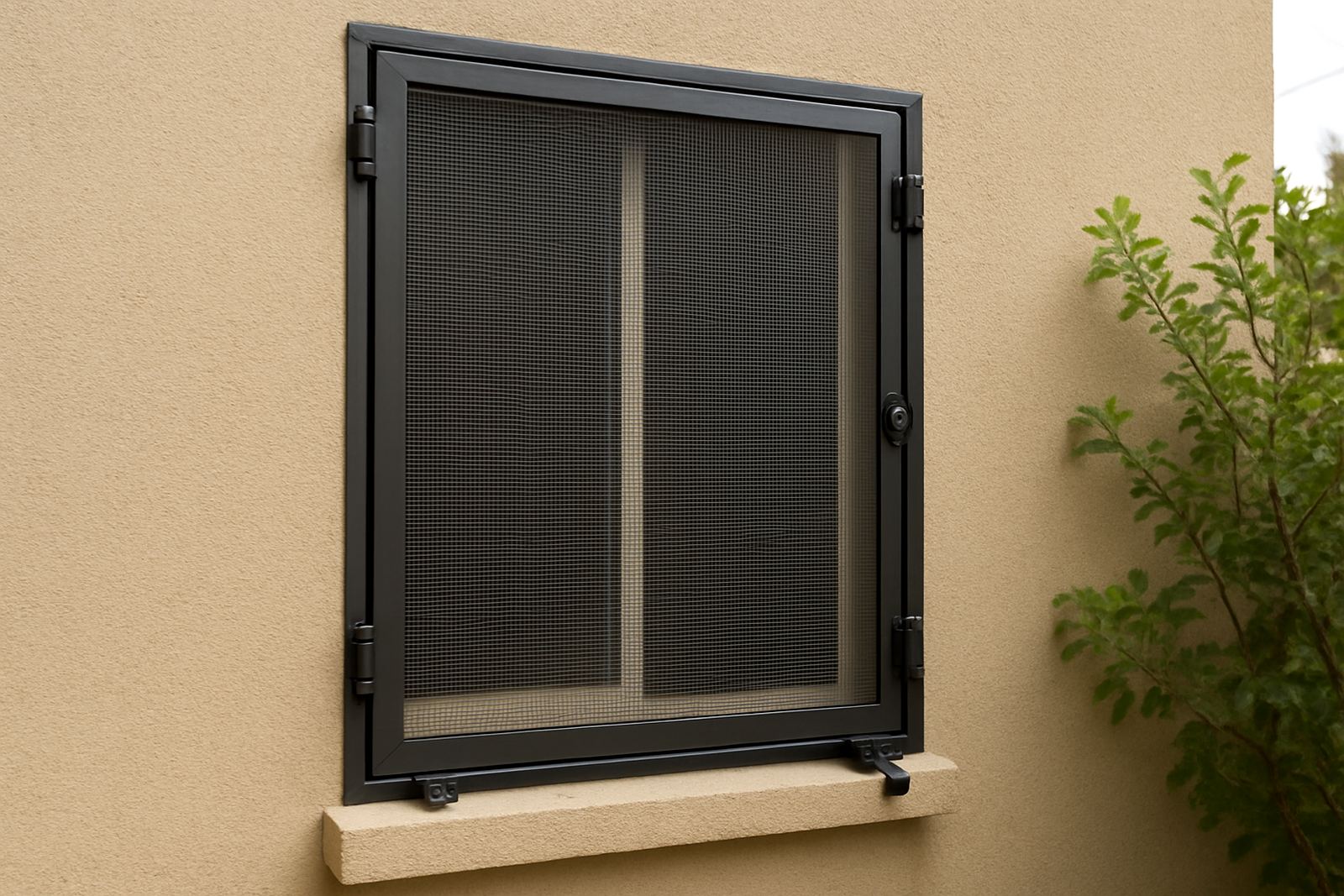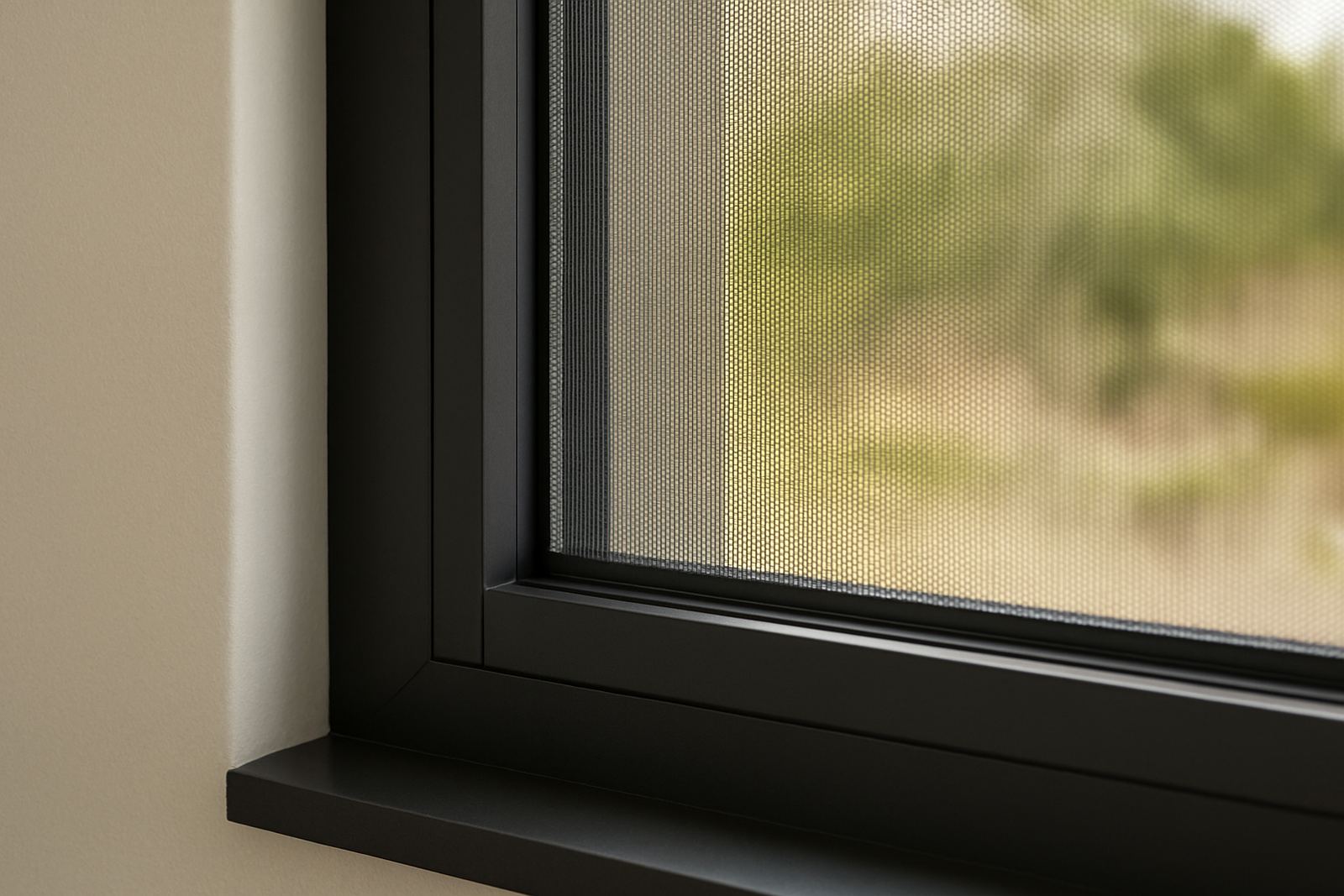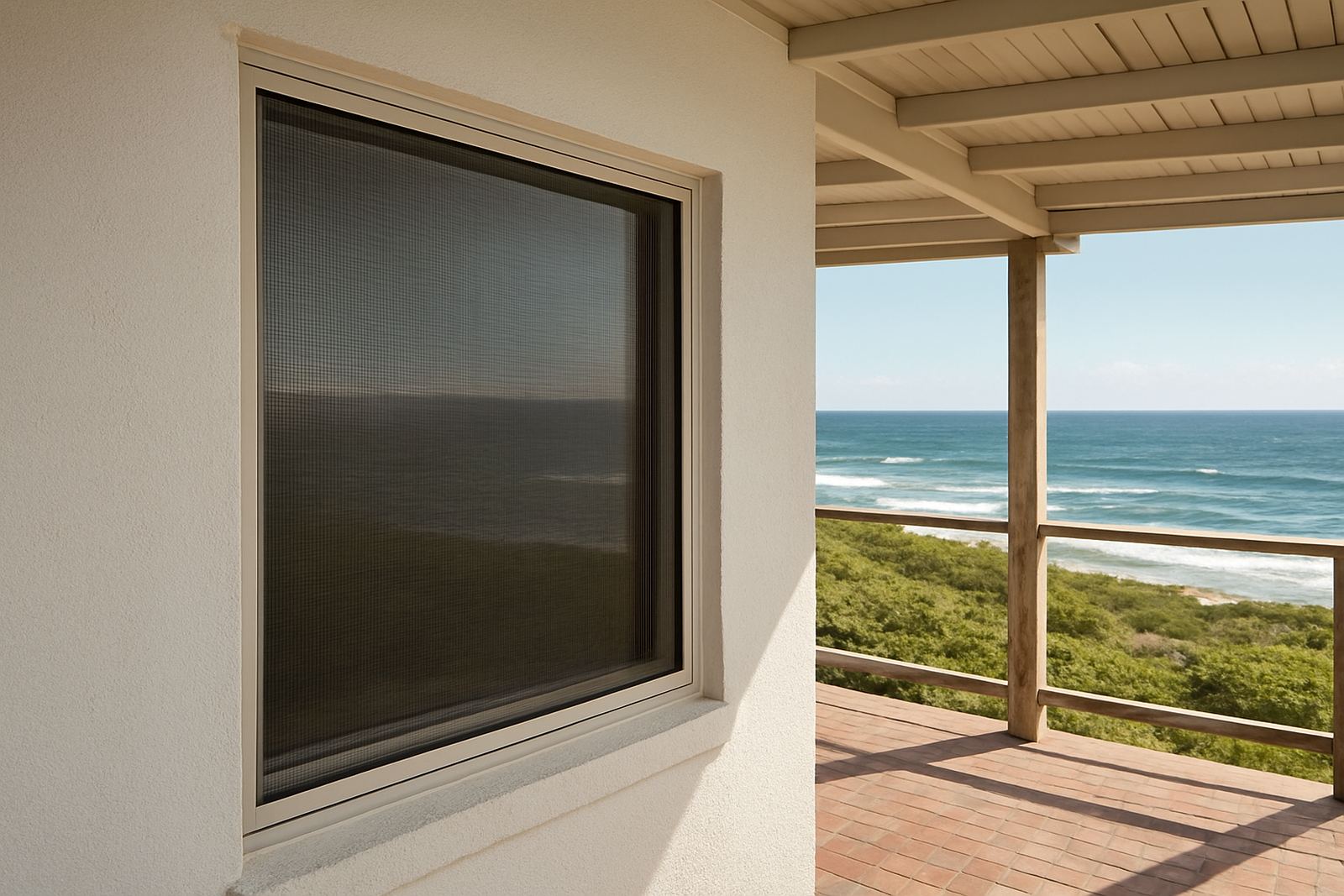
Built for salty air and everyday use
The Coastal Grade Screen is a corrosion-conscious screen option designed for properties close to the sea, estuaries and humid coastal streets. It uses materials and fixings chosen to slow down rust, pitting and premature wear, which matters in places like Walmer, Summerstrand, Jeffreys Bay and St Francis Bay. It is suitable for openings that need insect control, added privacy or extra security depending on the mesh and frame selected.
For many homes it is fitted to doors and windows that get regular sea air, splashback from rain and constant handling. On commercial sites, especially medical rooms, rental units and ground floor offices, it gives a neat controlled finish without needing complicated upkeep. It is a practical choice where you want long service life and less trouble with swollen timber, salty residue or sticky tracks.
Profiles, mesh and finish options
There is no single size for every opening, so each screen is made to suit the measured aperture. The frame can be supplied in slimline or heavier duty profiles, with mesh chosen according to the use. Fine insect mesh keeps out flies and mosquitoes, while stronger woven mesh can be used where pets, children or light impact are a concern. Some customers prefer a darker mesh for better outward visibility, while others choose a lighter finish to match pale walls and aluminium joinery.
- Custom made to opening size after site measurements
- Fixed, hinged or sliding configurations depending on the opening
- Powder coated finish options to suit the property
- Fine insect mesh, heavier duty mesh, or screened privacy options
- Single or multi-panel layouts for wider doors and windows
Typical custom work covers compact bathroom windows through to wider patio openings. For sliding doors, the screen can be made to run in a dedicated track so it does not interfere with normal door use. For security focused applications, the mesh and frame specification is selected to give stronger resistance without making the opening look bulky.
Where it suits along the Eastern Cape coast
This product suits any property where sea air and moisture are part of daily life. It works well on family homes, guest houses, sectional title units, shopfronts and office buildings from Gqeberha to the coastal towns further east. It is also a good option for estates that want a consistent appearance across several units, especially where rules cover external finishes and visible fixtures.
It is often chosen for kitchens, bedrooms and living areas that need airflow without insects coming in. In rental property, it helps reduce complaints about damaged fly screens and repeated callouts. In commercial spaces, it supports better comfort for staff and visitors during warmer months when doors are opened often. Coastal conditions can be hard on cheaper fittings, so the material choice and fixings really matter.
- Homes near the beach or open water
- Guest houses, lodges and short stay units
- Ground floor offices and reception areas
- Estates with appearance rules or access control
- Properties with high door traffic
Installation, access and what power or gas is needed
Installation starts with a site measurement and product consultation so the screen fits cleanly and opens correctly. Our team checks wall condition, frame depth, clearance around handles, and whether the opening needs a fixed, hinged or sliding solution. If a screen is being added to an existing opening, we also look at paint condition, old sealant and signs of corrosion before fabrication. That saves time later and reduces call backs.
The Coastal Grade Screen itself does not need electricity or gas. It is a manual product, so there are no power points, motors or fuel requirements. That said, if it is being fitted near an electric door lock, security gate, stove area or braai space, we check the surrounding conditions and recommend a layout that keeps movement easy and safe. For business sites, access hours and tenant rules are taken into account before install day.
- No electricity or gas required for standard operation
- Manual opening and closing for simple daily use
- Measured and fitted to the exact opening
- Suitable for new installs, replacements and upgrades
- Can be matched to estate rules and site access needs
Care, servicing and coastal maintenance
Even a coastal grade screen needs basic care to stay in good order. Salt film, dust and fine sand can build up on the frame and mesh, especially after windy weeks or heavy rain. For normal upkeep, wash the frame and mesh with mild soap, water and a soft cloth. Avoid harsh abrasives, strong chemicals or steel brushes because they can mark the coating and shorten the life of the screen.
We recommend seasonal checkups for properties close to the sea, especially where doors are used daily. During a service visit we can check roller action, hinges, catches, fixings and mesh tension, then handle any track servicing or hardware replacement if needed. In some cases a small repair now prevents a full replacement later, and that keeps costs down. If you notice stiff movement, salt spots, loose screws or frayed mesh, it is best to sort it out before the next rainy spell.
- Wipe down regularly to remove salt and dust
- Check fasteners after strong winds or heavy use
- Book mesh replacement before damage spreads
- Keep tracks clear of sand and grit
- Use seasonal checkups for coastal properties
What to confirm before ordering your screen
Before placing an order, confirm the opening size, the type of opening and the daily use pattern. A front door that is opened 20 times a day needs a different setup from a bedroom window that stays shut most of the time. It also helps to know whether the screen must fit with an existing security gate, blind, shutter or burglar bar layout. If you are in an estate or sectional title complex, check any rules on visible colours, fixings or external additions.
It is also worth noting the exposure on the property. Open coastal sites, north facing facades and upper floors can take more weather than sheltered courtyards. Tell us if there are pets, children, or equipment that needs to pass through the opening. That lets us recommend the right mesh strength, handle position and clearance. A good order starts with clear measurements and the right questions, not guesswork.
- Exact width, height and frame depth
- Opening type: window, hinged door or sliding door
- Coastal exposure and prevailing wind
- Need for insect control, security or privacy
- Existing gates, bars, blinds or estate requirements
Key facts
| Product type | Custom coastal grade screen |
|---|---|
| Use | Insect control, security screening, shading support |
| Frame options | Slimline or heavy duty profiles |
| Mesh options | Fine insect mesh, heavier duty mesh, privacy mesh |
| Finish | Corrosion-conscious coated finish |
| Installation area | Walmer, Gqeberha and across the Eastern Cape |