Why fixed screens still make sense
Fixed screens are exactly what they sound like: a screen panel that stays in place once it is fitted to the opening. That simple setup is often the best choice for windows, clerestory openings, small service windows and other areas that do not need frequent access. There is less to go wrong, fewer moving parts to service, and a neater finish when the frame is measured properly.
For many properties in Gqeberha and the wider Eastern Cape, fixed screens suit the way the building is used. Coastal wind, salt in the air and dust from open windows can wear out lighter hardware quickly. If a window is mainly opened for ventilation, not daily cleaning or passage, a fixed panel can do its job for years with very little attention.
They are also practical where load-shedding means people keep windows open for air flow and light. When the opening does not need to swing or slide, a fixed screen becomes one less thing to worry about.
Openings where fixed panels work best
Not every window needs a removable or moving system. Fixed panels suit openings that are used for airflow rather than access. They are common in homes, flats, offices and small commercial spaces where the frame shape stays consistent and the main aim is to stop flies, mozzies and wind-blown debris.
- Kitchen windows that stay open for steam and air movement
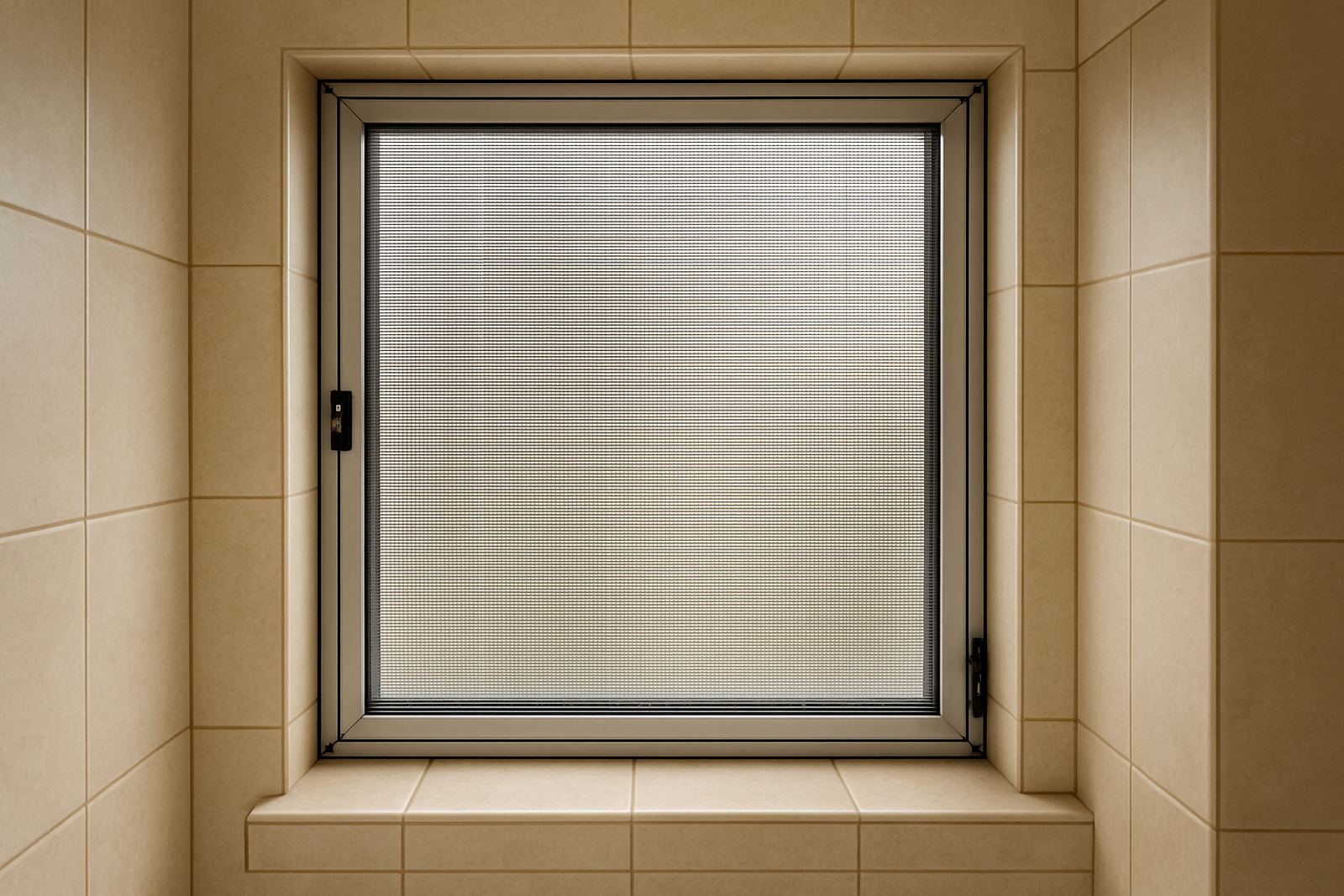
- Bathroom windows where privacy and ventilation are both important
- High windows that are difficult to reach
- Office or reception windows that need screening without changing the look of the façade
- Courtyard openings and utility rooms where access is limited
If the window is above a sink, behind a counter, or fitted with burglar bars already in place, a fixed screen can often be made to sit neatly without getting in the way.
The local conditions that change the choice
In coastal towns like Gqeberha, Jeffreys Bay and St Francis Bay, the environment matters. Salt air can affect hardware, tracks and fixings if the wrong materials are used. In windy areas, a loose fit can cause rattling or premature wear. That is why site measurements matter so much, because a screen that fits well is less likely to lift, rattle or collect gaps at the edges.
In older homes around Walmer and Newton Park, openings are not always square and some frames have settled over time. A fixed screen can still work, but it must be measured properly and made to the actual opening not the idea of the opening. The same goes for business premises in Uitenhage or Despatch where repeated use and cleaning can expose weak fixings quickly.
Where there are estate rules or building guidelines, a plain fixed panel is often easier to approve than a more complex solution. It keeps the look tidy and can be matched to the existing frame colour without drawing attention.
When a fixed screen is the better call than a moving option
The simplest choice is often the right one when the opening is not used for regular access. A sliding, hinged or retractable screen has its place, but it also brings rollers, hinges, tracks or folds that need more care over time. If the budget needs to be kept sensible and the opening is straightforward, fixed screens can give better value.
- Lower maintenance over time
- Cleaner fit on small or awkward openings
- Better for upper-storey windows and hard to reach places
- Useful where children or pets should not tamper with moving parts
- Good choice for rentals and shared buildings where simplicity helps
For many clients, the real question is not what looks more complicated but what will keep working with the least trouble. In that respect, fixed screens often come out ahead.
What to check before you order
A good screen starts with a proper site measurement. The opening has to be checked for width, height, reveal depth and any obstructions like locks, bars or uneven plaster. A fixed panel must be sized to suit the actual frame, and that includes allowing for a neat edge finish so the screen sits flush.
It also helps to think about how the room is used. A bedroom window may need finer mesh for better insect control, while a kitchen or storeroom may need something that is easier to clean. In humid coastal areas, hardware choice matters too because cheap fixings can corrode quicker than expected. That is where good advice saves money later.
ScreenMaster works from Walmer in Gqeberha and installs across the Eastern Cape, so the team sees the difference between a sheltered townhouse courtyard and a house facing the sea. That local experience matters when selecting mesh, frame finish and fixings for the job.
A practical example from Walmer
A Walmer homeowner recently needed insect control for a row of kitchen and bathroom windows in a property that gets strong afternoon wind. The windows were not opened for cleaning or access, so a fixed solution made more sense than a moving one. After site measurements, the screens were made to fit the openings exactly and the finish was matched to the existing frames.
The result was simple and tidy. The homeowner kept the rooms aired during load-shedding, the flies were kept out, and there were no tracks or hinges to service later. That is often the appeal of fixed screens: they do one job properly and stay out of the way. No fuss, just a neat fit.
For commercial sites the same logic applies. Offices, clinics and estate offices often need screening at windows that stay shut or only open part way. In those settings, a fixed panel is easy to maintain and less likely to get damaged through daily use.
Aftercare that keeps the fit working
Even a fixed screen benefits from basic care. Mesh should be checked for tears after storms, frames should be wiped down in coastal areas, and fixings need to stay secure where the window gets regular sun and moisture. If a screen starts to rattle or the mesh looks slack, it is better to sort it early than wait for the problem to spread.
- Book seasonal checkups before summer insect pressure builds up
- Replace damaged mesh before small tears become larger ones
- Service tracks and hardware if the opening shares parts with other fittings
- Ask for replacement fixings where corrosion has started
Fixed screens are not a short-term measure when they are measured well and cared for properly. For many homes and businesses in Gqeberha, they remain the simplest answer because they fit the building, the weather and the way people actually live.