Start with the track, not the screen
When a sliding screen becomes heavy to move, the track is usually the first place to check. Fine dust, sand, pet hair and grit build up slowly, then the rollers start riding over dirt instead of running on the track. In coastal areas like Gqeberha, salt carried in the air can also mix with dust and leave a film that makes movement rougher over time.
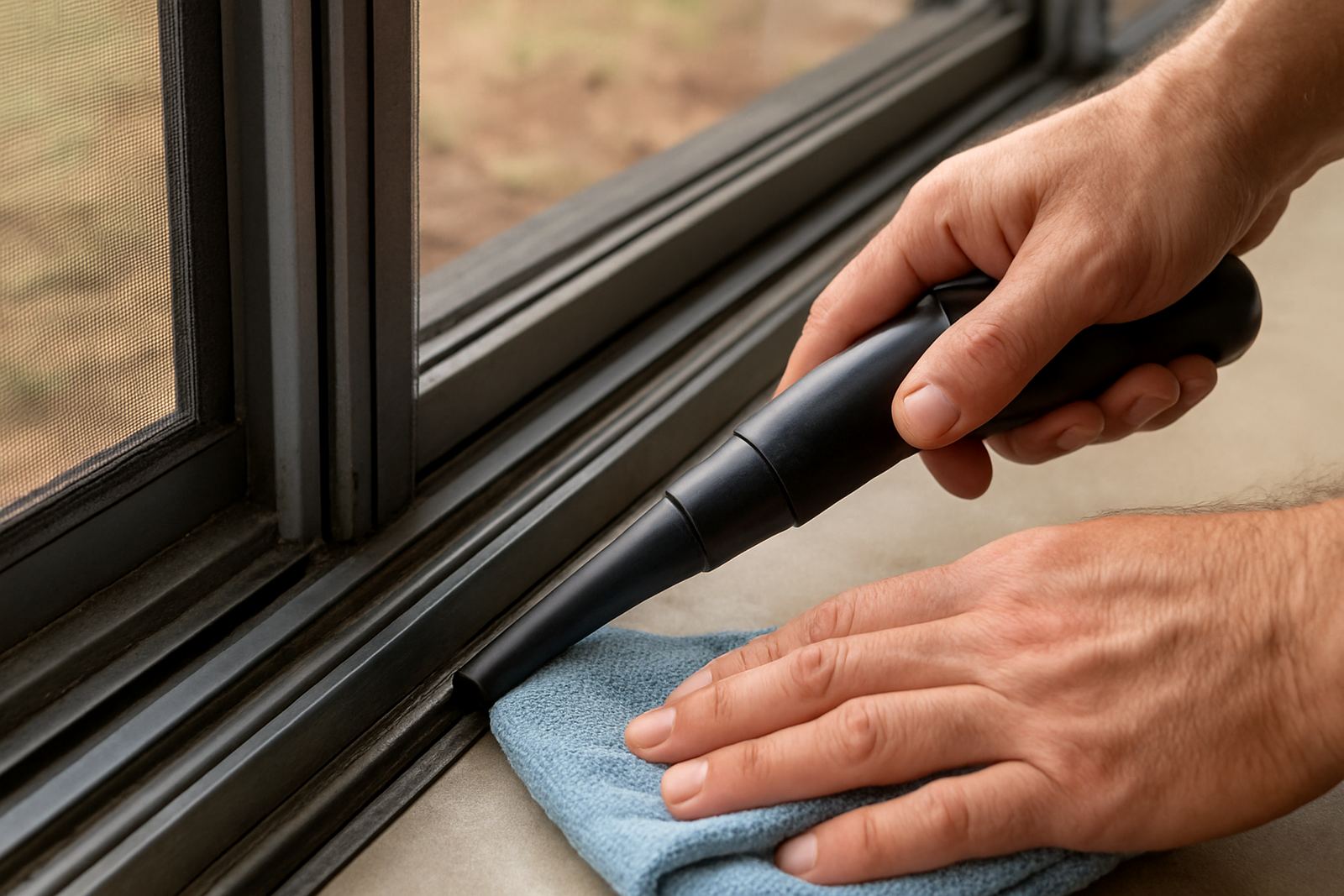
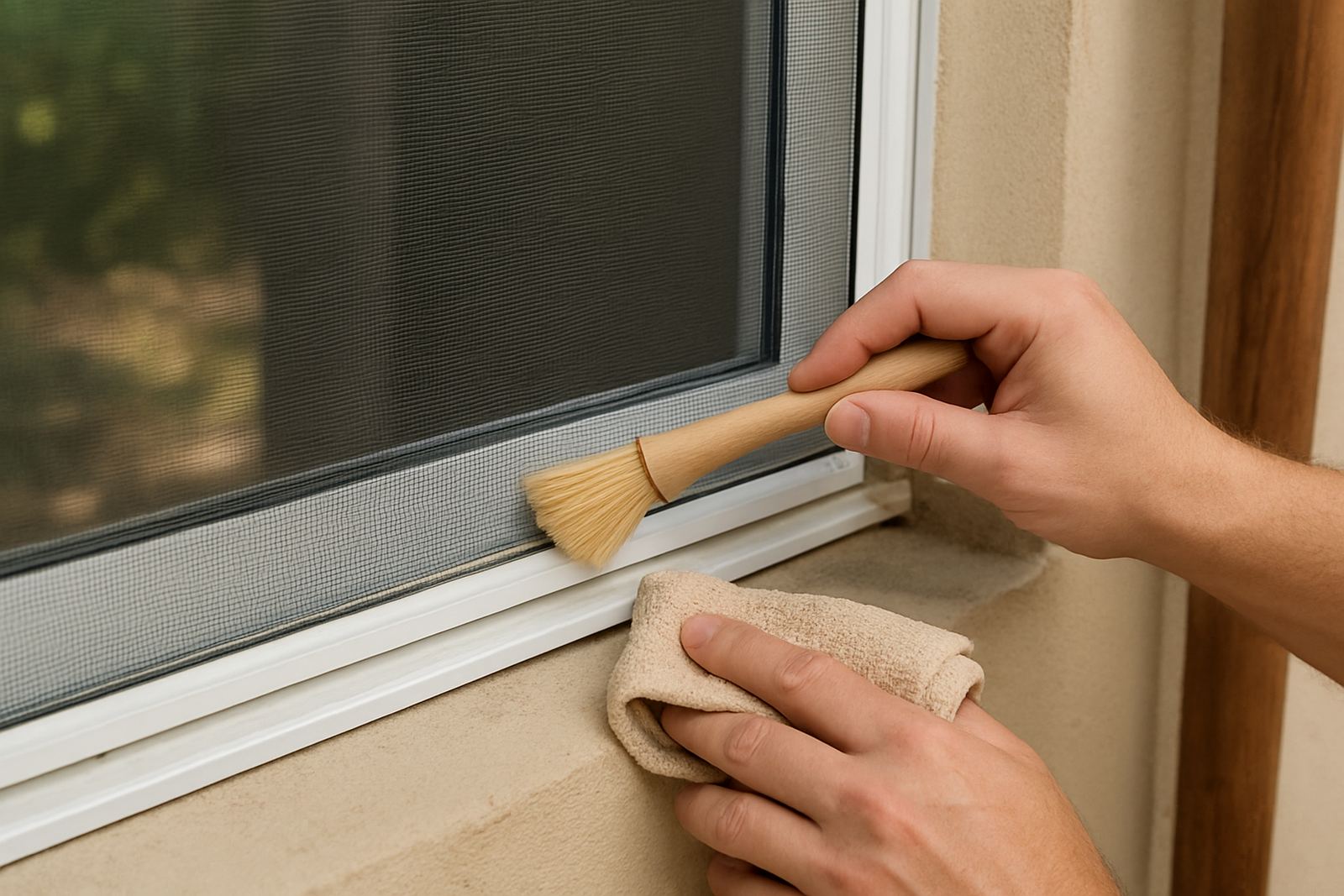
Begin by opening the screen fully and looking along the bottom and top tracks. Use a soft brush or a vacuum with a narrow nozzle to lift out loose dirt. A damp cloth helps with stubborn grime, but avoid soaking the track. Too much water can carry dirt deeper into corners and may leave moisture sitting in the frame.
- Brush out loose grit before wiping.
- Check both ends of the track where dirt gathers first.
- Wipe the track dry after cleaning.
- If you see dents or lifted edges, get them checked before forcing the panel.
A clean track is the simplest way to extend the life of a screen and reduce wear on rollers.
Keep rollers moving freely
The rollers do the hard work every time the screen opens or closes. If they pick up grit, flatten with age, or sit out of line, the screen may feel stiff or scrape along the track. That extra drag puts pressure on the frame and can cause the mesh to rub, which is never a good sign.
If you can remove the screen safely, inspect the rollers for visible wear or flat spots. They should turn freely and sit evenly in the track. A light clean often helps, but if the roller housing is cracked or the wheel no longer spins well, the part may need replacement. It is better to sort this early than wait until the frame starts jumping the track.
- Look for uneven rolling or a grinding sound.
- Check that the screen sits level when closed.
- Do not force a stiff screen open or shut.
- Ask for servicing if the screen keeps sticking after cleaning.
In homes near the coast, roller wear can happen faster because of humidity and salt, so routine checks are worth the effort.
Use the right cleaning method for the mesh
Mesh needs cleaning too, but it must be treated with care. A hard brush, strong chemicals or high pressure washing can stretch the mesh or loosen it from the frame. The goal is to remove dust, pollen and insect residue without damaging the weave.
For most sliding screens, a soft brush and mild soapy water are enough. Wipe gently with a sponge or cloth, then rinse lightly and let the screen dry properly before closing it. If the mesh is badly marked, torn or sagging, cleaning will not fix the problem and a mesh replacement may be the sensible option.
- Use mild soap only.
- Avoid sharp tools, scourers and high pressure spray.
- Dry the mesh before storing the screen closed for long periods.
- Replace damaged mesh before insects start finding gaps.
This is especially useful for family homes in Summerstrand and Walmer where doors are opened often in the evening and the screens get plenty of use.
Check alignment before small problems become bigger ones
A screen that starts to drag on one side is often out of alignment. This can happen after a bump, after repeated use, or when the track collects enough dirt to push the frame slightly off course. Once the panel is running crooked, the wear becomes uneven and the issue usually gets worse.
Look at the gaps around the frame when the screen is closed. They should be even. If the top and bottom do not sit square, or if the handle feels like it needs more force than usual, the screen may need a track service or adjustment. Small changes in alignment can also affect locking points and make the screen less secure.
- Watch for gaps that are wider on one side.
- Check whether the screen meets the stop neatly.
- Listen for scraping near the corners.
- Arrange a service if the screen has shifted after wind or impact.
On commercial sites and estate entrances, regular alignment checks help avoid complaints and keep shared doors working properly for everyone.
Seasonal care matters in the Eastern Cape
Sliding screen care should change with the season. In summer, screens are used more often and can pick up more dust, pollen and insects. In winter, heavy rain and damp conditions can leave tracks dirty and create a build-up of moisture. In coastal towns, the sea air adds another layer of maintenance because salt can settle on frames and fittings.
A quick seasonal check before the hotter months is a smart habit. Clean the tracks, test the rollers, inspect the mesh and look at the hardware. If your property is exposed to wind or sand, it may need attention more often. For estates, guest houses and retail entrances, seasonal servicing can be grouped into one visit which saves time and keeps multiple screens in better condition.
- Clean before summer when usage increases.
- Inspect after strong winds or heavy rain.
- Check coastal properties more often for salt build-up.
- Book planned servicing for larger sites and shared access points.
This approach is practical for Gqeberha, Jeffreys Bay and St Francis Bay where weather and sea air can test hardware year round.
Know when to repair instead of replace
Some sliding screens only need a basic service. Others need new mesh, fresh hardware or a proper track adjustment. The best fix depends on how far the wear has gone. If the frame is sound and the issue is dirt, roller wear or a worn handle, a repair usually makes good sense. If the mesh is torn, the corners are loose or the screen keeps coming off the track, a more detailed solution may be needed.
For homeowners in Newton Park or businesses in Uitenhage, the decision often comes down to safety and ease of use. A screen that is difficult to move gets ignored, and then it stops doing its job. A screen that is repaired early is usually cheaper to keep than one that is left until several parts fail at once.
- Repair worn rollers, handles and catches early.
- Replace mesh when holes or tears appear.
- Service tracks if the screen keeps sticking.
- Get advice before parts fail in more than one place.
A practical check now can prevent a bigger call-out later and keeps the screen useful for longer.