Why a few millimetres can change the whole job
On paper, a window opening can look straightforward. In practice, the difference between a snug fit and a troublesome one is often only a few millimetres. That matters on insect screens, security screens, and shading products because each one needs enough clearance to move, latch, and sit square without forcing the frame.
In Gqeberha and the coastal parts of the Eastern Cape, measure carefully for another reason too. Salt air, heat, and settled dust can affect how tracks and frames behave over time. A fit that is too tight can bind in summer, while a frame that is too loose can rattle in wind or leave small gaps where flies and mozzies get through. The aim is not just to get the size right once, but to get it right for daily use.
One of the most common problems is measuring the visible opening instead of the actual space the product has to work in. That sounds like a small difference, but it can change the finished result completely.
Inside, outside, and the wrong side of the tape measure
Many measuring errors happen before the first figure is even written down. The most common one is measuring the wrong face of the opening. A screen may need to sit inside the reveal, outside on the face of the wall, or within a track that already has hardware in place. If you measure only the brick opening and ignore the frame or the reveal depth, the product can end up too wide, too shallow, or awkward to fasten.
Another issue is using one single measurement and assuming the opening is perfectly square. Older homes in Walmer, Newton Park, or parts of Uitenhage often have openings that differ at the top, middle, and bottom. Even a modern house can shift slightly after years of sun, wind and movement. Always check width in at least three places and do the same for height.
- Measure left, centre, and right for width.
- Measure top, middle, and bottom for height.
- Use the smallest figure if the opening is not even.
- Note which side has hinges, latches, handles, or alarms.
Those small details help avoid a screen that arrives and then cannot close cleanly because a handle or tile edge was not accounted for.
The mistakes that cause rubbing, sticking, and crooked lines
Movement is where poor measurements show up fast. If a sliding screen is cut too wide, it will drag in the track. If it is too narrow, it may wobble or leave a light gap at the edge. With security screens, a poor measure can also leave the locking points out of line, which means the frame may sit unevenly or require force to close.
The neat finish most people want is often ruined by three simple errors. First, forgetting to allow for the thickness of the frame itself. Second, not checking for uneven walls, tiles, or sills. Third, measuring from one point only and not confirming the diagonal. If the diagonals are different, the opening may be out of square and the frame needs to be made with that in mind.
In commercial spaces, the stakes are higher because a bad fit can interrupt daily trading. A shopfront in Summerstrand or a small office in Jeffreys Bay may need a solution that opens smoothly every day, even when staff are rushing and the door is used all morning. A screen that catches on the first week will become a service call very quickly.
Local conditions that affect the final size
Port Elizabeth and the surrounding areas bring their own practical measuring challenges. Coastal humidity can swell some materials slightly. Strong wind can expose gaps that were not obvious during installation. In homes near the sea, fine sand and salt can build up in tracks, so a little extra tolerance may be needed to keep movement clean over time. In estate settings, there may also be rules about visible fittings, colours, and where fixtures can be placed.
Seasonal changes matter too. A window that closes easily in winter may bind in the heat of January. A blind or shade fitted too tightly can develop friction after the first few weeks of use. That is why a proper site measure should include an assessment of what surrounds the opening, not just the size of the opening itself.
- Check for cracked plaster, uneven tiles, or warped timber.
- Look for existing hardware that could interfere with movement.
- Allow for insect-proof overlap where needed.
- Confirm whether the product needs to clear burglar bars, handles, or curtains.
These details are often the difference between a product that looks made for the space and one that looks squeezed in.
What to record before a custom product is made
A clean measure is not only about numbers. It is about giving enough context for the product to be made properly. The most useful information includes opening size, fitting position, opening direction, existing obstacles, and whether the item must be removable for cleaning or servicing. If the screen is for a rental property, an estate, or a commercial unit, it is also worth noting who will use it and how often it will be opened.
Keep a simple record for each opening instead of relying on memory. This reduces confusion when several windows look similar but are not the same size. It also helps when a house in St Francis Bay or Despatch has a mix of window styles and one opening is a fraction taller than the others. For multiple units, a labelled list saves time and avoids mix-ups on installation day.
- Room name and opening position.
- Width and height in millimetres.
- Top, middle, and bottom readings.
- Notes on handles, burglar bars, tracks, or sill depth.
- Preferred finish, mesh type, or shading level.
The better the record, the cleaner the finish.
How to avoid a second visit for the wrong size
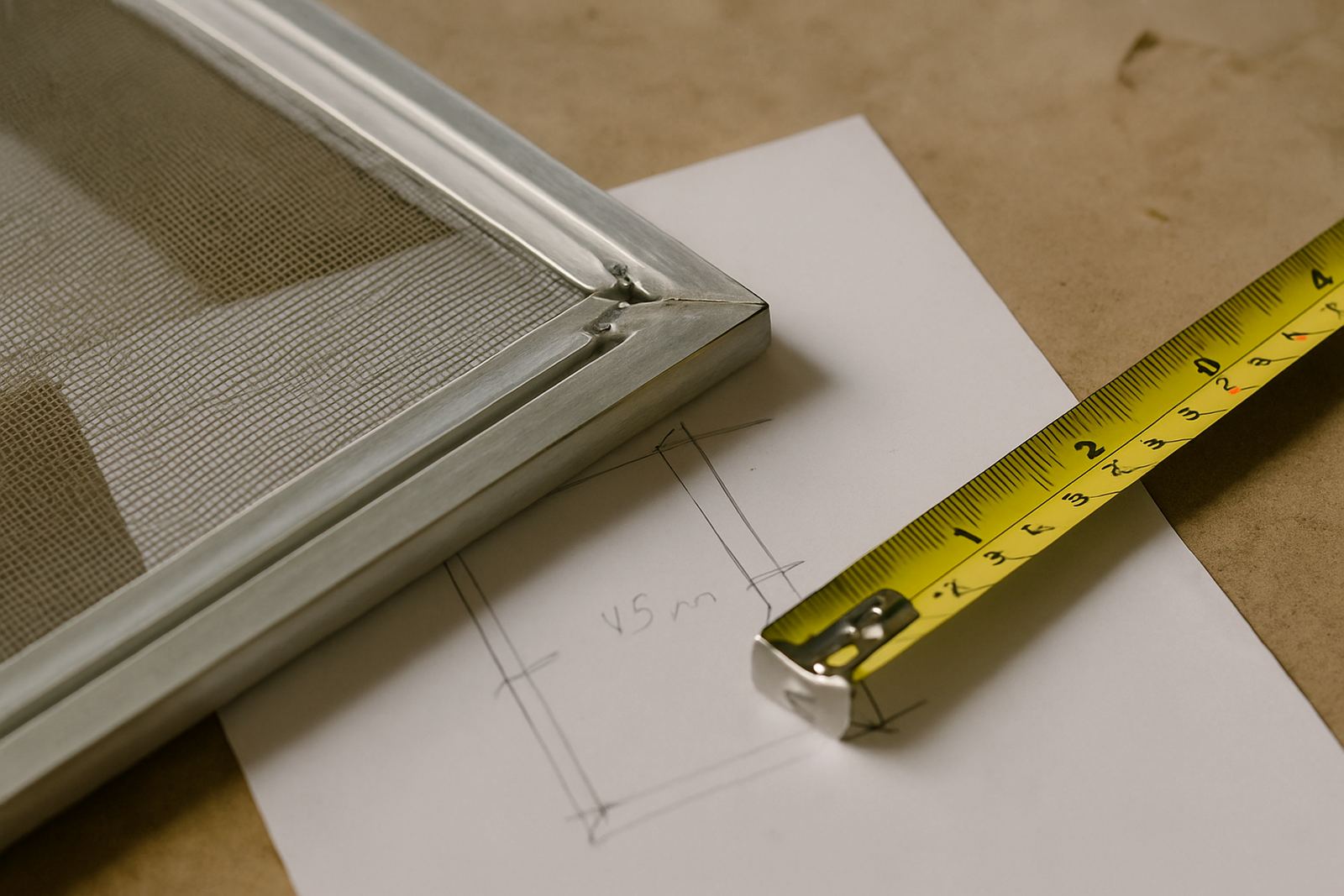
The easiest way to avoid a size mistake is to slow down at the measuring stage. Use a solid tape, check every opening more than once, and do not round up unless the fitting method allows it. If the opening is irregular or the installation is part of a larger estate rollout, it is worth getting a professional site measure before anything is manufactured.
That is especially useful where access is awkward, where there are multiple doors and windows, or where an older property has settled over time. It also helps when products need to be matched across several rooms so the result looks consistent. A small error in one unit can stand out badly when the others are aligned properly.
For homeowners and businesses across Walmer, Gqeberha, and the Eastern Cape, the goal is simple. Measure once, measure properly, and confirm every detail before production starts. That saves time, avoids wasted material, and gives the product a better chance of moving well and finishing neatly from day one.
When to call for a proper site measurement
Some openings are easy enough to measure at home. Others are not. If the window is high, the wall is uneven, the opening is out of square, or the product needs to work around existing security bars or unusual hardware, a proper site measurement is the safer route. The same applies when several windows must match, or when a commercial property needs all units to line up across a full frontage.
A trained measure also helps when there is a concern about fit on coastal properties where tracks, sills, and frames can change over time. It gives the installer a clearer view of what is needed, and it helps avoid the common problem of ordering to the wrong edge or allowing too little clearance. In short, a careful measure makes the rest of the job easier.
Good measuring is not a small admin task. It is the start of a product that works properly, looks tidy, and lasts better in real South African conditions.