Why coastal homes need a firmer maintenance rhythm
In Gqeberha, Walmer, Summerstrand and the wider Eastern Cape coast, screens cop more than just normal wear. Salt in the air settles on frames and mesh, wind pushes grit into tracks, and summer humidity can leave fittings stiff if they are left alone for too long. Even homes a few streets back from the beach still feel the effect.
The best approach is not to wait until something jams or starts rattling. A short monthly check, plus a proper seasonal clean, will usually keep most systems in good order. It also helps with security, because a screen that does not close properly is not doing its job. For estates and businesses, this routine matters even more since many units are used hard every day.
Your monthly check for screens, tracks and hardware
A monthly walk-through takes only a few minutes per opening, but it catches the small issues early. Look for salt marks, sand in the runner, loose screws, snagged mesh and any rubbing when the panel moves. If you hear a scraping sound, there is usually dirt in the track or a roller that is starting to wear.
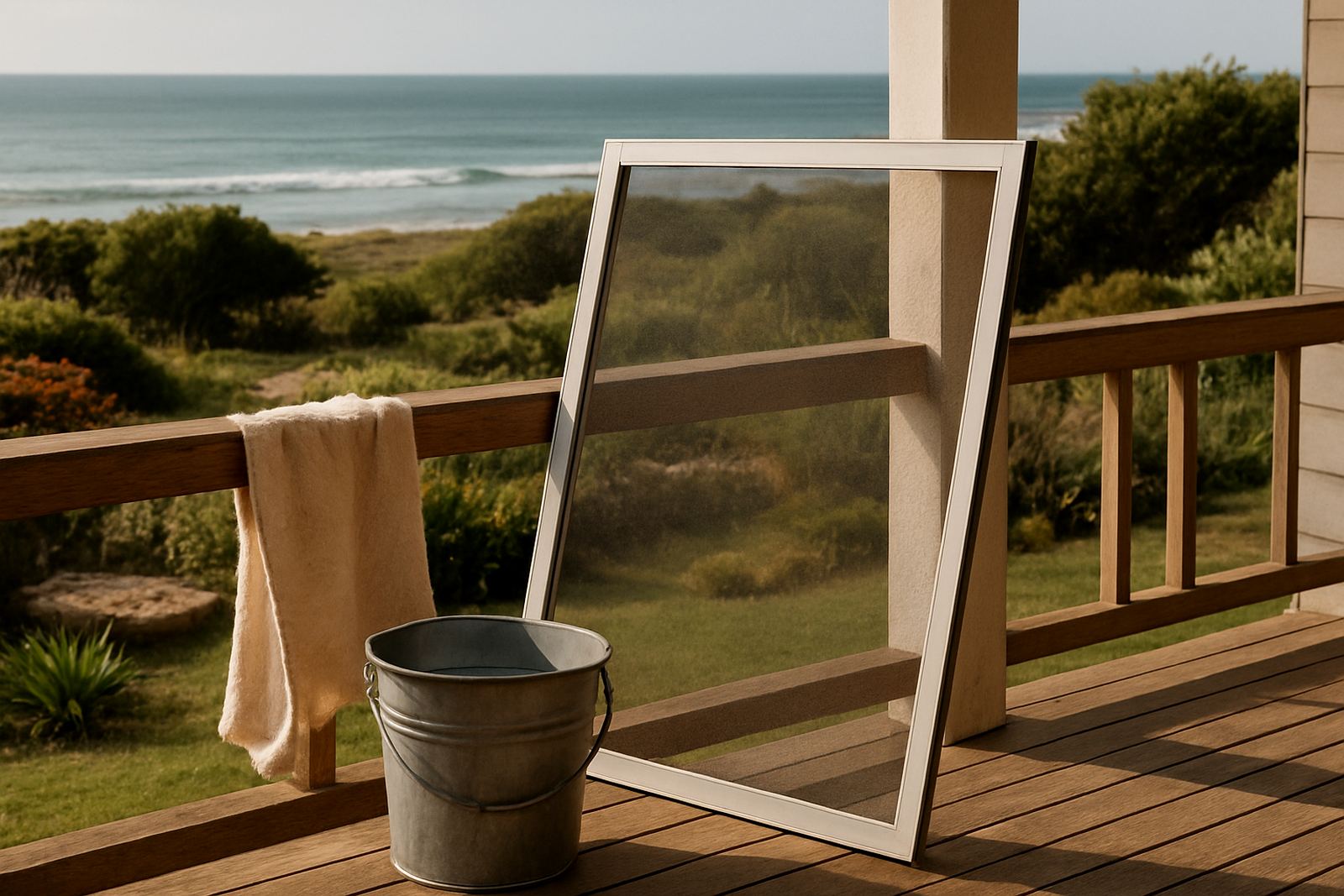
- Wipe frames with a soft cloth and clean water
- Vacuum tracks with a small nozzle to lift out sand and grit
- Check that handles, latches and locks still align properly
- Open and close each screen fully to test for sticking
- Look for tears, lifted corners or stretched mesh
Keep the cleaning gentle. Harsh chemicals can mark powder-coated finishes and some cleaners leave a sticky film that traps more dust. A little water and a mild soap is usually enough, and in most coastal houses that is the safer option.
What to do after wind, rain and heavy salt spray
After a strong southerly, a storm front, or a week of wet weather, give the screens a quicker once-over. Wind can push fine sand into the tracks, while rain may leave salt residue on exposed surfaces. If your home is close to the beachfront or on a windy stand in St Francis Bay or Jeffreys Bay, do this more often.
Start by checking that doors and sliding panels still meet their stops cleanly. Then rinse off salt from the outside of the frame and dry the fittings with a clean cloth. Do not leave pooled water sitting in bottom rails or around locks. On security screens, pay attention to hinges and latches because corrosion tends to start there first and then spreads. A small bit of care now saves a bigger repair later, its worth the time.
Seasonal care for summer heat and winter damp
Coastal maintenance changes with the season. In summer, the focus is on airflow, insect control and UV exposure on shading products. In winter, it is about moisture, corrosion and keeping moving parts from seizing. For homes in Newton Park, Uitenhage and Despatch, where dust can also build up around openings, the same routine still applies but may need extra cleaning after dry, windy days.
- Summer: clean mesh more often so airflow stays open and bugs stay out
- Summer: check that shade fabric or blinds are tensioned correctly
- Winter: inspect fixings for rust, whitening or pitting
- Winter: make sure condensation is not sitting in bottom tracks
If your property is used only on holidays, for example a family unit in St Francis Bay, it is worth arranging a check before and after the busy season. Closed-up homes often show more problems once everything is opened again, especially if the screens were left with salt on them for weeks.
When a repair is enough and when replacement makes more sense
Some problems need only a track service, mesh replacement or new hardware. Others point to heavier wear. If a frame is bent, a security screen no longer locks squarely, or repeated cleaning still leaves a panel hard to move, a site measurement and proper assessment are better than patching the same fault again and again.
Common signs that it is time to call for help include:
- Tears in mesh that keep spreading
- Rollers that no longer run smoothly after cleaning
- Locks that sit off-centre or do not catch properly
- Frames that corrode at the bottom edge
- Shade products that sag or flutter in the wind
For commercial properties and estates, it also makes sense to plan before peak season. A roll-out handled unit by unit reduces disruption and helps keep entrances and windows working as they should.
A local example from Walmer to the coast
A Walmer homeowner with a sea-facing patio may think the screens are fine because they still close, but a closer look can show salt build-up in the runners and a lock that is beginning to drag. Left alone through one wet winter, that small issue can turn into a jammed panel and a damaged latch. A seasonal check would usually pick it up before it becomes a bigger job.
That is the value of a routine. Not everything has to be repaired straight away, but nothing should be ignored for months either. ScreenMaster works across Gqeberha and the Eastern Cape with site measurements, product consultations, repairs, servicing and aftercare support, so homes and businesses can keep a regular maintenance rhythm instead of waiting for a breakdown.
A simple schedule that suits coastal homes
If you want a maintenance routine that is easy to keep to, use this one: a quick check every month, a proper clean every season, and a full service once a year. For busy homes near the sea, or properties with many openings, twice-yearly servicing can be the safer option.
- Monthly: wipe, inspect, and clear tracks
- Every 3 months: check hardware, tension and alignment
- After storms: rinse salt and dry fittings
- Once a year: arrange a proper service and repair any worn parts
That is usually enough to keep insect screens, security screens and shading products working as they should in coastal conditions. A small routine done consistently beats a major fix every time.