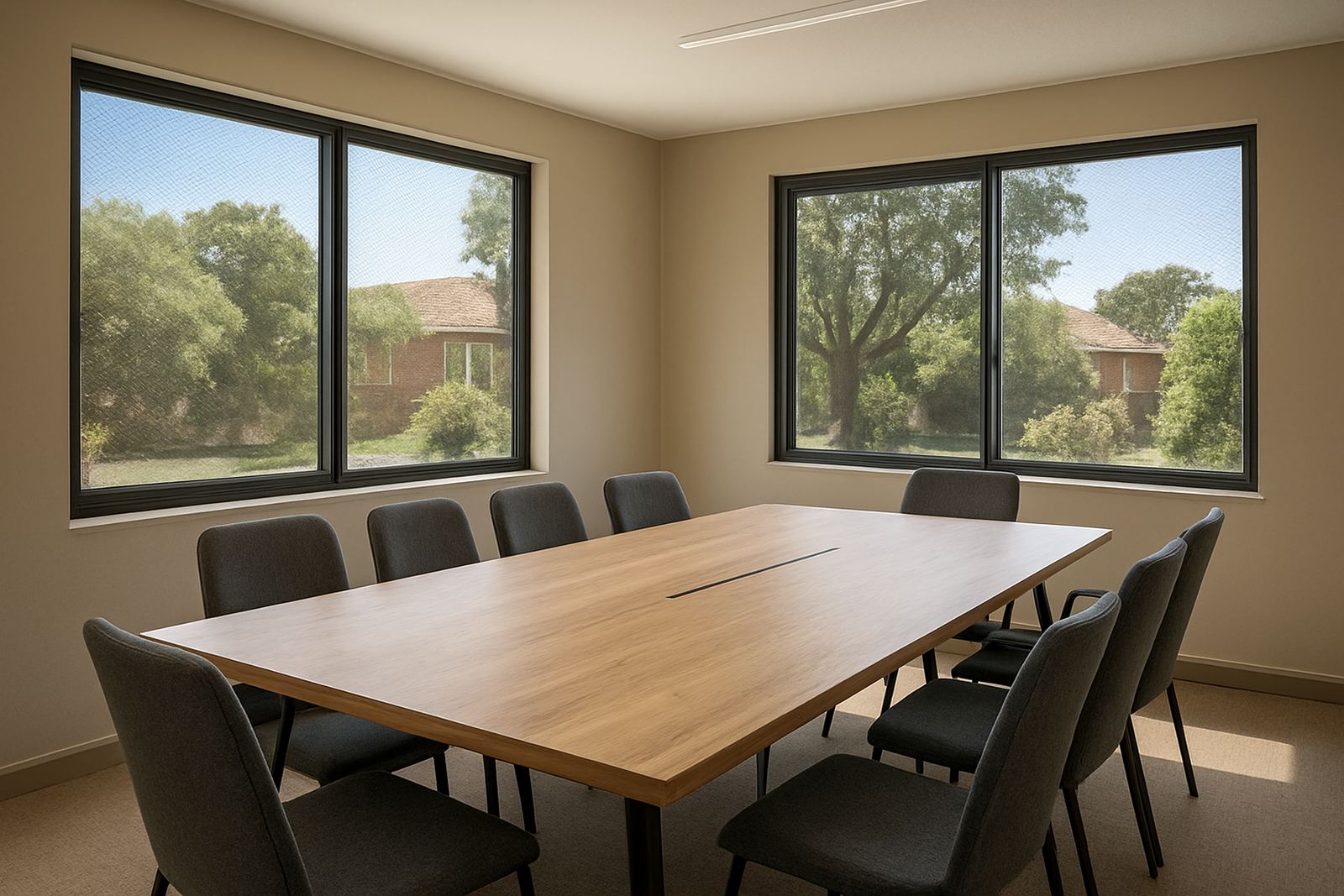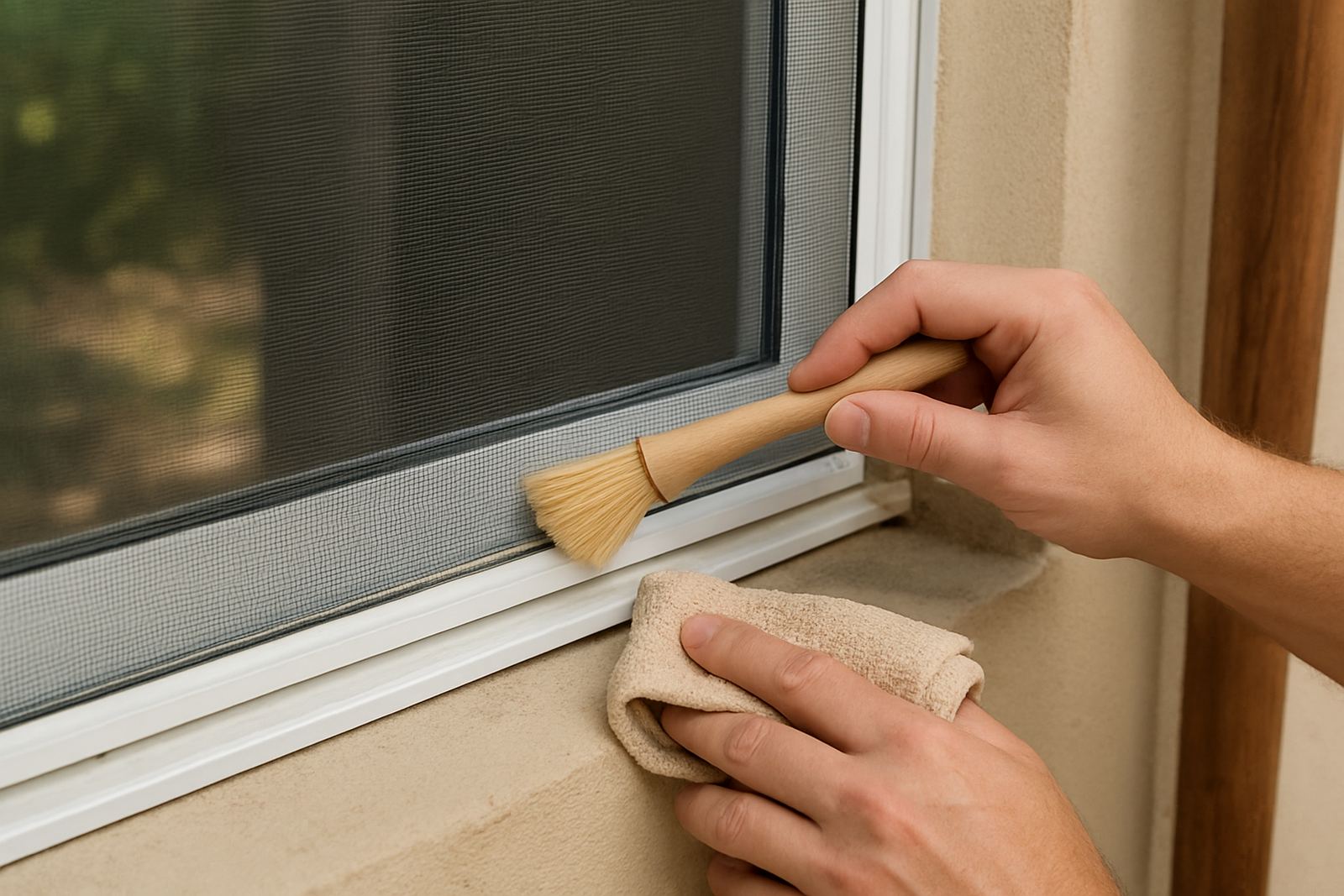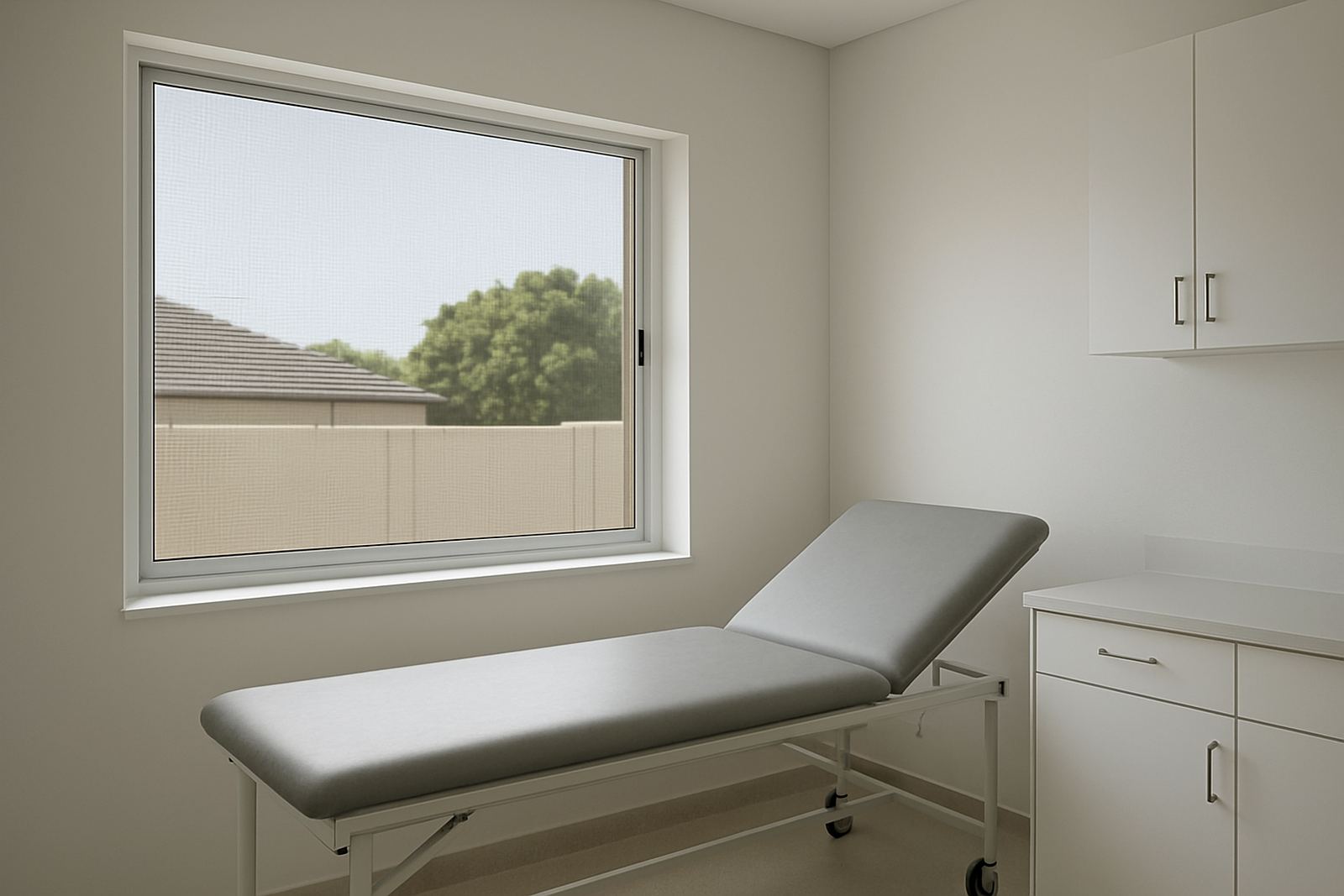
What clinic screens need to handle every day
In a healthcare setting, screens do more than keep insects out. They help reduce dust entry, support infection control routines, give patients privacy and make staff areas more manageable when doors and windows must stay open for air flow. A good screen should sit neatly in the opening, clean easily and keep working after repeated use by staff, cleaners and visitors.
For clinics in Walmer, Summerstrand, Newton Park and the broader Gqeberha area, the practical concerns are often the same. Salt in the air, wind-driven grit, summer mosquitoes and winter dust all make low-maintenance fittings important. If the screen is awkward to remove or the mesh traps grime, it quickly becomes a nuisance instead of a help.
The best clinic screen notes start with simple questions: where is the screen fitted, who will clean it, how often will it be opened, and does it need to allow ventilation while still supporting privacy and safety. Those answers shape the frame, mesh type and fixing method.
Choosing materials that stand up to cleaning and coastal air
For medical and allied health rooms, material choice matters as much as the fit. A screen that looks fine on day one may start warping, staining or corroding if it is installed with the wrong frame or hardware. Coastal towns such as Gqeberha and Jeffreys Bay can be hard on untreated fittings, so corrosion resistance is worth paying attention to from the start.
Aluminium frames with appropriate powder coated finishes are often a sensible choice for clinics because they are light, stable and easy to wipe down. Mesh selection depends on the room use. Fine insect mesh works well for consulting rooms and reception windows. Where extra security is needed for ground-floor openings, a stronger security screen can be used without blocking the whole opening. In some cases a combination of insect screening and security screening is the most practical solution.
- Choose frames that are easy to remove for deep cleaning or seasonal servicing.
- Use mesh that can be wiped without fraying or distorting at the edges.
- Specify fixings that suit the building material, whether brick, concrete or steel.
- Avoid fittings that trap dust in hard-to-reach corners.
Privacy, airflow and patient comfort in one opening
Clinics need balance. Rooms must feel private, but they also need fresh air and natural light where possible. Screens can help by allowing windows to stay open during mild weather while reducing insect entry and keeping the room more comfortable. In waiting areas, a screened opening can make the space feel less stuffy without compromising the basic boundary between inside and outside.
For treatment rooms, the placement of the screen matters. A screen on a side window may be enough to support ventilation, while a front-facing opening may need a different approach because of privacy and street exposure. In some medical rooms, fixed screens are better. In others, sliding or removable units suit the cleaning routine more effectively.
Keep in mind that privacy is not only about blocking views. It also means avoiding distractions, reducing clutter around the opening and making sure blinds, curtains or frosted glass work together with the screen. If the whole setup is planned properly, staff do not have to choose between airflow and patient dignity.
Security screens for clinics, pharmacies and shared practices
Many clinics in Eastern Cape towns are part of mixed-use buildings or small business centres, so security is a practical concern after hours. Ground-floor consultation rooms, dispensary counters and side access doors may need added protection without making the place feel like a cage. Security screens can support that by giving a solid physical barrier while still allowing light and visibility through the opening.
For clinics in Uitenhage, Despatch and Gqeberha business districts, a proper security screen can reduce the risk of break-ins while keeping routine access manageable for staff. It is important that the screen suits the opening size and does not interfere with emergency exits, fire procedures or daily cleaning. Where a building has municipal or body corporate rules, the screen should also match the approved appearance and fitting method.
- Check that the screen does not block escape routes or emergency access.
- Confirm the opening method suits staff use, especially where keys or locks are involved.
- Make sure the visible finish is suitable for a clinic front, not just the back door.
- Plan for service access so repairs can be handled without major disruption.
Repair, servicing and the small details that save money
A clinic screen gets used harder than a domestic one. Doors are opened more often, carts knock against frames, and cleaning crews need to work around it. Over time, tracks can collect grit, mesh can loosen and hardware can wear. If those issues are left too long, the screen starts sticking or rattling and staff stop using it properly.
That is why regular checkups are worth doing. A seasonal inspection can pick up loose fixings, damaged mesh, worn rollers or corrosion before a small fault turns into a full replacement. In a busy practice, even a slightly bent track can slow down the morning routine. It is a small thing, but it becomes annoying fast.
Common clinic maintenance jobs include mesh replacement, track servicing, hardware replacement and aftercare support after installation. These jobs are not glamorous, but they are the difference between a screen that lasts and one that becomes another admin issue for the practice manager.
A practical example from a Gqeberha medical practice
A local example helps put this in perspective. A small medical practice in Walmer needed better insect control in consulting rooms and a safer solution for a side entrance used after hours. The building was close to busy traffic, with dust in summer and damp air in the mornings. The owner wanted fresh air where possible, but the rooms still had to feel calm and professional.
The solution used fine mesh on the consulting room windows, with stronger screening at the side access point. The installation was measured to suit the openings, so the screens sat neatly without needing awkward workarounds. The staff then had a simple routine for cleaning: wipe the frames, check the tracks, and report any wear early. It kept the place more comfortable for patients and easier to manage for the team.
That sort of outcome is what matters in healthcare. Not a fancy feature, just a screen that does its job day after day and does not create extra work.
Planning a rollout for one room or several branches
Some practices only need one or two openings screened. Others need a larger rollout across multiple consulting rooms, dispensary spaces, admin areas and staff entrances. In those cases, consistency matters. The same finish, fixing style and service approach should be used across the site so maintenance stays simple and replacements are easy to match later.
For healthcare operators with rooms in Summerstrand, Newton Park or further out in St Francis Bay, it helps to plan the work around opening hours and patient flow. Site measurements, product consultations and custom manufacture allow each opening to be treated properly instead of forcing a standard size into an awkward frame. Once installed, aftercare support and occasional servicing keep the screens performing as intended.
For clinics, the best screen is often the one that disappears into the background. It should be there when needed, easy to clean, and dependable enough that the team stops thinking about it. That is usually the sign it was chosen well.