Why Flat Screens Suit Apartment Living
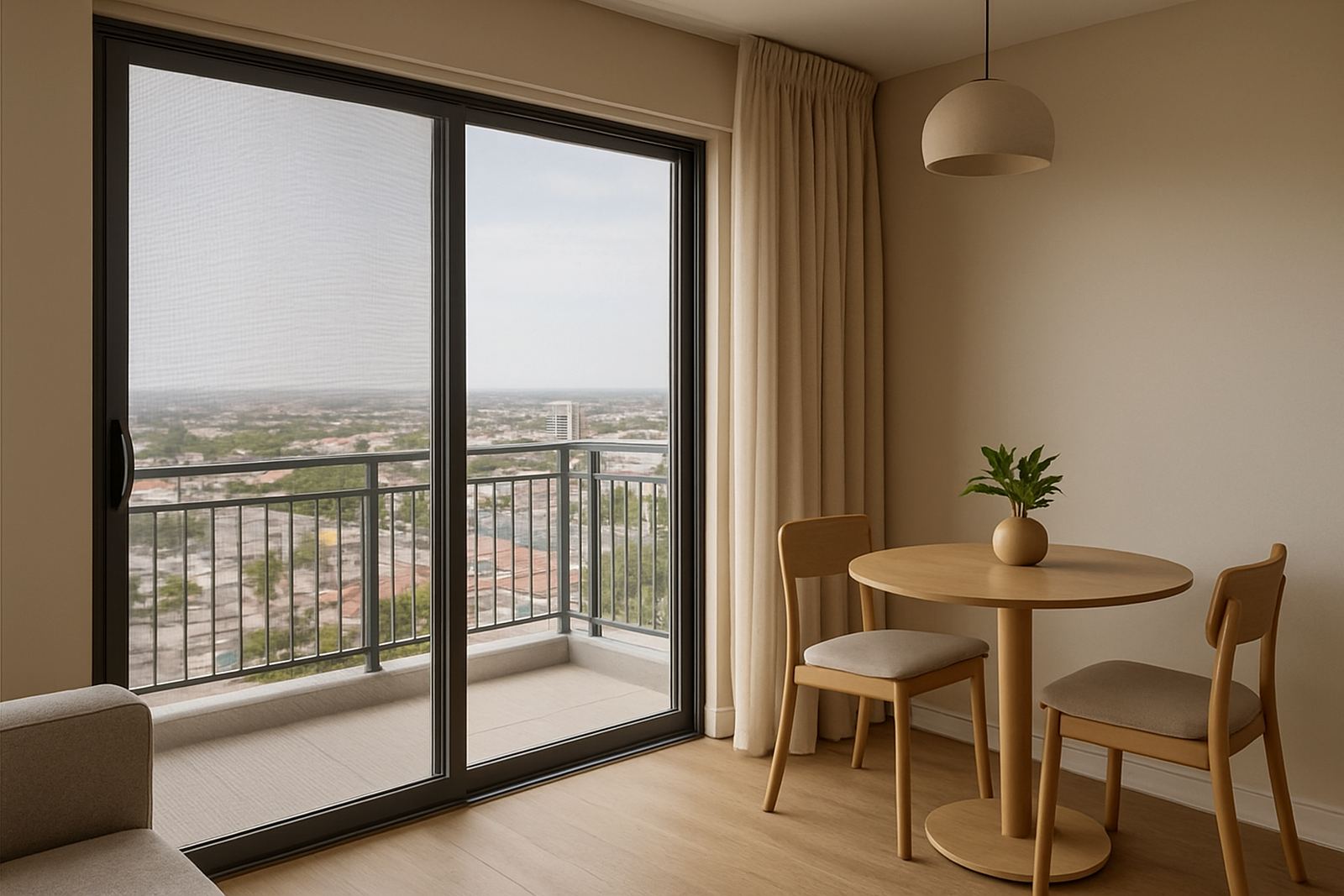
Flat screens work well in apartments because they sit close to the opening and do not swing into the room. That matters in smaller lounges, compact bedrooms and kitchen areas where every metre counts. They are also useful on balcony doors where you want ventilation without leaving a gap for mozzies, flies or dust from the street.
In coastal areas like Gqeberha, screens also help with salt air and fine grit that blows in on windy days. For upper-floor units, they can be matched to window styles that are common in flats and sectional title homes, including sliding, hinged and fixed openings. If the body corporate has rules about visible fittings or colours, we take that into account during the measure and quote stage.
For many clients, the decision comes down to practical comfort. You want to open the window at night, let the sea breeze through, and still sleep without insects. A flat screen gives you that without changing the room layout or blocking light.
Common Screen Setups for Flats and Small Units
The most common flat screen jobs are straightforward, but the details still matter. The opening size, frame depth and how the window or door is used all affect the final setup. A screen for a bedroom window is often different from one on a balcony door or utility opening.
- Fixed insect screens for bedroom and kitchen windows
- Sliding screens for balcony doors and larger openings
- Hinged screens where access is needed for cleaning or airflow control
- Security screens for ground-floor windows and vulnerable balcony access
- Mesh replacement for damaged or aged screens that no longer seal properly
We also look at the way the unit is used. If a window is opened daily for fresh air, the hardware needs to hold up under regular handling. If it is a seldom-used opening, a simpler setup may be enough. In compact homes, the aim is to keep the screen neat, easy to use and out of the way. No one wants a screen that knocks against furniture or makes cleaning harder.
Planning the Layout Before You Order
Good planning saves money and avoids rework. Before ordering, measure the opening properly and check what sits inside and outside the frame. A common mistake is to measure only the visible glass area, then ignore handles, latches, burglar bars or balcony rails. That can lead to a screen that fits on paper but not on site.
We usually advise clients to think through how each room is used. In a bedroom, privacy and airflow may matter most. In a kitchen, easy cleaning and insect control are usually the priority. On a balcony, the screen may need to handle stronger wind, so the fit and fixings must be right. In some units, a low sill or a narrow reveal means the screen has to be built to suit the opening exactly, not forced into a standard size.
Seasonal use also matters. Many apartment owners in Gqeberha and the wider Eastern Cape open windows more in summer, but even in winter there are days when you want fresh air without inviting insects inside. If you are working around load-shedding, it helps to have screens that let you use cross-ventilation properly when fans or aircon are off.
What to Avoid When Choosing Flat Screens
Most problems come from rushing the order or choosing the wrong type for the opening. A screen that is fine for one window may be poor on another. The wrong mesh can also reduce visibility or make the room feel too closed in, which is not ideal in a flat where natural light matters.
Another common issue is ignoring maintenance access. If a screen blocks cleaning, tilting or emergency exit use, it becomes a nuisance. In a rental unit that changes tenants often, it is worth choosing fittings that can be serviced without replacing the whole unit. Rust is another concern near the coast, so the frame finish and hardware need to suit humid conditions and salty air.
- Do not guess the size from the inside plaster line alone
- Do not choose a screen that clashes with balcony handles or security gates
- Do not overlook the effect of wind on larger openings
- Do not use a mesh that is too fine for the room's airflow needs
- Do not ignore municipal or body corporate rules on outward-opening parts
If you are fitting screens in a sectional title complex, it is worth checking requirements before you start. Some complexes prefer a certain colour or a neat external finish, and it is simpler to plan for that upfront than to change it later.
Budget Ranges for Flat Screen Projects
Costs vary depending on opening size, frame type, mesh choice and whether the screen needs special hardware. A basic flat insect screen for a standard apartment window will usually sit in a lower range than a security screen for a balcony opening. If you need multiple units measured and fitted at once, there can be savings per opening compared with single-item callouts.
As a practical guide, many small flat screen jobs are quoted per opening for simpler insect screens, while larger or more detailed openings can be quoted per job. Security screens, special finishes and awkward layouts may cost more. Repairs and mesh replacement are usually lower than full replacements, especially where the frame is still sound. Final pricing is always based on site measurements, because even a small change in width or reveal can affect the build. Ask for a quote
For landlords and body corporate managers, it is often better to standardise a few screen types across the unit. That keeps future servicing simpler and helps with budget planning when a tenant moves out or a screen is damaged.
How We Handle Measuring, Fitting and Aftercare
ScreenMaster works from our Walmer base in Gqeberha and installs across the Eastern Cape, including Summerstrand, Newton Park, Uitenhage, Despatch, Jeffreys Bay and St Francis Bay. For flat screen work, we start with site measurements and product consultation so the screen suits the opening and the way the unit is used. That keeps the process practical and avoids trial and error.
Our team can handle custom manufacture, home installations, commercial installations, track servicing, hardware replacement and seasonal checkups. If a screen has been damaged by wind, salt air or repeated use, we can look at repairs, mesh replacement or a full replacement where needed. For complexes and estate rollout work, we also help with standardised fitments so the same approach can be used across multiple units.
- Measure each opening individually, even if the windows look the same
- Check balcony doors for clearance around handles and floor tracks
- Choose hardware that suits coastal humidity and daily use
- Plan for easy cleaning and access to latches or catches
- Book checkups if screens are used heavily or exposed to wind
When the layout is right, flat screens fade into the background and simply do the job. You get fresh air, fewer insects and a tidier finish in a small space, without making the room feel cluttered.