Why track clearance matters before you fit a sliding screen
Clearance is the gap that allows a sliding screen to move freely without rubbing on the floor, sill or threshold. On the Eastern Cape coast, where dust, sand and humidity can all affect a track, a small measurement mistake can turn into daily frustration. The screen may drag, jam, or wear the hardware unevenly, which shortens service life and makes cleaning harder.
In homes around Walmer, Summerstrand and Jeffreys Bay, we often find that tiled floors, older timber thresholds and uneven grout lines all change the usable gap. Commercial sites can be even trickier because of busy entrances, wheel traffic and cleaning routines. The aim is not just to make the screen fit, but to make it move smoothly for years.
As a rule, clearance needs to suit the track profile, the wheel set, the frame depth and any weather seal that is part of the system. If one of those elements is out by even a few millimetres, the whole screen can feel wrong to use.
Measure the opening from floor to head and from sill to threshold
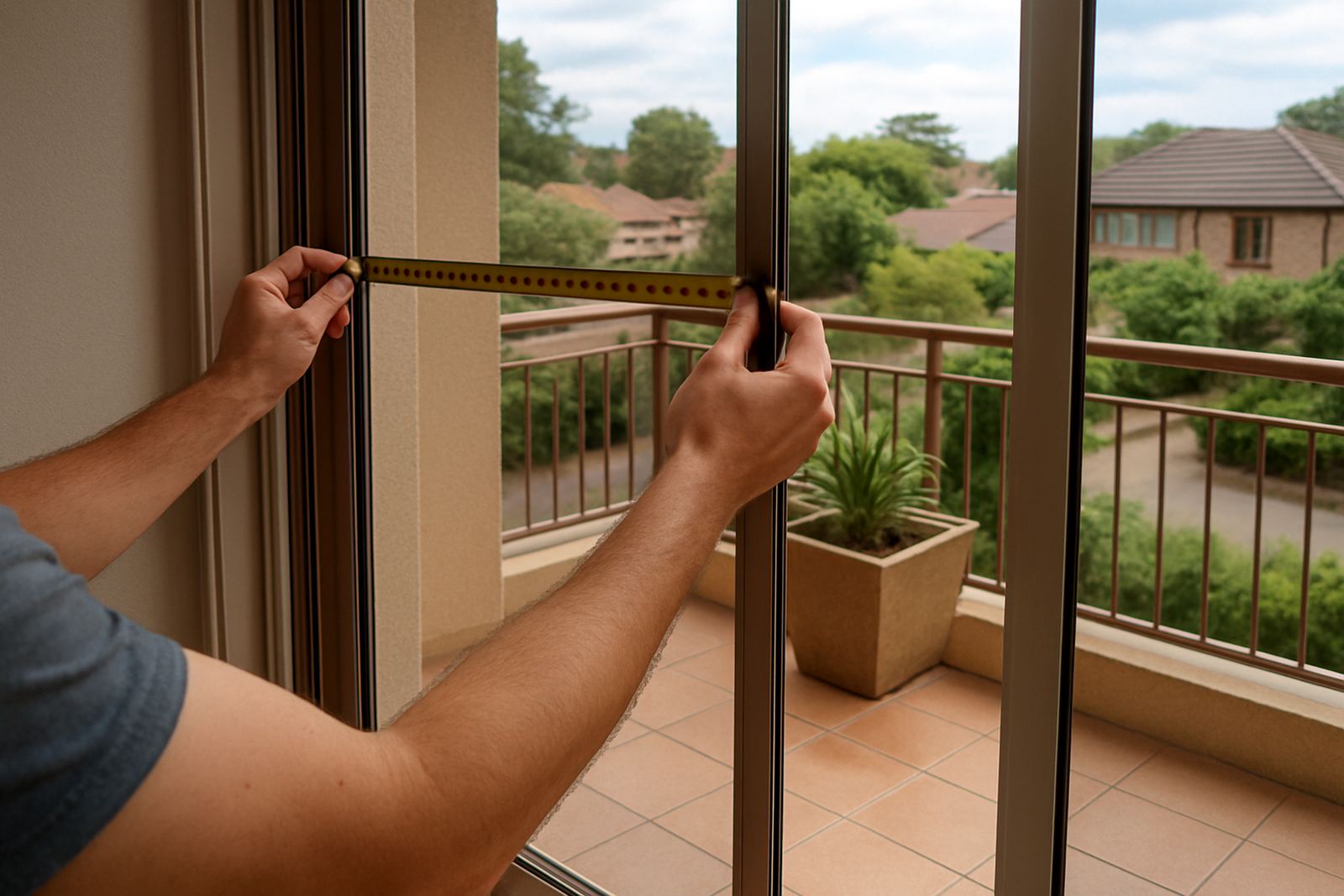
Start with a proper site measurement rather than guessing from the old opening. Measure the full height at three points: left, centre and right. Do the same across the bottom, especially if the floor slopes or the sill is not level. Many older properties in Gqeberha and Uitenhage are slightly out of square, so one reading is rarely enough.
Use a steel tape measure and note the lowest point of the opening if the floor rises or the threshold sits proud. That lowest point will usually determine the final clearance. If the screen is installed into a recessed track, measure the recess depth as well, because that affects how much wheel adjustment is available.
- Measure height at left, centre and right
- Measure width at top and bottom
- Check for floor slope, chipped tiles or raised grout
- Record the deepest point of any sill or threshold
- Allow for final hardware and seal thickness
Know the minimum gap needed for smooth movement
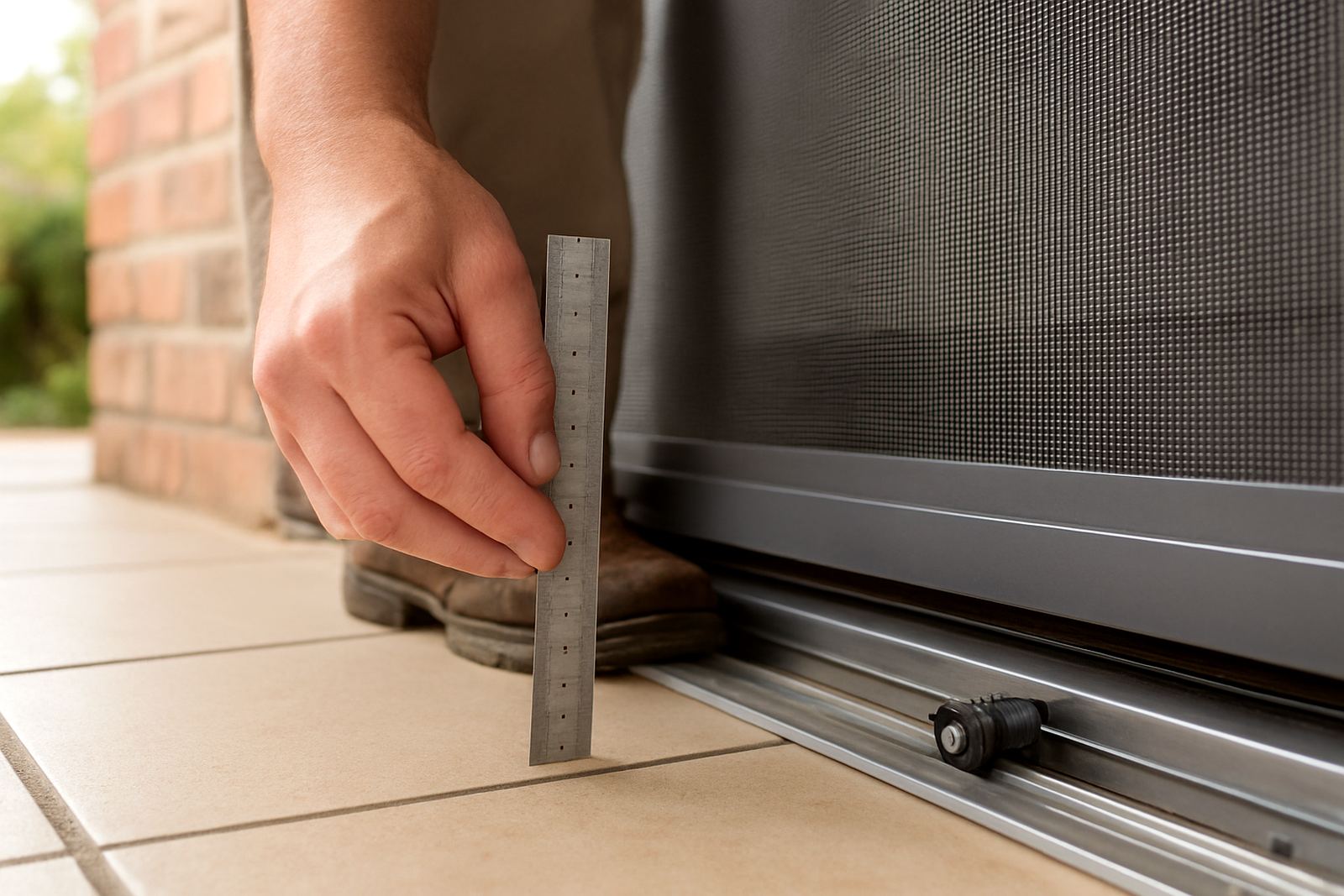
The gap needed will depend on the system, but the goal is always the same: enough space for free movement, not so much that insects, dust or draughts get through more easily. A well set screen should glide without the bottom rail touching the floor under normal use. If the screen is meant for an entrance that gets heavy daily use, a little extra clearance can help prevent binding when the building settles or the track collects grit.
For coastal homes in St Francis Bay or Jeffreys Bay, sand can build up in the lower guide and reduce the effective gap. In those cases, it helps to leave a sensible operating allowance and make sure the track is easy to clean. On commercial premises, staff should be able to sweep or vacuum the area without damaging the track edge or knocking the roller alignment out.
If the clearance is too tight, the first signs are usually scraping, a higher push force, or a slight jerk at one point in the travel. If it is too loose, the screen can look uneven and may leave a gap that affects sealing and appearance.
Check the sill, threshold and floor finish before installation
The condition of the base surface matters as much as the measurement. A tiled threshold with a chipped edge, a rough concrete lip, or a painted sill with flaking material can all interfere with the screen bottom rail. In some cases the issue is not the clearance itself, but a local high point that catches the frame on the way through.
Before fitting, inspect the entire run for cracks, loose tiles, screw heads, and sealant ridges. If the area has recently been retiled or patched after building work, let the finish settle and check again. A fresh skim of levelling compound can also change the gap by a few millimetres, which matters more than many people expect.
- Remove debris and test the area with a straightedge
- Check for proud screws, tile lips and sealant ridges
- Look for uneven grout lines near the track path
- Confirm that the door or screen does not foul on wind stops or brackets
- Make sure the cleaning routine will not wash grit into the track
Adjust rollers and track components after fitting
Once the screen is in place, the final fit is set with the roller adjustment and the track alignment. A good installer will test the movement in both directions, then fine tune the height so the bottom rail clears the floor by the right amount. The top and side guides should hold the screen steady without forcing it into the track.
At this stage, the screen should be opened and closed several times to check for any rubbing at one point only. That usually shows a localised issue such as a bowed track, uneven threshold, or a slightly twisted frame. It is better to correct that immediately than leave it for the first few weeks of use. A small adjustment now saves wear later.
If your system includes a lock or latch, check that the closing position still lines up after the roller height is altered. The frame can move just enough to affect the catch, especially on wider openings used in commercial premises or estate entrances.
Use a simple maintenance routine to protect clearance
Clearance changes over time because tracks collect dirt, homes settle, and weather affects materials. A basic routine keeps the system moving well. In Gqeberha, where salt in the air and fine dust can settle quickly, monthly cleaning is worth the effort. In busy business entrances, weekly checks may be better.
Look for signs that the screen is no longer gliding correctly. Early attention prevents damage to rollers, seals and the frame. If a bottom guide starts to scrape, do not force the screen. Clean the track, check for debris and test again before assuming the hardware has failed.
- Wipe the track and sill with a dry cloth or vacuum nozzle
- Remove sand, grit and insect debris from the lower channel
- Check for loose screws or worn rollers
- Inspect mesh edges for snagging near the bottom rail
- Book seasonal checkups after heavy wind, rain or building work
If the problem keeps returning, the opening may need a fresh site measure or a service call to reset the alignment. That is often the best fix for older homes in Newton Park or Walmer where floors have moved slightly over time.