Start with a light clean every few weeks
For most homes in Walmer, Summerstrand and the wider Gqeberha area, a light clean every few weeks is enough to keep frames, mesh and tracks in good order. Use a soft brush or a vacuum with a brush attachment to remove dust, sand and cobwebs. On coastal properties, it helps to do this more often because salt can settle on the surface and in the corners.
Mix a small amount of mild soap with lukewarm water and wipe the frame with a soft cloth. Rinse with clean water and dry with a fresh cloth. Avoid strong chemicals, scouring pads and pressure washers, as they can damage coatings, warp lighter components or loosen fixings. A gentle clean also makes it easier to spot wear early.
- Brush or vacuum loose dirt first
- Wipe with mild soapy water and a soft cloth
- Dry frames and corners after cleaning
- Do not use abrasive cleaners or hard scrubbing pads
Keep tracks and rollers free from grit
If a sliding screen starts to feel stiff, grit in the track is usually the first thing to check. Sand, pet hair and small stones can build up quickly, especially after windy days or load shedding when windows and doors may be left open for longer. Clean tracks make a big difference to how smoothly the screen moves.
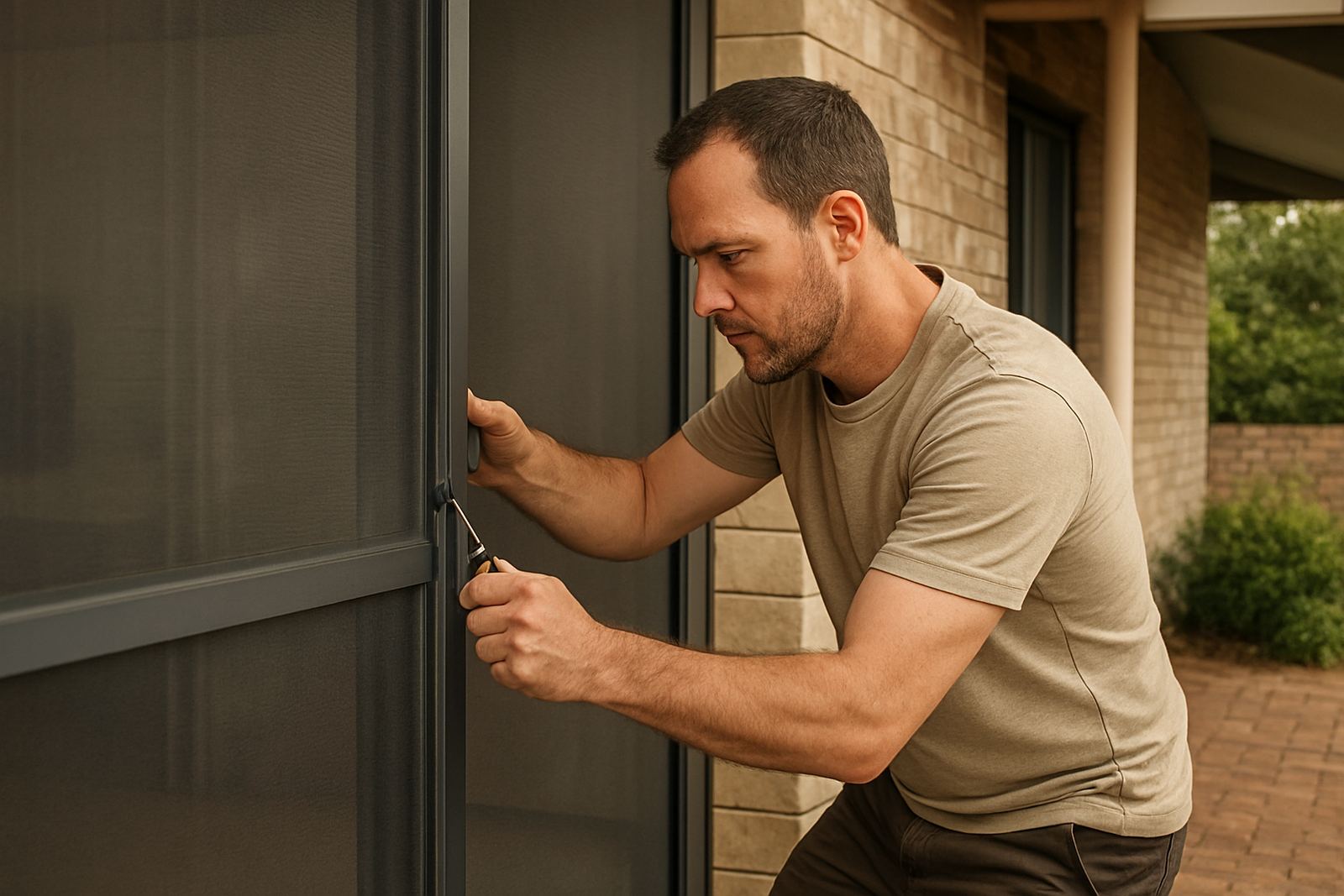
Use a hand brush or vacuum nozzle to clear out the track, then wipe it with a damp cloth. Check that the roller paths are free of debris and that nothing is bent or rubbing. If the screen still catches, do not force it. Forcing the unit can damage the frame, the mesh or the hardware and turn a small problem into a service call.
- Remove grit from the full length of the track
- Check that rollers move evenly
- Look for bent corners or loose screws
- Stop and book service if the screen still sticks
Treat coastal humidity and salt air early
Homes near the sea, including Jeffreys Bay and St Francis Bay, need a bit more attention because humidity and salt can mark hardware sooner. Wipe down visible metal parts from time to time and keep an eye on any discolouration, tiny rust spots or powdery residue. The sooner these are handled the better.
Where possible, rinse exposed parts lightly with fresh water and dry them afterwards. Make sure the screen is not sitting against standing water, damp plaster or garden irrigation overspray. In humid months, leave the area around windows and doors open when practical so air can move through and moisture does not stay trapped. That small habit can help a lot.
Check mesh and fixings before summer use
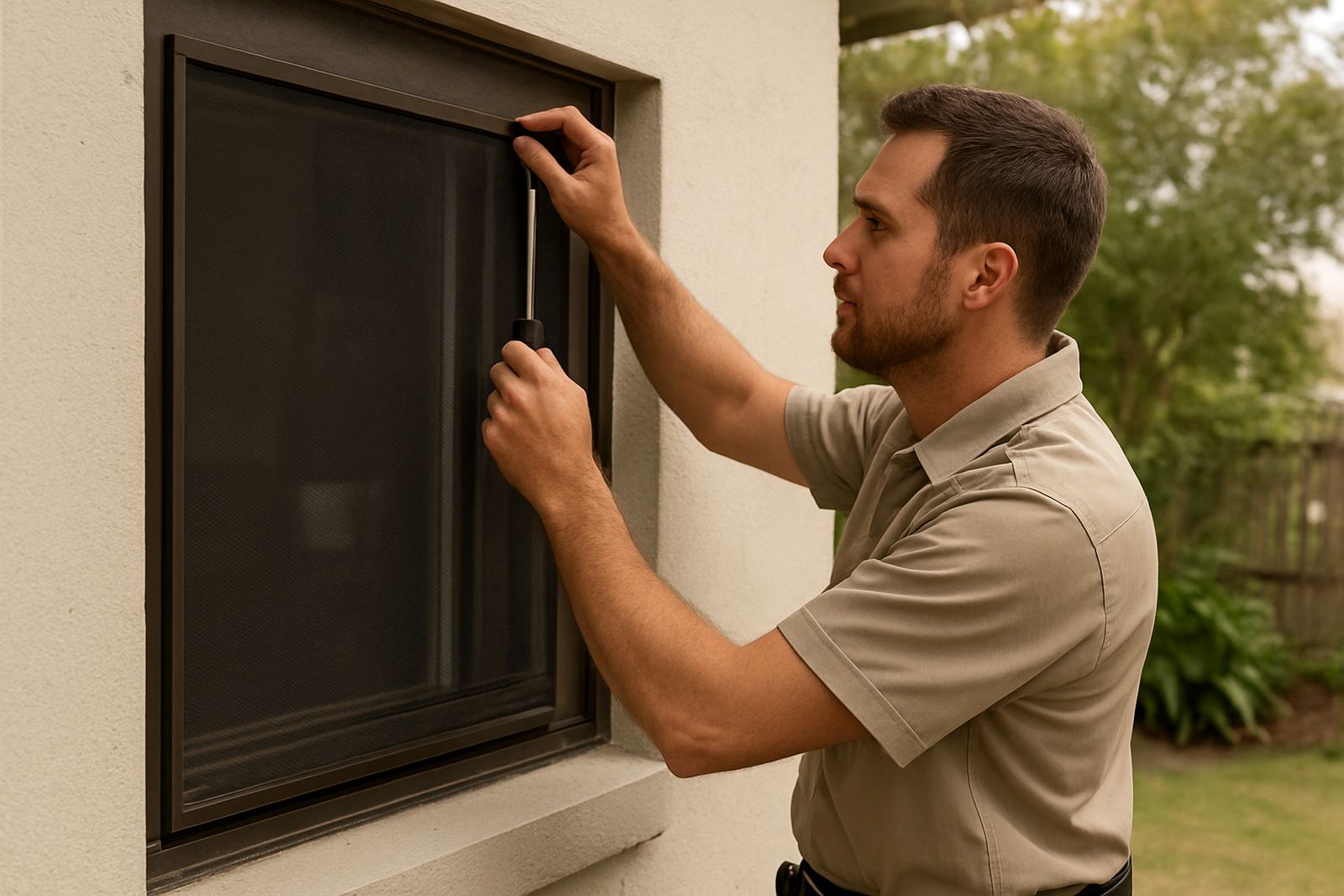
Before the warm months, give each screen a quick once-over. Look closely at the mesh for small tears, pulled corners or places where pets may have pressed against it. On security screens, check that locks, hinges and latches close correctly and that the frame sits square. A loose catch can be a simple fix if it is picked up early.
It also helps to test each unit after cleaning. Open and close it slowly. Listen for scraping, rattling or a change in feel. If one side drops or the unit no longer meets the frame properly, the screen may need adjustment. Taking five minutes now can save time later, especially if you rely on the screen daily.
- Look for tears, loose corners and worn edges
- Check that locks and latches engage properly
- Test opening and closing for smooth movement
- Arrange repairs before the busy summer season
Handle shading products with a steady hand
Shading products need a lighter touch than many people expect. Open and close them evenly, and do not yank cords, arms or tensioned parts. Sudden pulls can throw the alignment off or strain the fittings. If your shading is used on a patio or commercial frontage, dust and wind can affect it more quickly so a regular visual check is worthwhile.
When closing shade after strong wind, make sure the fabric or slats are not caught on anything nearby. Trim back plants if they are brushing the unit and check for insects nests in the corners. Keeping the area clear helps the product move properly and reduces unnecessary wear. It is a small thing but it makes the system last longer.
When to book ScreenMaster support
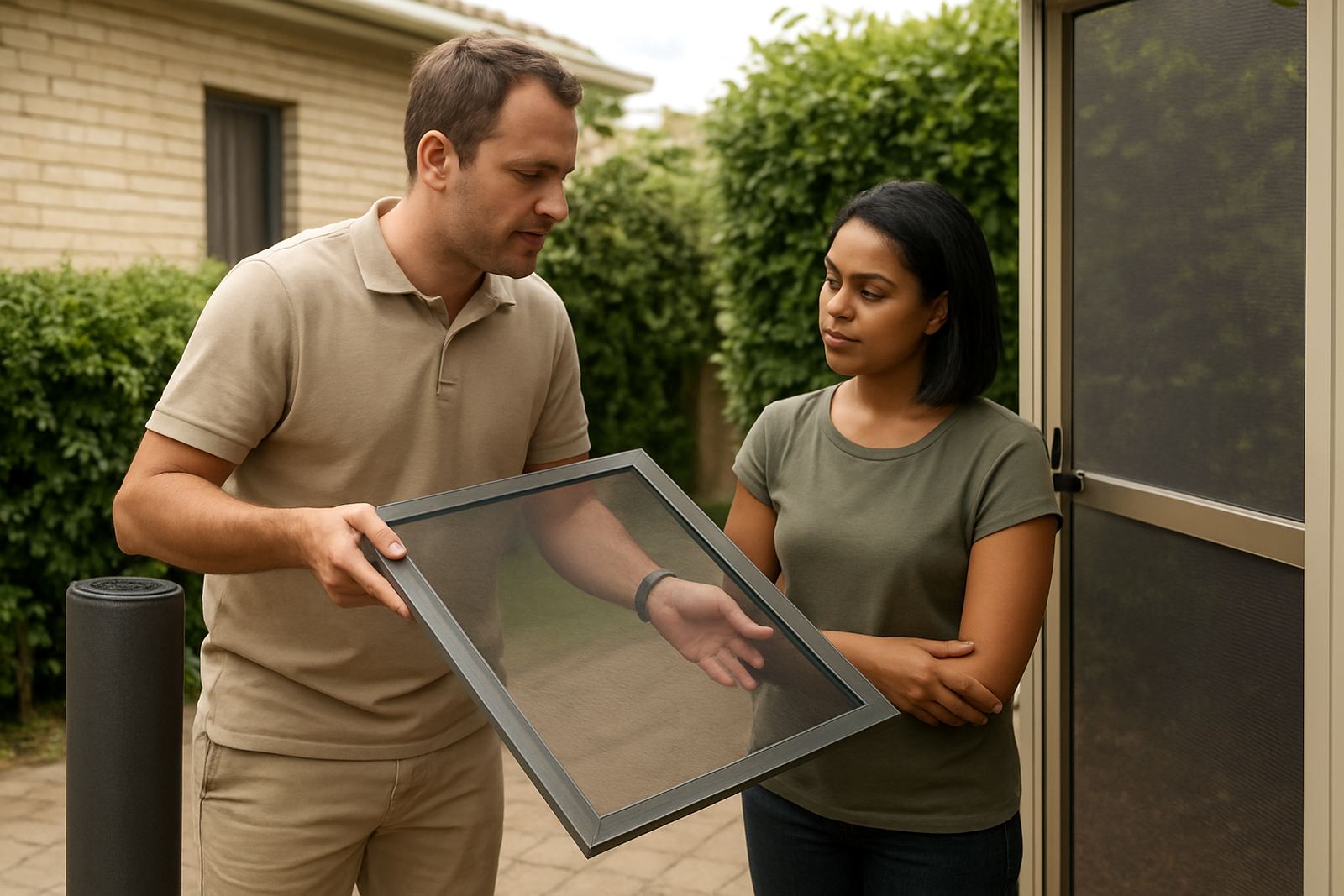
Some care can be done at home, but there are times when a proper service is the better choice. If a screen is warped, the mesh has split near the frame, the hardware is loose, or the unit no longer fits well after a door adjustment, book a visit. In estates and commercial spaces across Gqeberha and the Eastern Cape, we also assist with scheduled checkups and estate rollout support.
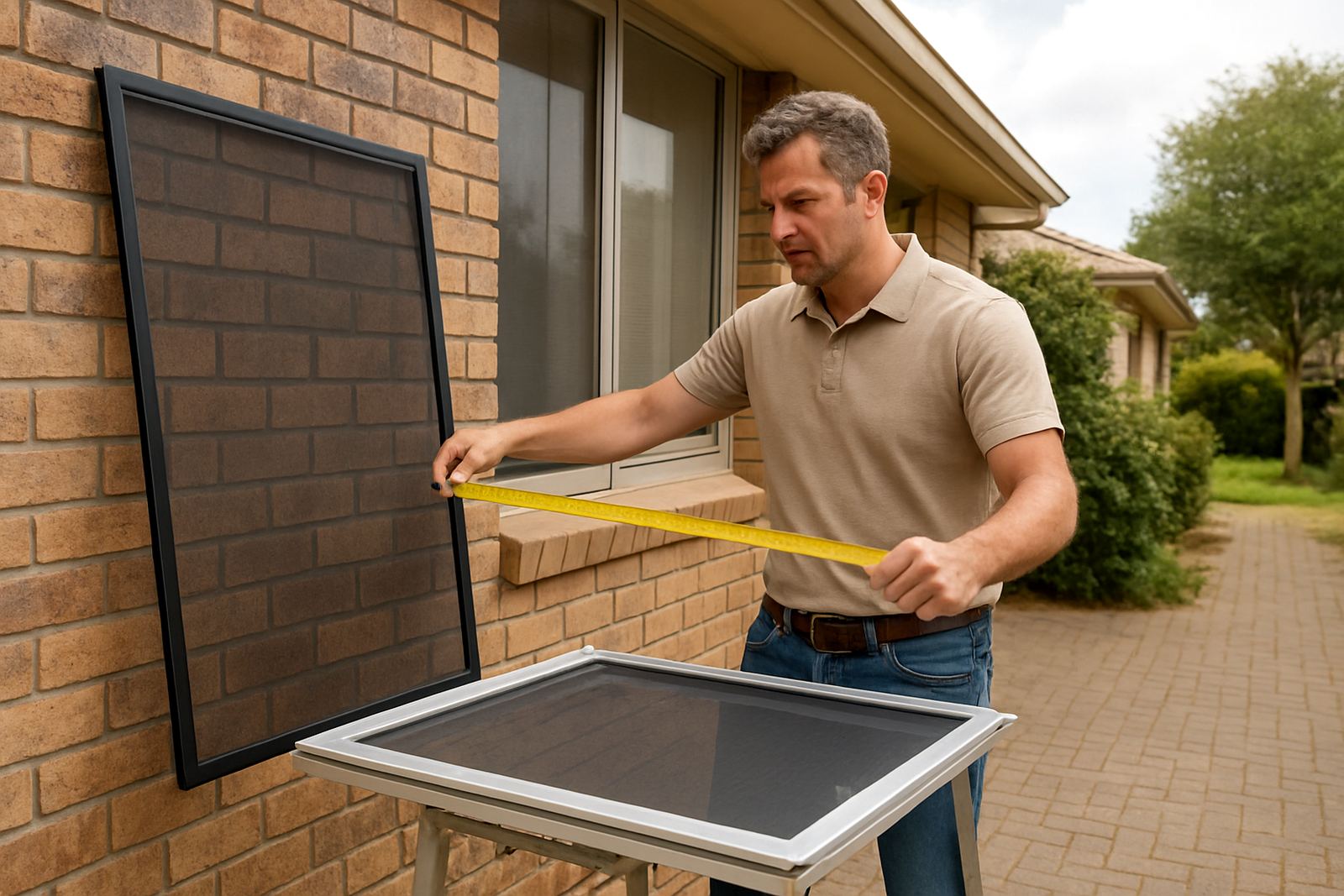
Our team can help with screen repairs, mesh replacement, track servicing, hardware replacement and seasonal checkups. If you want to reduce repeat issues, ask for a site measurement and product consultation so the right fit and finish is checked from the start. That saves time on call-backs and keeps things neater in the long run.
- Book help if the frame is bent or the mesh has torn
- Arrange service when tracks keep jamming
- Ask for aftercare support after repairs or installation
- Use the contact page enquiry form to ask about insect screens, security screens or shading in Gqeberha