What We Replace and Why It Matters
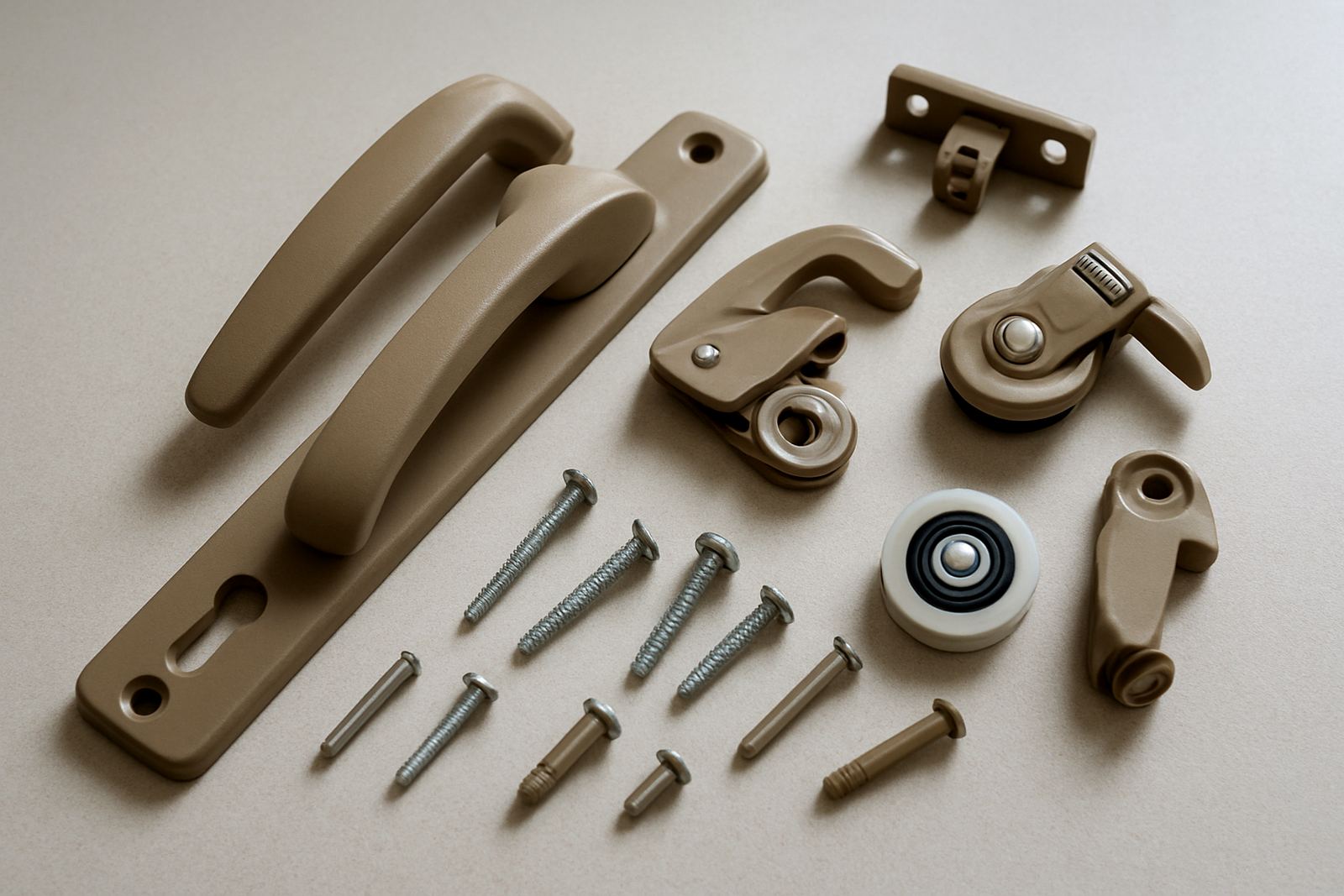
Our hardware replacement service covers the small parts that carry daily wear: handles, rollers, closers, latches, catches, keeps, guide shoes, pivot parts, corner pieces and fixings. On coastal properties in Walmer, Summerstrand and Jeffreys Bay, salt in the air can corrode metal fasteners and seize moving parts. In busy homes and offices, repeated use can loosen fittings, make doors drag, or leave a screen not closing flush.
We replace like for like where possible, and we also upgrade weak components when a better suited part will improve service life. That can include larger rollers for smoother movement on patio screens, stronger latches for security screens, or corrosion resistant fixings for homes near the sea. If your screen is otherwise sound, hardware replacement is often the most cost-effective way to restore proper use without replacing the full unit.
- Handles for sliding and hinged screens
- Rollers and guide components for smooth track travel
- Closers and latches for positive shut and secure locking
- Catches, keeps and strike plates
- Fixings, screws and small wear parts
Signs the Hardware Needs Attention
If a screen sticks, rattles, scrapes the frame or needs a hard push to close, the hardware is usually telling you something. You may also notice the handle feels loose, the latch does not line up cleanly, or the door needs lifting to clear the track. On security screens, a worn closer or damaged latch can leave the unit not seating properly, which affects both safety and day to day use.
We often attend callouts where the frame and mesh are still in good condition but one or two parts have failed. That is common after years of use, especially on sliding units exposed to sand, wind and load-shedding related shut up cycles where doors are opened and closed more often during the evening. A quick parts swap can bring the whole screen back into service with very little disruption.
- Loose or broken handles
- Worn rollers, flat spots or seized wheels
- Latch not catching or slipping open
- Closer not pulling the screen shut properly
- Scraping, jumping or heavy movement on the track
How We Handle a Hardware Replacement Call
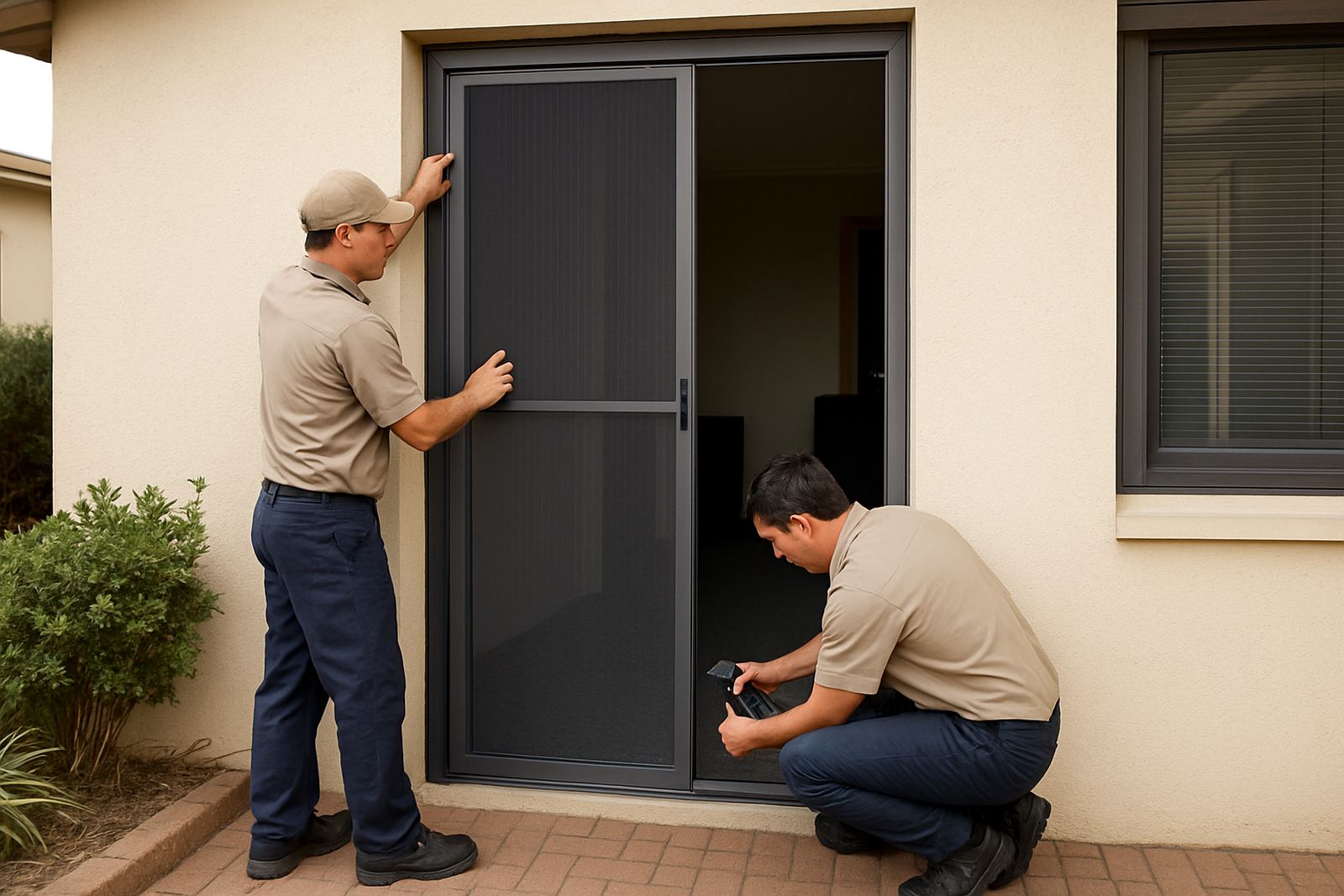
We start with a site measurement and inspection, either as part of a wider service visit or as a focused repair call. Our team checks the screen type, frame condition, fixing points and the size of each component before recommending the right replacement. If the part is standard and available, we can usually complete the job in one visit. If a special fitting is needed, we confirm the dimensions and source the correct item for a proper fit.
The process is neat and practical. We remove the worn part, clean the contact points, fit the new hardware and test the screen through a full open, close and latch cycle. Where needed we adjust alignment so the screen tracks square and closes without strain. Before we leave, we check that the hardware is holding correctly and that there is no unwanted play in the moving parts.
- Site inspection and measurements
- Assessment of the screen, frame and track condition
- Removal of worn or damaged hardware
- Fitment of new parts and adjustment
- Final test and handover
Turnaround Times for Homes, Estates and Businesses
Simple replacements such as a handle, latch or roller set can often be handled quickly once the correct part is confirmed. For common residential work in Gqeberha, Newton Park, Walmer and Uitenhage, turnaround is usually short because the parts are straightforward and the fitting is local to the screen. More specialised hardware, or repairs on older screens where fixings no longer match, may take longer while we confirm the best compatible item.
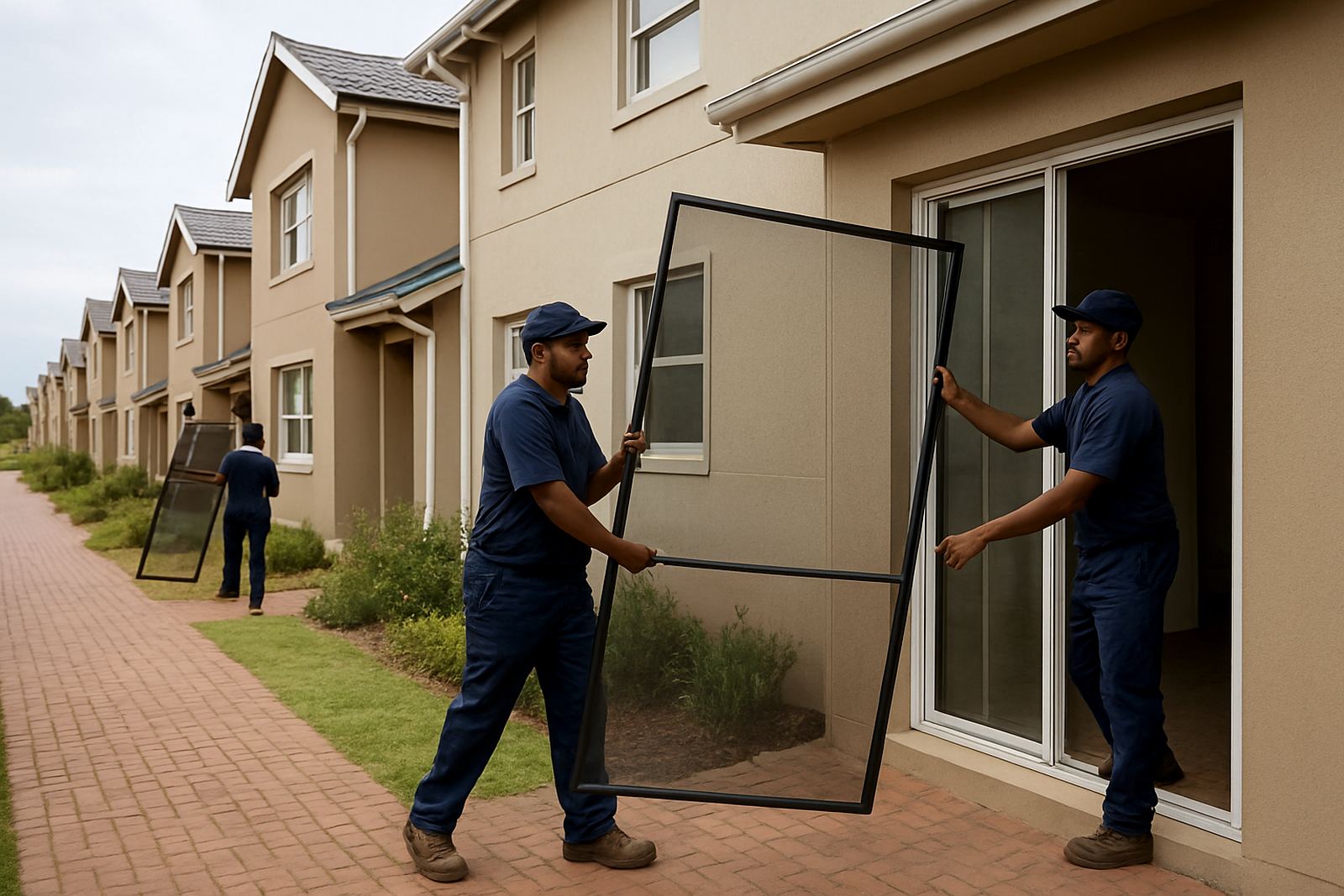
For commercial sites, body corporates and estate rollout work, we plan repairs in batches so multiple units can be serviced with less downtime. That helps where several screens are affected by the same wear pattern. If a property manager needs staged work across homes or units, we can schedule it by area and priority. In most cases the aim is to restore safe use fast, not to keep a customer waiting for days on end.
- Common parts: often completed in a short lead time
- Special parts: quoted after inspection and confirmation
- Batch work: planned for estates, rentals and commercial sites
- Coastal properties: extra care for corrosion affected fixings
Pricing Approach and What Affects the Quote
Pricing is based on the part required, the screen type, the amount of labour involved and whether any extra adjustment is needed. A simple handle replacement is priced differently from a full roller and latch set on a heavy sliding security screen. If the fixing points are damaged, or the frame needs minor correction to accept the new part, that is included in the assessment before work begins.
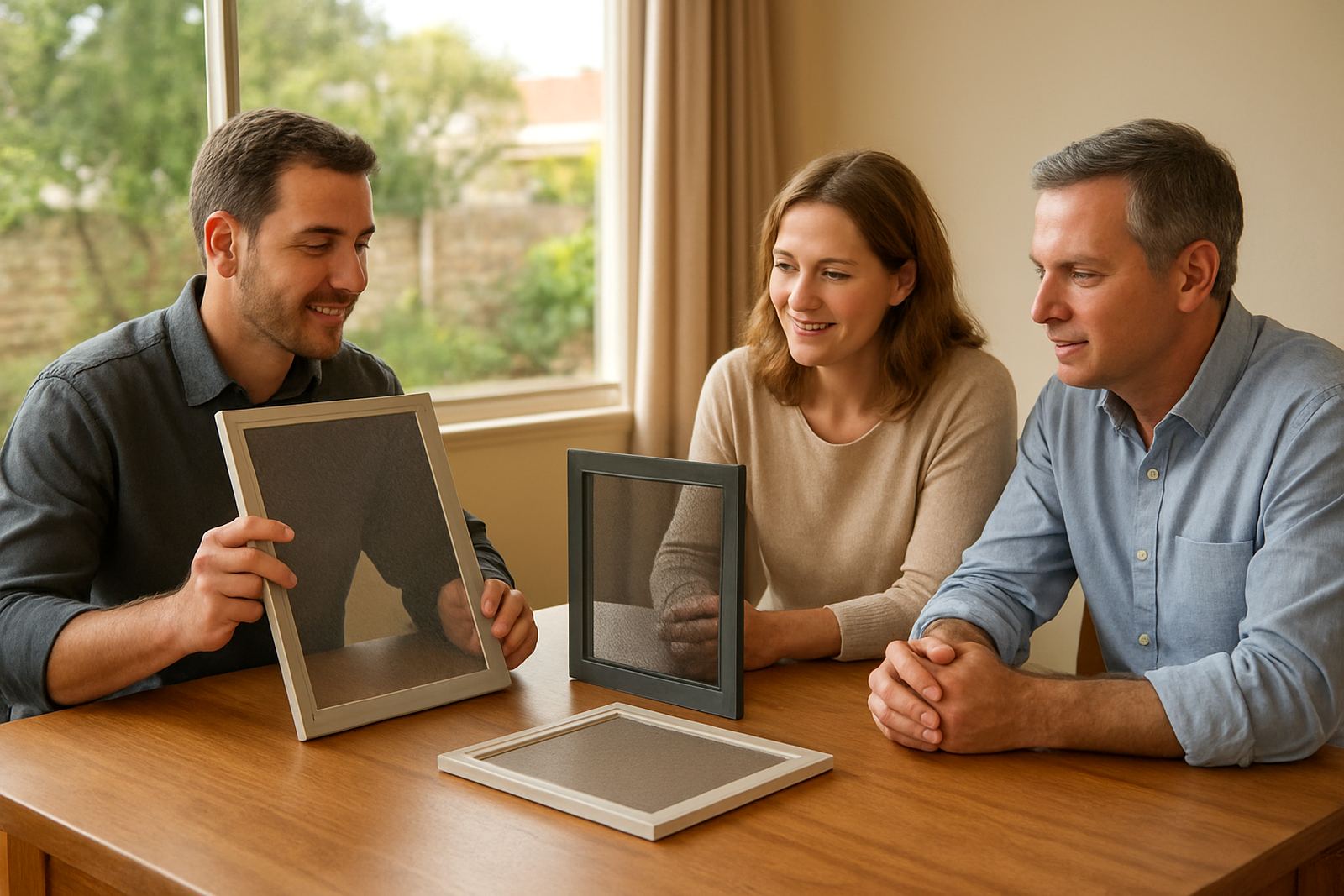
We keep pricing practical and clear. You will know whether the job needs a single part swap, a set of matching components, or a repair that includes alignment and hardware reconditioning. When a customer only needs a small replacement, we will not push a bigger job. If there is value in updating several worn parts at once, we will explain that too so you can make a sensible decision.
- Part type and material
- Screen size and access
- Single item replacement or multiple fittings
- Track or frame adjustment needed
- Travel and site access for outlying Eastern Cape areas
Keeping the Hardware Working Longer
Regular upkeep makes a clear difference, especially near the coast and on properties that get dust, sand or strong wind. We recommend a seasonal checkup at least once a year for most homes, and more often for busy commercial entrances or estate common areas. A quick inspection can catch loose screws, tired rollers, worn catches and stiff closers before they fail completely.
Basic care helps too. Keep tracks free of grit, wipe moving parts dry after heavy rain, and avoid forcing a screen that has started to bind. If you are in St Francis Bay or Jeffreys Bay where moisture and salt can work into fittings, early attention is worth it. Small issues grow into bigger repair if they are ignored, and a damaged latch or roller can put extra strain on the rest of the unit.
- Annual checkup for most homes
- Six monthly checks for high use entries
- More frequent inspection near the coast
- Immediate attention for loose, bent or seized parts
Key facts
| Hardware types | Handles, rollers, closers, latches, catches, guide shoes and fixings |
|---|---|
| Screen types | Insect screens, security screens and selected shading units |
| Fitment scope | Residential, commercial and estate properties |
| Typical issue sizes | Loose fitment, worn rollers, broken latches, seized closers |
| Materials considered | Corrosion resistant metal parts and durable polymer rollers where suitable |
| Service area | Walmer, Gqeberha, Summerstrand, Newton Park, Uitenhage, Despatch, Jeffreys Bay, St Francis Bay and wider Eastern Cape |