What a sliding door screen does in daily use
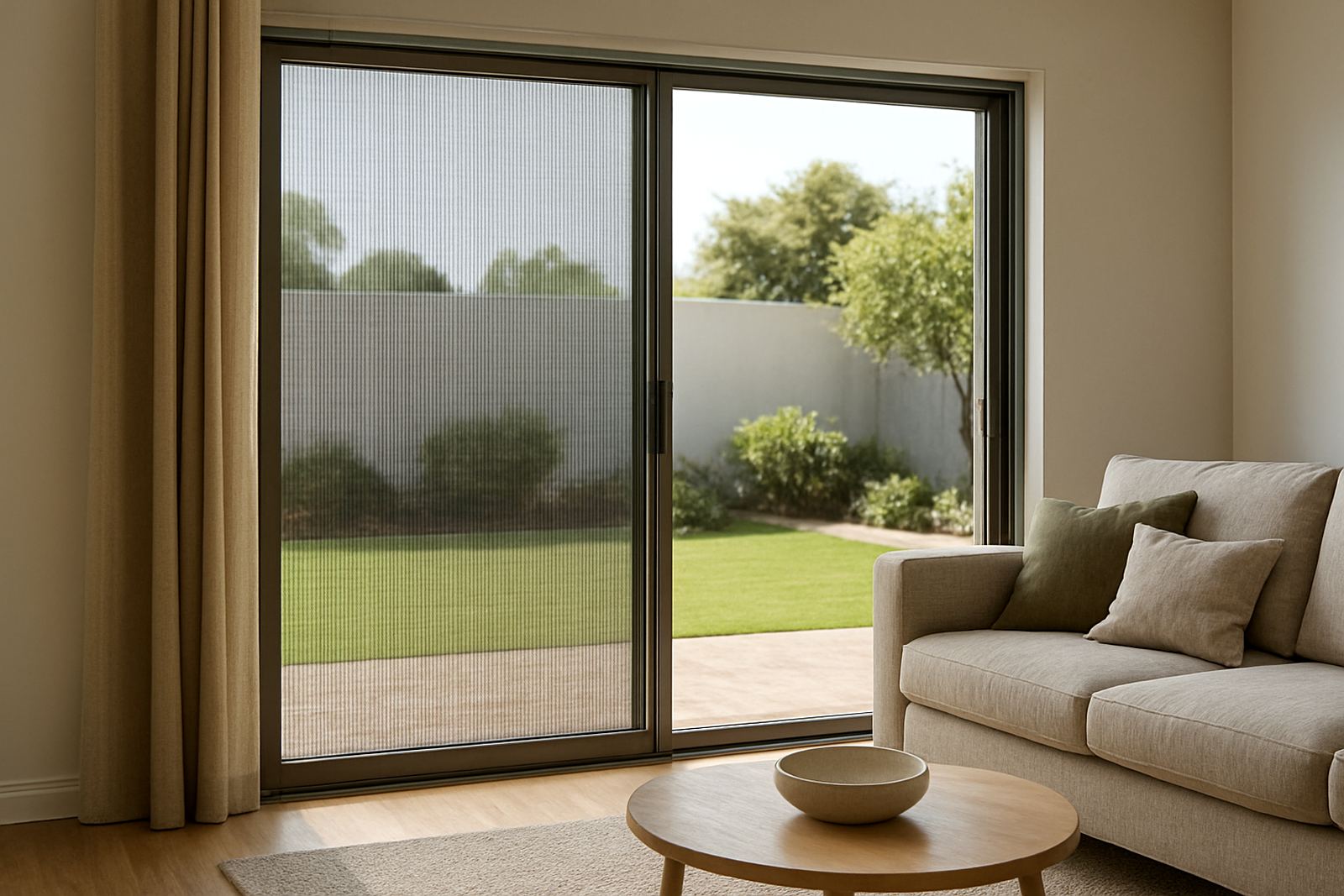
A sliding door screen is fitted to run beside or in front of your existing sliding door opening, giving you a barrier that moves with the door and does not block normal access. It is a simple answer for patio doors, braai room exits, apartment balconies and shop back entries where fresh air matters but insects are a problem.
The screen is made to suit the opening, so the frame, mesh and handle position are measured on site. That matters in coastal areas like Gqeberha and Jeffreys Bay where door openings can vary a bit from one property to the next, and where salt air can affect fittings over time. We also check for sill height, wall returns and nearby burglar bars so the screen works without rubbing or catching. Small thing but it saves a lot of trouble later.
Sizes, mesh choices and frame options
Sliding door screens are custom made for common domestic and commercial openings. A typical unit suits widths from about 800 mm to 3 000 mm, with height options generally from 1 800 mm up to 2 400 mm, depending on the site and the track layout. Larger openings can often be handled in paired panels or with a different frame arrangement.
You can choose a finer insect mesh for smaller pests, or a tougher mesh where pets, children or busy foot traffic are part of the picture. In coastal homes, a corrosion-resistant frame finish is worth asking about, especially close to the sea. Common options include:
- Single sliding panel for standard patio and balcony doors
- Double leaf arrangement for wider openings
- Fixed return panel where the doorway sits against a wall
- Fine mesh for tight insect control
- Tougher mesh for higher wear areas
- Powder-coated frame colours to match existing fittings
Where a sliding door screen suits best
This product is a good fit for family homes, holiday units, guest houses, offices with lunchroom access and restaurants that want air movement without inviting flies inside. It is especially useful on doors leading to patios, pools, braai areas and courtyards where the door stays open for long periods in summer.
In places like Summerstrand, Newton Park and St Francis Bay, sliding door screens are often requested for airflow in warm weather, while in Uitenhage and Despatch they can help in homes where doors are left open during the day for ventilation. They also suit sectional title properties and estates with appearance rules, because the finish can be kept neat and consistent across multiple units. We do estate rollouts too, so the same screen style can be repeated across a block or a cluster of homes.
Installation, power use and what is needed on site
The fitting is done with standard installation tools and does not need power or gas for the screen to work. The screen is measured, manufactured to size and then fitted onto the door opening with the correct track and hardware. In most cases, the job can be completed without major building work, which is useful when access is tight or the property is occupied.
Our installation team checks the floor level, door clearances and the condition of the surrounding frame before fitting. If a door track is worn or the rollers are not running properly, we will flag that first because a screen will not perform well if the base door is already sticking. In some homes the opening also needs minor trim work, and it is better to sort that at the start than after the screen is up.
- No electricity required for daily operation
- No gas supply needed
- Suitable for occupied homes and businesses
- Can be fitted around existing sliding doors
- Works well during load-shedding because it is manual
Keeping the screen running smoothly
Sliding door screens need light care, not complicated servicing. A quick wipe down of the mesh and frame keeps dust, pollen and coastal grime from building up. The track should be kept free of sand and grit, especially near the beachfront or where pets track in soil from the garden. If the screen starts to feel stiff, it usually means the rollers or track need cleaning and adjustment.
We offer screen repairs, mesh replacement, track servicing and hardware replacement for screens that have taken wear over time. On coastal jobs, it is worth checking the bottom track and locking points every few months because salt and fine sand can shorten the life of moving parts. A seasonal checkup is often enough to catch small faults before they turn into an expensive replacement.
What to check before you order
Before ordering, measure the full width and height of the opening and note whether the screen needs to sit inside an existing frame or against a wall return. Check which side the main sliding door opens from, where the handle sits and whether there is enough clearance for the screen to move freely. If the sill is uneven, take that into account as well.
It also helps to know how the door is used. A private home with light evening use needs a different setup from a shop or office that opens and closes all day. If you are in an estate or commercial building, ask whether there are colour or fixing rules to follow. We handle product consultations and site measurements across Walmer, Gqeberha, Summerstrand, Newton Park, Uitenhage, Despatch, Jeffreys Bay and St Francis Bay, so the final screen is matched to the opening and the way it is used.
- Opening width and height
- Door swing and handle position
- Existing frame, sill and track condition
- Preferred mesh type
- Colour matching needs
- Any estate or body corporate rules
Local support from measure-up to aftercare
ScreenMaster works from our Walmer base in Gqeberha and installs across the Eastern Cape for both homes and businesses. Our team handles site measurements, custom manufacture, installation, repairs and aftercare support, so the same people can assist from the first visit through to later servicing if needed.
For many clients the main concern is simple: they want fresh air, clean entryways and less fuss with insects. A sliding door screen gives you that without changing the way the door is used every day. If the opening is tricky, if the property is near the coast, or if you need a neat finish for a commercial site, we can spec the screen accordingly and make sure the fittings are practical for everyday use.
Key facts
| Product type | Custom sliding door insect screen |
|---|---|
| Typical opening width | About 800 mm to 3 000 mm |
| Typical opening height | About 1 800 mm to 2 400 mm |
| Frame finish | Powder-coated options to suit the property |
| Mesh options | Fine insect mesh or tougher wear-resistant mesh |
| Maintenance | Track cleaning, roller checks, mesh and hardware servicing |