What a Balcony Screen System does on a daily basis
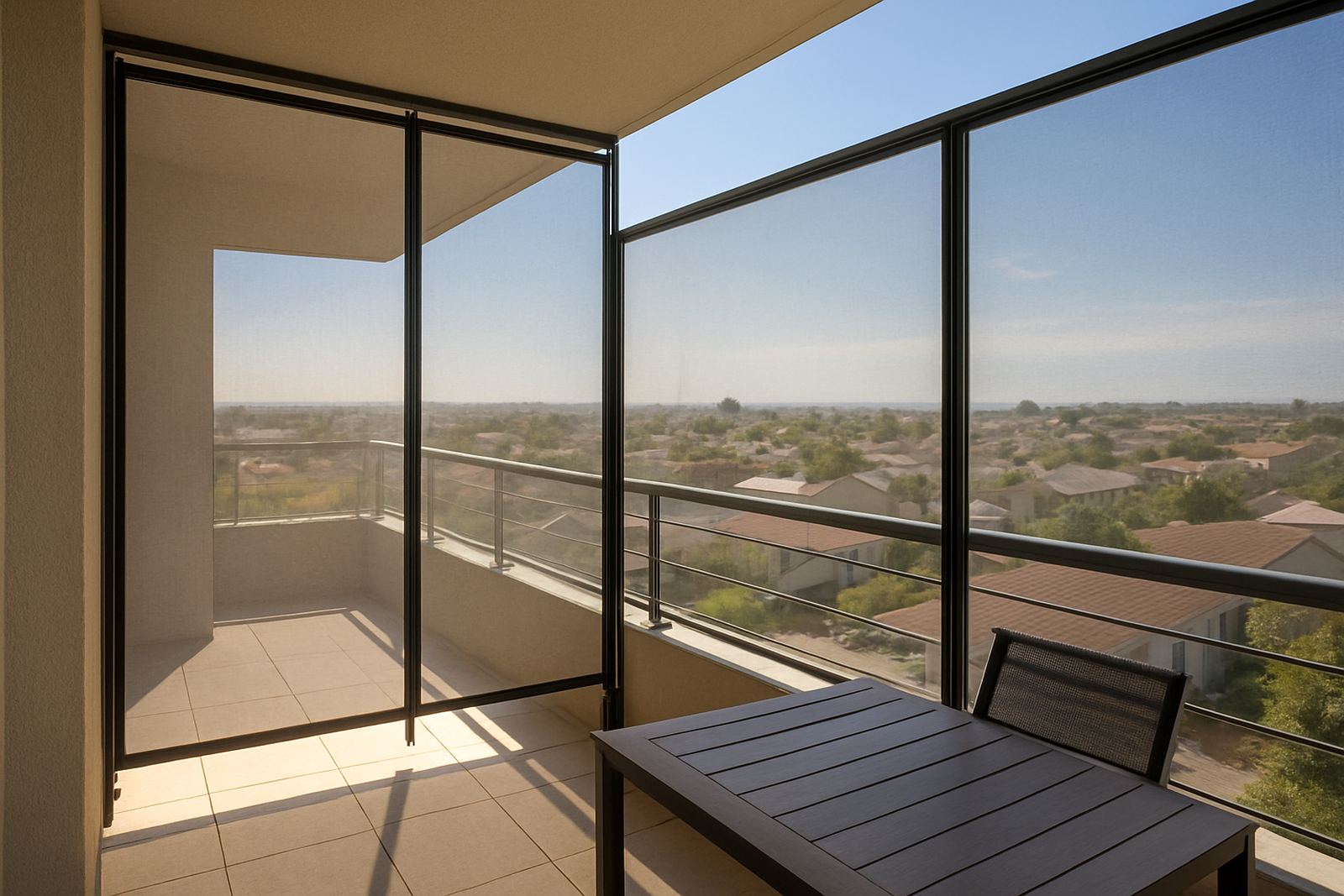
A balcony screen system is fitted to open sides, rail openings, or selected sections of an upper-level outdoor space to make the area more usable in wind, sun and insect season. In practical terms it gives you a cleaner edge to the balcony, helps reduce dust blow-in, and can soften the view into a unit without shutting the space off completely.
For apartments in Walmer, Summerstrand and Newton Park, the screen often needs to do more than one job. It may need to provide insect control in summer, a degree of privacy from neighbouring units, and enough airflow so the balcony does not feel boxed in. On coastal sites near Gqeberha, materials also need to handle salt air and strong wind with minimal fuss.
ScreenMaster supplies custom arrangements made to fit the opening rather than forcing a standard size into place. That matters on balconies because rail heights, slab returns and door positions are never exactly the same from one building to the next.
Size ranges, opening styles and screen options
Most balcony screen systems are made to order after a site measurement. The final size depends on the balcony width, the usable height above the rail, and whether the screen must clear doors, kickplates or existing balustrades. For larger spans, the system can be divided into sections so it stays stable and manageable during use and servicing.
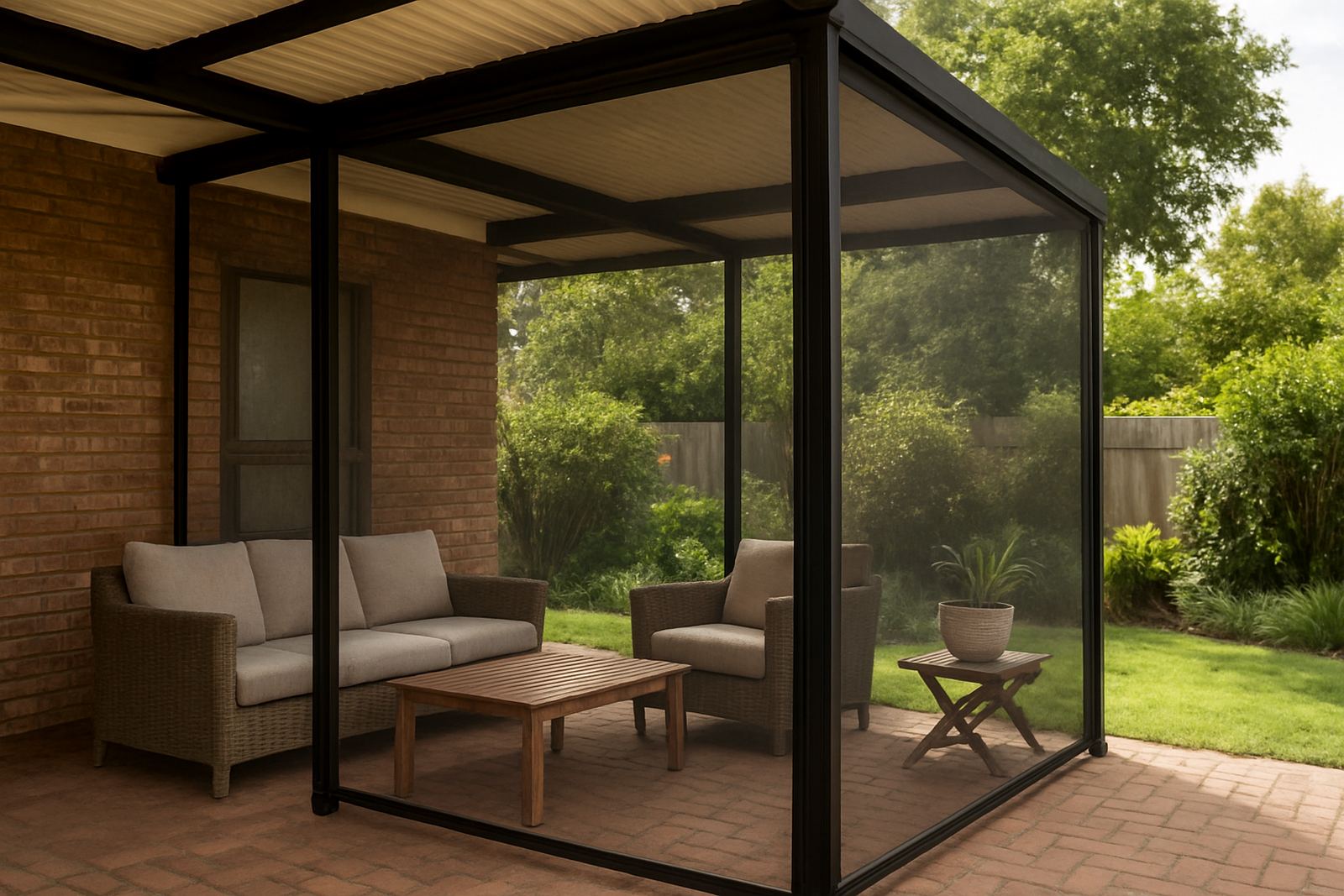
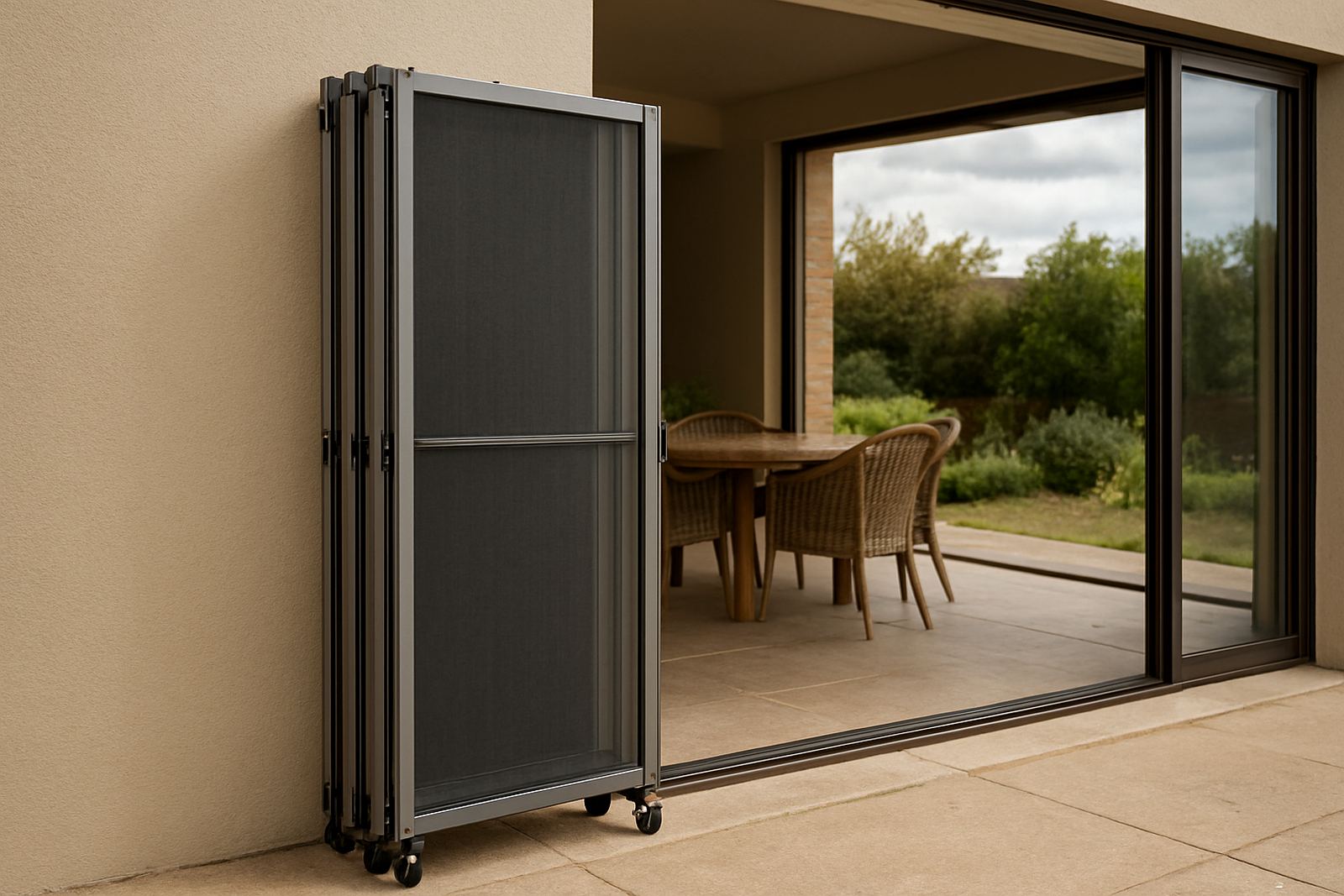
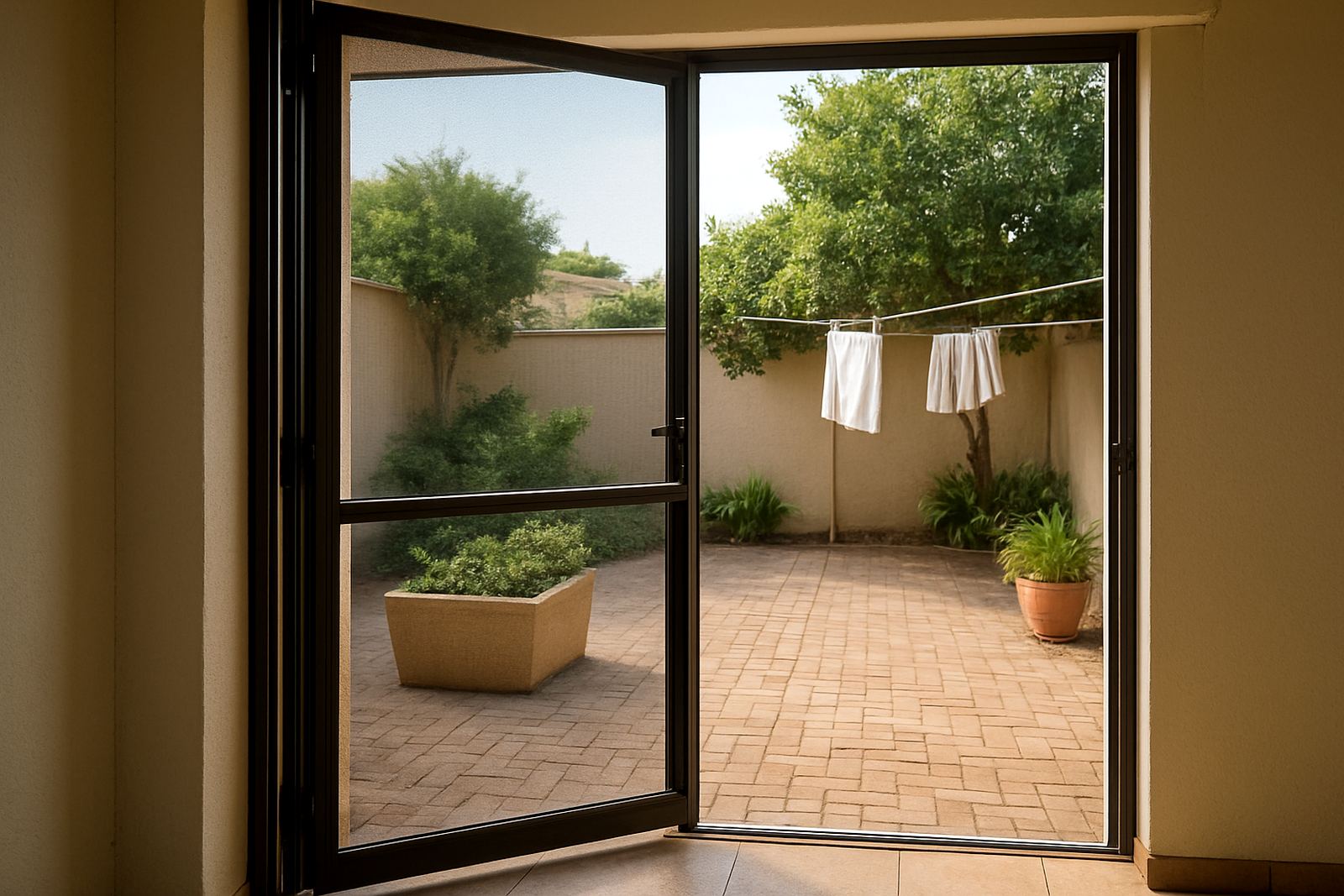
Common options include fixed panels, retractable screening, hinged access panels and framed sections with insect mesh or stronger security mesh. A balcony facing the wind may suit a tighter mesh and a stiffer frame, while a sheltered unit may benefit from lighter screening that keeps the view more open.
- Panel widths usually range from about 600 mm up to 1 200 mm per section, depending on the opening and frame load.
- Typical heights are from 900 mm to 2 100 mm, with custom extensions where the balcony layout needs it.
- Mesh choice can include fine insect mesh, privacy mesh or stronger security-grade mesh for exposed units.
- Frames are usually made to sit neatly against concrete, aluminium or steel balcony details with minimal visible fixings.
For body corporate buildings, a consistent appearance across several units is often important. A measured approach helps each balcony match the building rules and keeps the façade orderly.
Where a balcony screen works best
This product suits apartment balconies, hotel balconies, retirement units, loft terraces and raised stoep areas where wind and insects are a recurring problem. It is also useful for commercial spaces with upper-level smoking areas, staff break balconies, or sheltered service terraces that need a tidier edge and some screening.
In the Eastern Cape, coastal humidity and seasonal wind can be hard on exposed fittings. That is why the screen system should be specified with the site in mind, not just the opening size. A balcony in Jeffreys Bay will face different conditions to one in Uitenhage, and an exposed unit in St Francis Bay may need stronger fixing detail than a sheltered inner-courtyard balcony in central Gqeberha.
- Apartment balconies with children or pets that need a safer boundary and less insect access.
- Upper-level outdoor areas used for braais, drying racks or casual seating.
- Buildings where municipal or body corporate rules call for a neat, non-invasive finish.
- Properties where load-shedding means more time is spent outside in the cooler evening air.
If the balcony is used for gas braais or fixed appliances, the screen layout must allow safe clearance and ventilation. It should not interfere with gas bottle placement, door swing, or access to an emergency exit. That needs to be checked before manufacture, not after.
Installation details and what the site team checks first
Installation starts with site measurements and a look at the balcony structure. The team checks slab edges, rail condition, wall surfaces, drainage points, and any existing cracking or movement. On older buildings the fixing surface can be uneven, so the system may need packing or an adjusted frame line to keep the screen square.
For most balcony jobs, no power supply is needed. Manual opening systems rely on guided tracks, hinges or tension fittings rather than motors. If a customer asks for a powered shade or retractable element, then an electrical supply may be required and the control position must be planned carefully. In standard insect and privacy screen work, the product is fitted without any power requirement. Gas is only relevant where the balcony includes a braai or gas appliance and safe clearances must be maintained.
ScreenMaster handles home installations and commercial installations across Walmer, Gqeberha, Summerstrand, Newton Park, Despatch, Uitenhage, Jeffreys Bay and St Francis Bay. The goal is a neat fit that opens properly, locks where needed, and does not rattle in a strong south-easter.
Maintenance, repairs and coastal wear
A balcony screen should be easy to keep in service. On coastal properties, salt build-up can affect moving parts and fixings if they are not rinsed from time to time. A mild detergent and soft cloth are usually enough for the frame and mesh, and the tracks should be kept clear of sand, leaves and fine dust. Avoid abrasive cleaners because they can mark the finish and shorten the life of the surface.
ScreenMaster also offers screen repairs, mesh replacement, track servicing, hardware replacement and seasonal checkups. That is useful when a section starts rubbing, a latch stops holding properly, or the mesh has been damaged by pets, moving furniture or storm debris. In apartment blocks, keeping the system in order also helps avoid complaints from neighbours and body corporates.
- Wash the mesh every few weeks in coastal areas, more often if the balcony faces the road.
- Check latches, rollers and hinges after heavy wind or a storm.
- Do not force a panel that is sticking, it may need alignment rather than pressure.
- Book a seasonal checkup before summer if the balcony is used daily.
If a screen has come loose from the frame or the mesh is torn, it is better to repair it early. Small issues become bigger ones quickly on exposed balconies, especially where the unit faces direct wind and salt air.
What to check before you order
Before ordering, measure the clear opening, check the balcony rail height, and note any obstructions such as drain pipes, bulkhead details, outdoor lights or air-con pipe runs. If there is an existing security gate or sliding door, the new screen must not block access or create a trip point at the threshold.
You should also decide what the screen must do first. If insect control is the main concern, a fine mesh may be best. If the balcony is more exposed to neighbours or street view, privacy and security may matter more. If the space is used with a gas braai, ask about ventilation and safe placement early, because the layout can change the whole design.
- Opening width and height at the narrowest point.
- Whether the balcony is sheltered, windy or fully exposed.
- Need for insect control, privacy, safety or a combination of these.
- Any body corporate rules on colour, fixings or visible hardware.
Clients can send an enquiry through the contact page for a site measurement and product consultation. From there the team confirms the best arrangement, explains the options, and sets out the final build before manufacture.
Key facts
| Product type | Custom balcony screen system for upper-level outdoor spaces |
|---|---|
| Typical use | Apartments, terraces, upper-level patios and body corporate balconies |
| Frame options | Fixed, hinged, retractable or sectional framed layouts |
| Mesh options | Insect mesh, privacy mesh or security-grade mesh |
| Installation | Made-to-measure site installation across the Eastern Cape |
| Maintenance | Cleaning, track servicing, mesh replacement and hardware replacement |