Why cottages need a tighter screen plan
A cottage often has fewer openings, smaller frames and more mixed-use spaces than a standard house. That means one badly chosen screen can make a kitchen feel cramped, block a hinge, or leave a window partly unusable. In Walmer, Summerstrand and the older parts of Newton Park, we see cottages with timber, aluminium and steel openings that all need different hardware and fixing methods.
For insect control, the aim is to keep fresh air moving while stopping mozzies, flies and small coastal insects from getting in at dusk. For security, many cottage owners want a screen that can stay closed during load-shedding or when the property is vacant for a weekend. In a rental cottage or garden flat, neat screens also help the place feel cared for without changing the structure too much.
The best result starts with measurements on site. Corners are checked, sill depths are noted, and we look at how far a sash opens before it fouls a handle, curtain or burglar bar. This is where cottage jobs go wrong most often: people order standard sizes and then find the leaf catches, the track is out by a few millimetres, or the mesh bows because the frame was not square.
Typical screen setups for small homes and garden cottages
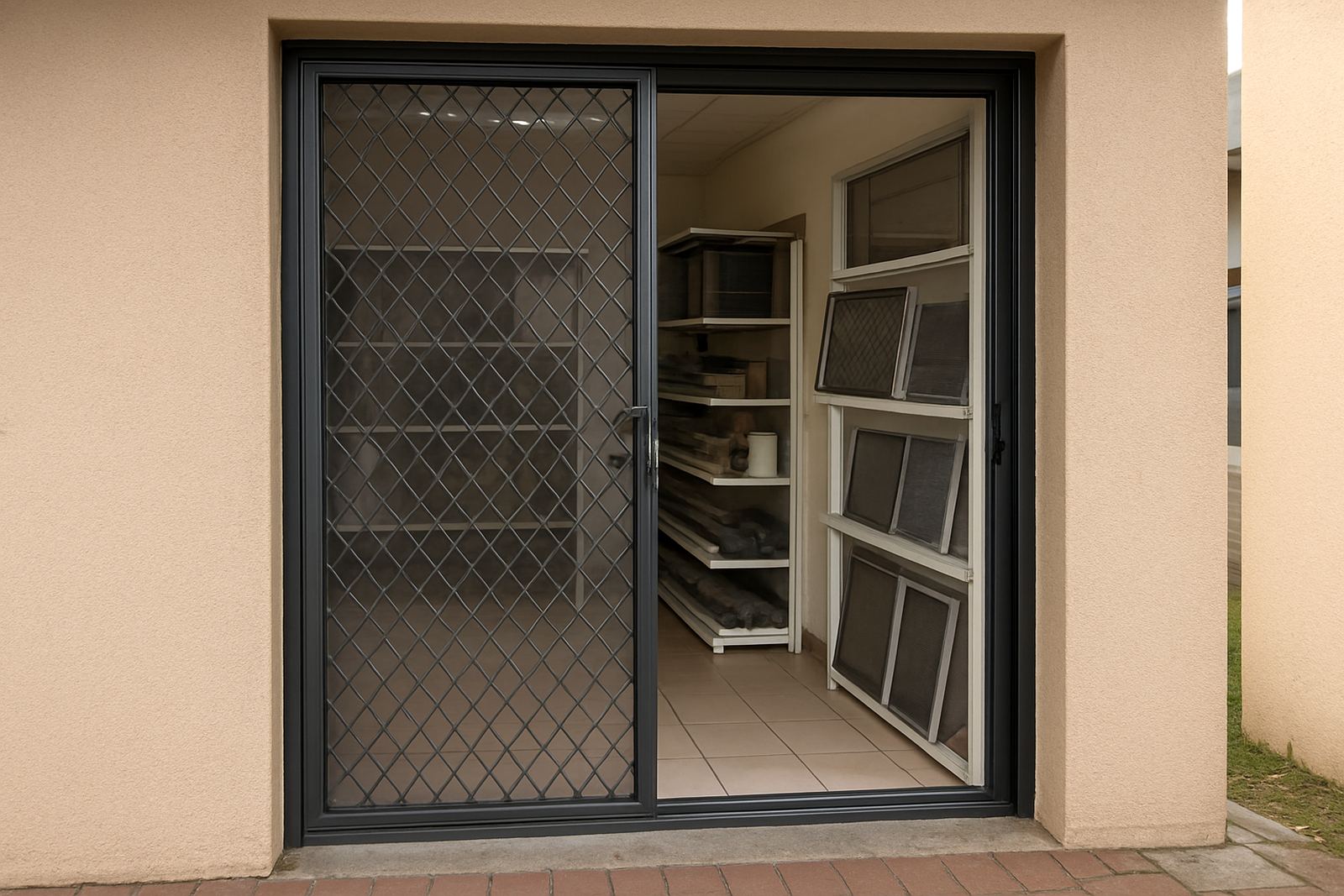
Most cottage projects use a mix of insect screens on windows and one or two door screens on the main access points. Where there is a small stoep or side passage, a sliding screen can be useful because it keeps the opening clear and does not swing into tight spaces. In compact kitchens, fixed screens or neat open-and-close units are often better than heavy framed options.
For coastal parts of Gqeberha and nearby areas like St Francis Bay and Jeffreys Bay, corrosion resistance matters. Salt air can eat into poor hardware and leave rollers sticky within months, so we choose fittings that are better suited to humid conditions. If the cottage has a rental turnover, we also look at ease of cleaning and how much wear the tracks will take.
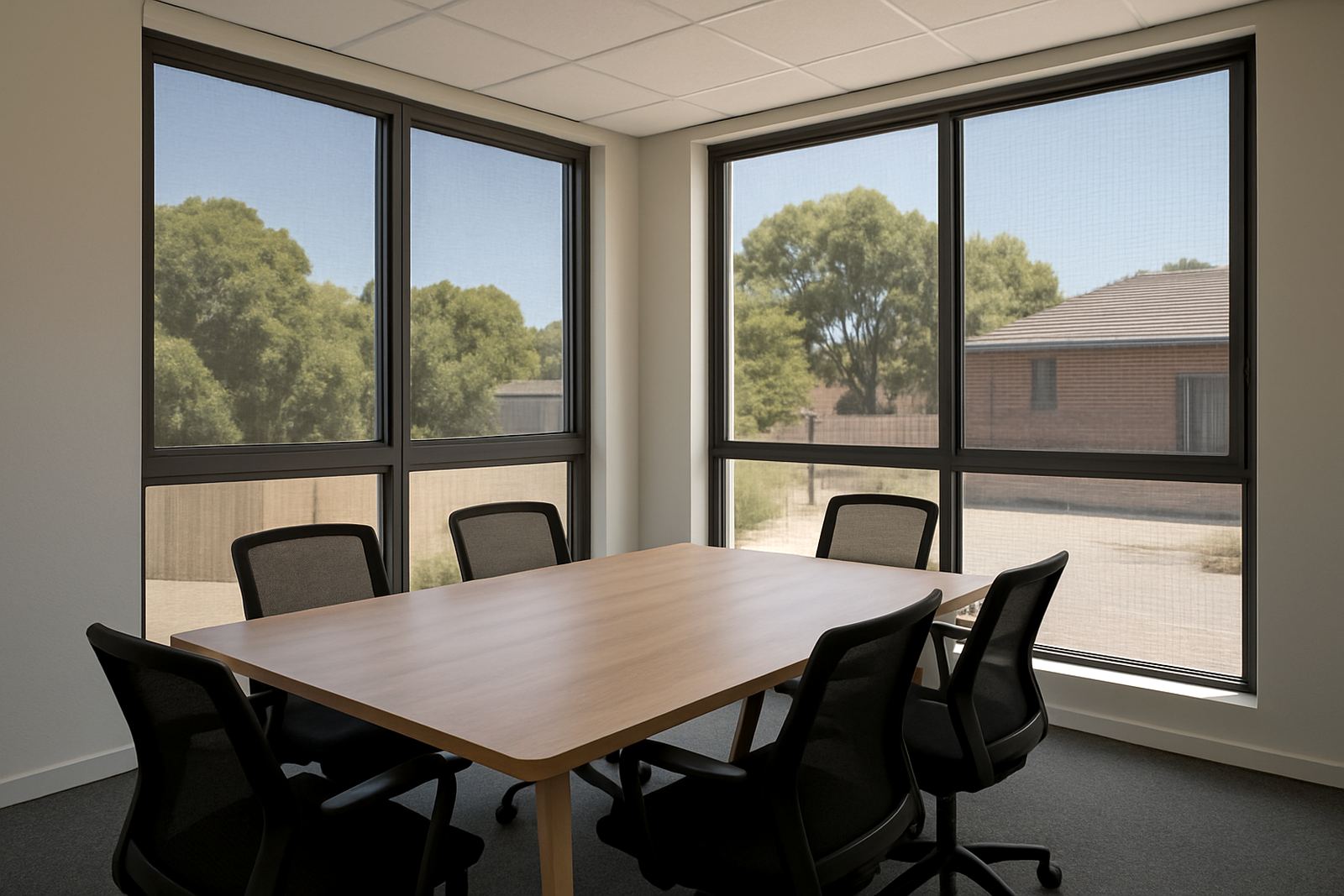
- Window insect screens for bedrooms, bathrooms and kitchens
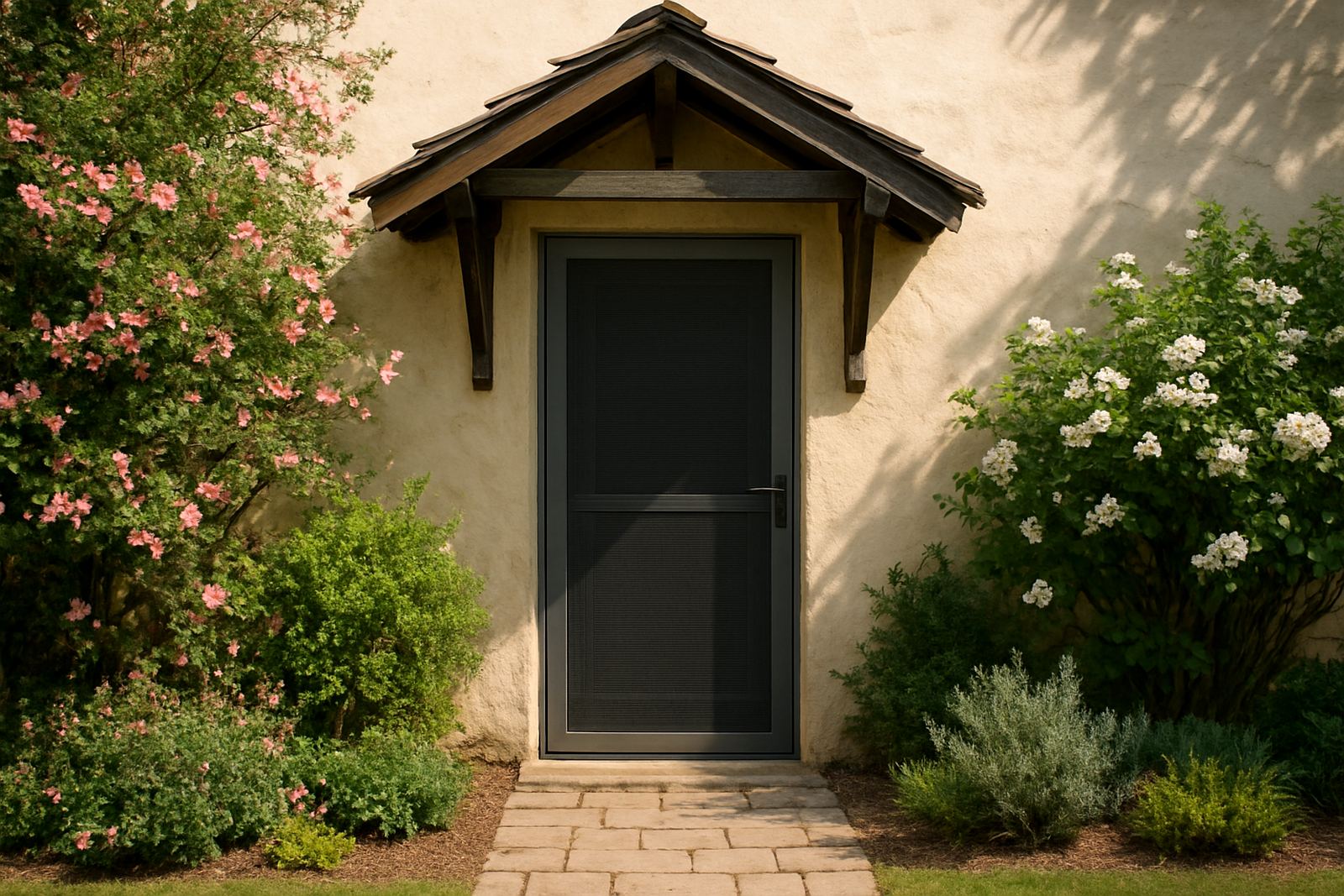
- Sliding or hinged door screens for front, back and stoep entries
- Security screens where extra protection is needed at ground level
- Shading options for western sun on small patios and living rooms
- Mesh replacement and track servicing for older installed systems
Planning the layout so nothing clashes
Small homes punish poor planning. A screen can clash with curtain rails, burglar bars, deep window catches or a fold-out kitchen vent, and then the owner ends up leaving it open or removing it. We plan each opening with the daily routine in mind: where people enter after work, where washing lines are outside, which windows are opened for night air, and which doors get used when the wind is up.
In many cottages, the most practical setup is to screen the rooms used most often and leave low-use openings for a later phase if budget is tight. That gives immediate relief from insects without overspending. For a granny cottage or small business unit, we may recommend stronger screening at the main access and lighter insect screens on the side openings.
- Check opening direction before choosing hinged or sliding units
- Measure curtain clearance, sill depth and handle projection
- Allow for uneven plaster, old frames and settlement in older cottages
- Plan for easy cleaning if the property is near the sea or dusty roads
- Keep future maintenance access in mind, especially on rental units
Common mistakes with cottage screens
One common mistake is trying to fit a standard unit into a non-standard opening. Cottage windows are often shorter, older or slightly out of square, so a factory-style size can leave gaps. Another mistake is choosing mesh that is too coarse for insects in summer or too dark for a small room that already feels shaded.
Owners also underestimate how much a screen changes day-to-day use. If the bedroom window opens only part way because the frame is too deep, people stop using it. If the door screen drags on a slightly uneven threshold, it soon gets forced and the rollers wear out. A small issue becomes a repair call, and that costs more in the long run.
We also see hurried jobs where the installer has not checked the fixing surface. Old putty lines, soft timber, cracked plaster or corroded steel need proper preparation. Without that, the screen may look fine on day one but loosen after a few weeks of wind and regular use. In coastal areas this shows up quickly, especially where salty moisture is present. Better to sort the substrate first, then fit the screen.
Budget ranges for cottage screen projects
Budget depends on how many openings need screening, the size of each opening, the frame type and whether you want insect, security or shading solutions. A small cottage with two to four windows and one access point can often be handled in stages, which helps spread the cost. In Gqeberha and surrounding areas, many owners start with the rooms that get the most evening use.
As a general guide, basic custom insect screens for smaller windows is quoted per opening, depending on size and hardware. Sliding or hinged door screens for compact cottages often fall in the region a quoted price per door, while stronger security screen options can run higher because of the frame, lock points and mesh type. Repairs such as mesh replacement, track servicing or hardware replacement are usually far less than a full new install, and are worth checking before replacing a complete unit. Ask for a quote
If you are fitting out a rental cottage, budget for the likely wear and tear over time. Tracks, rollers and seals need seasonal attention, especially after winter wind and summer humidity. A modest aftercare plan can save money, and it keeps the screen working as intended instead of binding or rattling loose.
Our cottage screen service in the Eastern Cape
ScreenMaster works from Walmer, Gqeberha and installs across the Eastern Cape, including Uitenhage, Despatch and the coastal holiday towns. Barend Bezuidenhout and the team handle site measurements, product consultations, custom manufacture, home installations and commercial installations. For cottage owners, that means one contact point from first measure to final fit.
We also take care of screen repairs, mesh replacement, track servicing, hardware replacement, seasonal checkups, estate rollout and aftercare support. If a cottage is part of a larger property, or you are managing a few units for family or tenants, we can schedule the work to suit your access times. The aim is a neat finish that works in practical daily use, not just on the day of install.
For the enquiry form on our contact page, send through the opening sizes or a short note about the cottage layout and we will advise on the next step. If the opening is tight or the building is older, that is no problem. We deal with those conditions often, and a careful measure is usually the difference between a screen that fits properly and one that becomes a nuisance.